

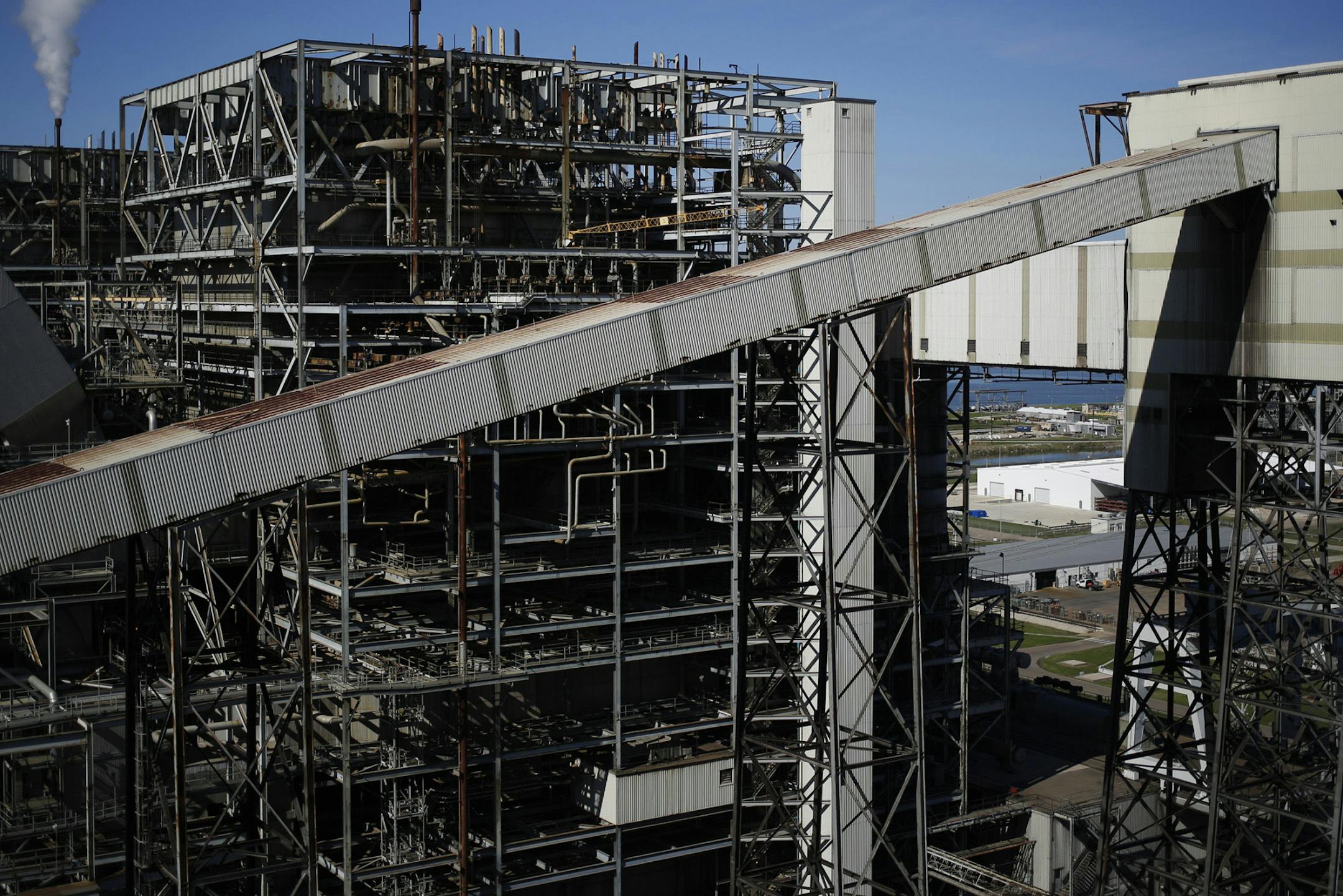
President Donald Trump promised his administration would bring about "clean coal," but his budget proposed slashing research the industry says it needs to make that a reality.
The Energy Department has spent more than $200 million a year on research into ways to capture and store the carbon dioxide emitted when coal is burned to make electricity. Under Trump's proposal released Tuesday that would be cut to $31 million, an 85 percent reduction.
"It's extremely disappointing," said Brad Crabtree, vice president of fossil energy for the Great Plains Institute, a Minneapolis group that studies energy and advocates on behalf of carbon capture. "I think at some point the administration is going to have to decide whether they intend to keep their commitments to ensuring a future for coal."
The White House budget sketches out widespread changes to energy research, environmental regulation and government ownership of energy assets, as the Trump administration seeks $3.6 trillion in total spending cuts. As part of that change, the Energy Department would have its budget cut $1.7 billion to $28 billion, with a priority placed on revamping how it funds research and development.
The department would focus on basic research, and then free those technologies to private industry to develop them. That's how Energy Secretary Rick Perry is approaching carbon-capture research, Shaylyn Hynes, an Energy Department spokeswoman, said.
"Secretary Perry's support for clean coal and carbon capture has not changed with this budget request," she said in an e-mail.
Coal is the top source of energy-related carbon dioxide emissions, accounting for 68 percent of the emissions associated with electricity generation, according to Energy Department data. For each watt of electricity produced, coal emits twice the carbon dioxide as its main competitor, natural gas. Wind, solar and nuclear energy are nearly or entirely carbon-free.
Coal producers have advocated for federal research into the technology to pull the carbon dioxide from smokestacks and store it underground as a way to make that fuel "clean." But the technology for doing that has so far been expensive and elusive.


