
Trump has a chance to dispel one of the greatest conspiracy theories in U.S. history

Additional documents pertaining to the JFK assassination are due to be released in October. By law, the president (and only the president) can stop this, but he should not do so.

July 25, 2017 at 4:46PM
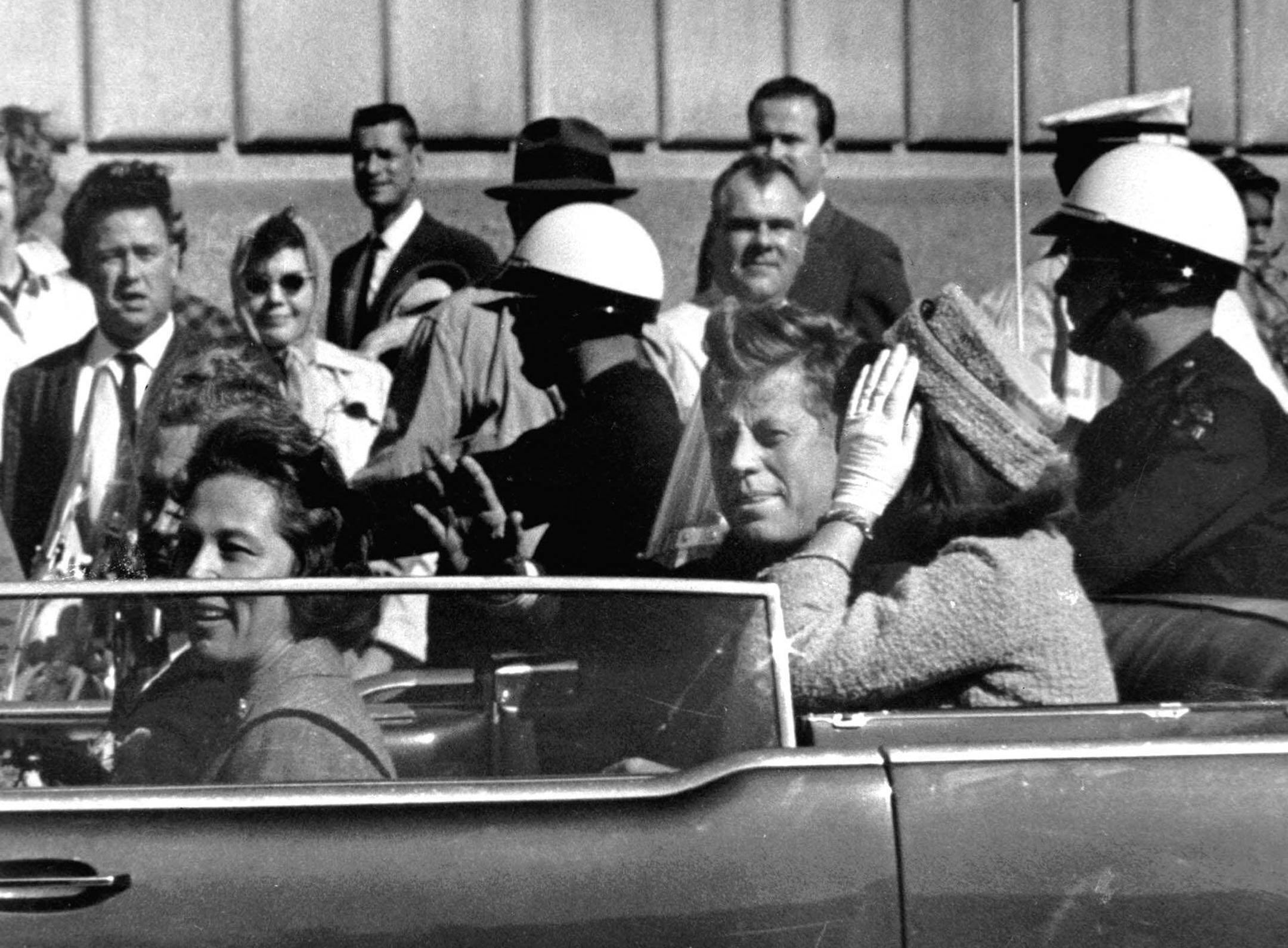
FILE -- President John F. Kennedy is seen riding in motorcade approximately one minute before he was shot in Dallas, Texas on Nov. 22, 1963. In the car riding with Kennedy are Mrs. Jacqueline Kennedy and Gov. and Mrs. John Connally of Texas. Perhaps the most profoundly disturbing 26 seconds of footage in American history -- the Zapruder film of President Kennedy's assassination -- goes on sale to the general public at video stores Monday. (AP Photo)
President John F. Kennedy is seen riding in motorcade approximately one minute before he was shot in Dallas, Texas, on Nov. 22, 1963. (The Minnesota Star Tribune)

Later this year — unless President Donald Trump intervenes — the American people will get access to the last of thousands of secret government files about a turning point in the nation's history: the 1963 assassination of President John F. Kennedy.

The National Archives this week released several hundred of the documents, which come from CIA and FBI files, and of course, JFK researchers are scrambling to see whether they contain any new clues about the president's murder. But many more documents remain under seal, awaiting release by this October, the 25-year deadline set by the 1992 Kennedy Assassination Records Collection Act.

The law gives only one person — the president — the ability to stop the release from happening. He can act only if he certifies in writing that the documents would somehow endanger national security.

We know we speak for an army of historians, political scientists, journalists and concerned citizens who have studied the JFK assassination when we say that it is time for the federal government to release everything in the custody of the Archives. This is the moment for full transparency about a seminal event that cost many Americans' trust in their government.

The 1992 law has already brought some welcome transparency. It resulted in the release of millions of pages of documents regarding the assassination, including the 441 files from the CIA and FBI made public Monday. But about 3,150 other documents remain totally under seal, along with tens of thousands of pages that have been only partially unsealed because intelligence and law-enforcement agencies opposed their release in the 1990s.

Those are the documents that Trump could try to keep secret. And sadly, he appears to be under pressure to do so. Both of us have written books about the assassination and have a keen interest in what the president decides. Congressional and other government officials have warned us in confidence in recent weeks that at least two federal agencies will make formal appeals to the White House to block the release of some of the files.

Which agencies? Which files? The officials would not say, but it is already known that the CIA, the FBI and the Justice Department prepared most of the still-secret documents. If they're the agencies objecting, is the president prepared to overrule them in the name of openness?

When it comes to JFK's murder, what secret can be worth keeping nearly 54 years after those shots rang out in Dealey Plaza? In the 1990s, intelligence agencies might have been able to argue legitimately that some documents needed to stay under seal because they revealed the identity of American spies and law-enforcement informants who were still living and could be in danger if their cover were blown.

But decades later, logic suggests that almost all those people are now dead; if a handful are still alive, provisions can be made to protect them, if necessary. What lingers today is the widely held belief among Americans that the truth about a landmark moment in the nation's history is still being hidden.

Almost as soon as the Warren Commission issued its September 1964 findings that Lee Harvey Oswald killed Kennedy and there was no evidence of a conspiracy, it became apparent that the investigation led by Chief Justice Earl Warren was seriously flawed. In large part, this was because the CIA, the FBI and other agencies had withheld evidence from the commission and its investigative staff, apparently to cover up their own bungling before the assassination.

The evidence did not necessarily point to a conspiracy in Kennedy's death — at least not the sort of dark, tangled plot imagined by many theorists. But the commission should have dug more deeply into Oswald's mysterious six-day trip to Mexico City two months before the assassination, when he met with high-level Soviet and Cuban embassy personnel. While 21st-century forensic science demonstrates that Oswald was almost certainly the lone gunman in Dallas, it's possible that people at home or abroad knew he was plotting to kill Kennedy and might have encouraged him — by definition, possible co-conspirators. Or at a minimum, they did not try to stop Oswald.

By the late 1960s, opinion polls showed that, largely due to the Warren Commission's shortcomings, most Americans had rejected the official story. What happened in the decades since is both understandable and toxic. Much of the public came to assume that if their government would not tell the truth about the murder of the president, it could not be expected to be honest about anything else — for example, human-caused climate change or the safety of childhood vaccines.

Trump, no stranger to promoting conspiracy theories, has a chance to show that he is committed to resolving some of the biggest conspiracy theories in American politics. We hope he welcomes the opportunity. If the documents in the National Archives are released in full, the president will receive credit for having struck a blow for transparency and, at least on this issue, attempting to show that the government no longer has anything to hide.

Larry J. Sabato is director of the University of Virginia Center for Politics and author of "The Kennedy Half-Century." Philip Shenon, a former Washington correspondent for the New York Times, is author of "A Cruel and Shocking Act: The Secret History of the Kennedy Assassination." They wrote this article for the Washington Post.

about the writer

about the writer

Larry J. Sabato and Philip Shenon

More from Commentaries

See More
card image
Renée Jones Schneider/The Minnesota Star Tribune

Over time it has been one of the most effective such offices in the nation, but recently it has been seriously diminished.

card image
card image