

Opinion editor’s note: Strib Voices publishes a mix of guest commentaries online and in print each day. To contribute, click here.
•••
On Jan. 20 — the day he was inaugurated — President Donald Trump signed an executive order declaring a national energy emergency. Below are excerpts from that order and actions that his administration has taken since then:
Executive order language: “We need a reliable, diversified, and affordable supply of energy to drive our Nation’s manufacturing, transportation, agriculture, and defense industries, and to sustain the basics of modern life and military preparedness.”
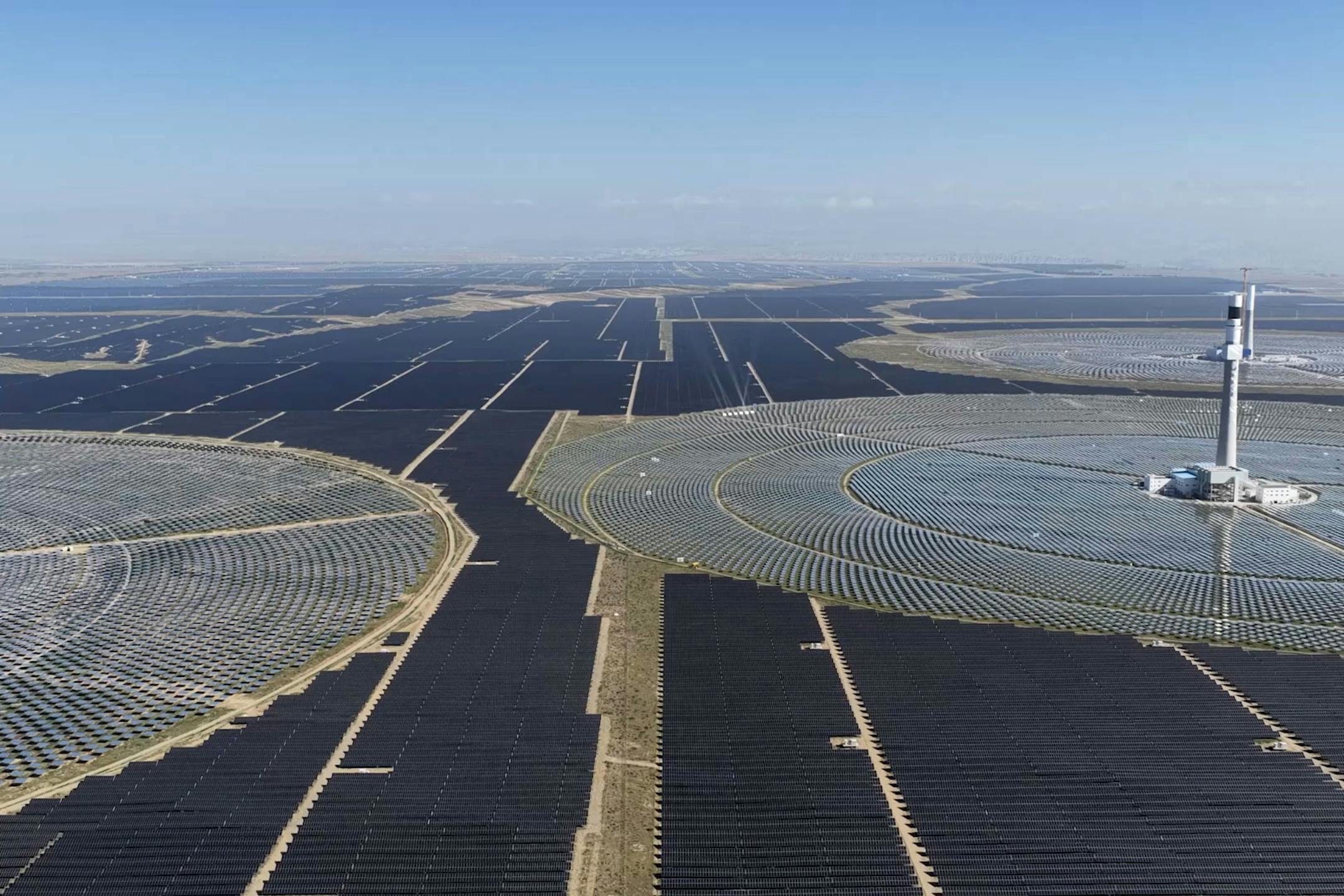
Trump administration actions: On the same day he declared a national energy emergency, Trump also signed an executive order pausing new leasing and permitting for wind and solar projects on federal lands and waters, although these are the least expensive and quickest ways to add new electrical generating capacity to the nation’s grid. On July 15, the Department of the Interior added multiple layers of review for all wind and solar projects on public land to further thwart their development, and on Aug. 1, the Interior Department ended new leasing for offshore wind projects. On Aug. 19, the USDA announced it would stop funding wind and solar projects on farmland. Meanwhile, China has built a solar project on the Tibetan plateau that is seven times the size of Manhattan and can power 5 million homes, and is planning to expand it to 10 times the size of Manhattan.
Executive order language: “The integrity and expansion of our Nation’s energy infrastructure — from coast to coast — is an immediate and pressing priority for the protection of the United States’ national and economic security.”
Trump administration actions: On July 23, the Department of Energy revoked its $4.9 billion in loan guarantees for the Grain Belt Express, a large high-voltage, direct current (HVDC) transmission line designed to address critical electrical grid issues, and on the same day, the White House released its AI Action Plan, outlining the need to enhance and expand the nation’s electric grid to meet the demand for data centers. On Oct. 7, the administration cut $15.5 billion for hundreds of infrastructure projects, including grid modernization. There are only seven HVDC transmission lines in the U.S., running a total of about 2,400 miles. The Grain Belt Express was to be the eighth. Meanwhile, China has 24 HVDC lines that extend for more than 11,000 miles.
Executive order language: “[T]he United States has the potential to use its unrealized energy resources domestically, and to sell to international allies and partners a reliable, diversified, and affordable supply of energy. This would create jobs and economic prosperity for Americans forgotten in the present economy [and] improve the United States’ trade balance … .”


