WASHINGTON — President Donald Trump's abrupt announcement that he will suspend U.S. military drills in South Korea appeared to catch the Pentagon and the Seoul government flat-footed, and it contradicted a pillar of Defense Secretary Jim Mattis' campaign to make U.S. troops more combat-ready.
During a news conference following his summit Tuesday with North Korean leader Kim Jong Un, Trump pushed his unconventional approach even further by calling annual U.S.-South Korean military exercises "provocative." He also said he'd like to remove all 28,500 U.S. troops stationed in the South, although he made clear this was an option for the future, not a part of current negotiations.
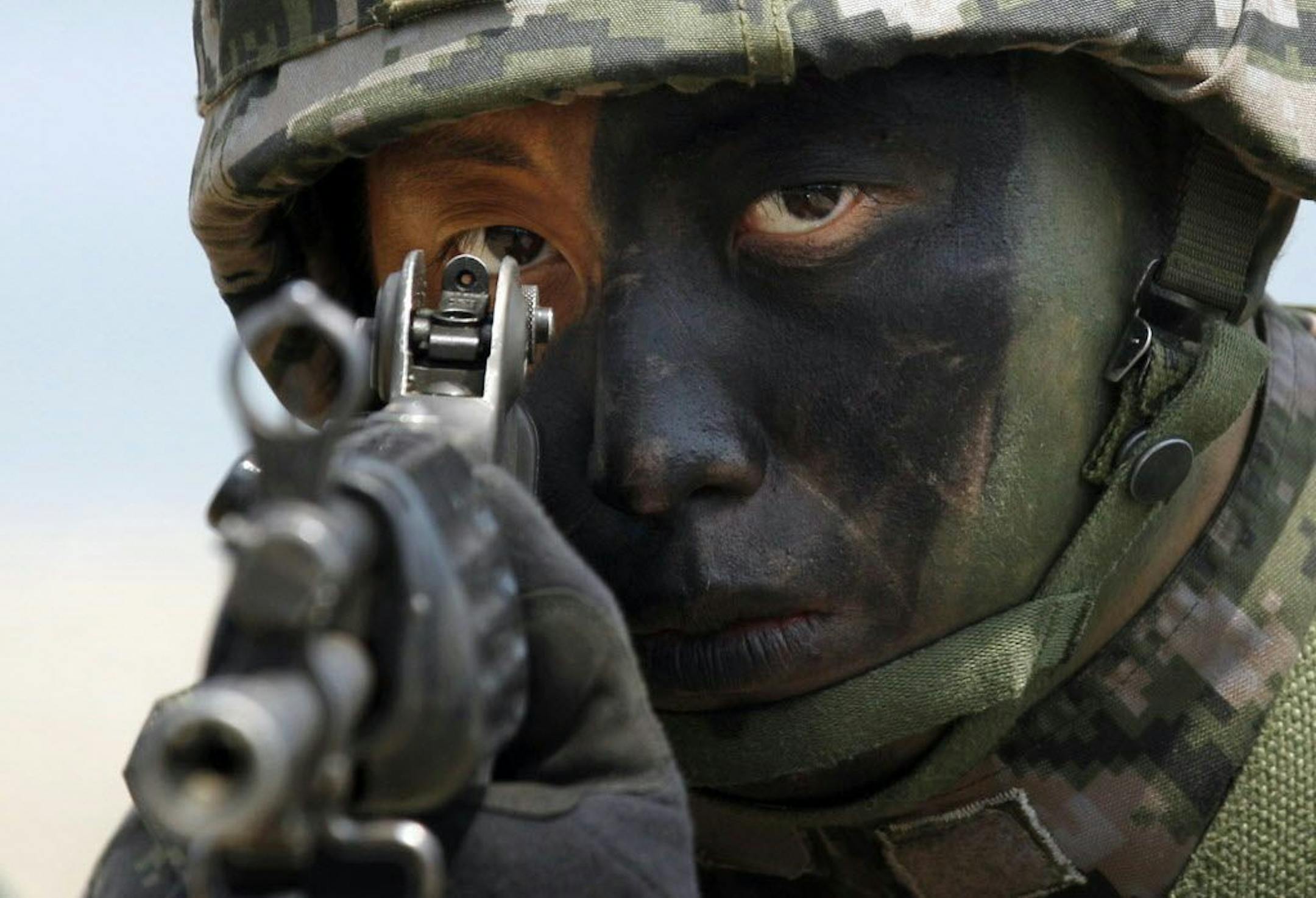
The U.S. has stationed combat troops in South Korea since the end of the 1950-53 war and has used them in a variety of large-scale drills designed to sharpen skills and test troops' ability to operate effectively with their South Korean partners.
The next scheduled major exercise, known as Ulchi Freedom Guardian and involving tens of thousands of troops, normally is held in August.
"We will be stopping the war games, which will save us a tremendous amount of money, unless and until we see the future negotiation is not going along like it should," Trump said in Singapore. "But we'll be saving a tremendous amount of money. Plus, I think it's very provocative." In a later interview with the Voice of America, Trump said the North Koreans were "very happy" about his decision to freeze the exercises "because it is so provocative."
In the wake of Trump's unexpected, almost offhand comments to reporters, the Pentagon had nothing to say about the future of the war games. Several hours after Trump's remarks, the Pentagon put out a brief statement welcoming "positive news" from Singapore, but it remained silent on whether Ulchi Freedom Guardian will proceed. Mattis' chief spokeswoman, Dana W. White, told reporters he was "in full alignment" with Trump and had been consulted in advance on all aspects of the Singapore talks.
"There were no surprises," she said.
If Mattis was aware that Trump was going to announce a suspension of military exercises, he apparently did not share that information with the South Koreans or with the military organization most directly affected: U.S. Forces Korea.