

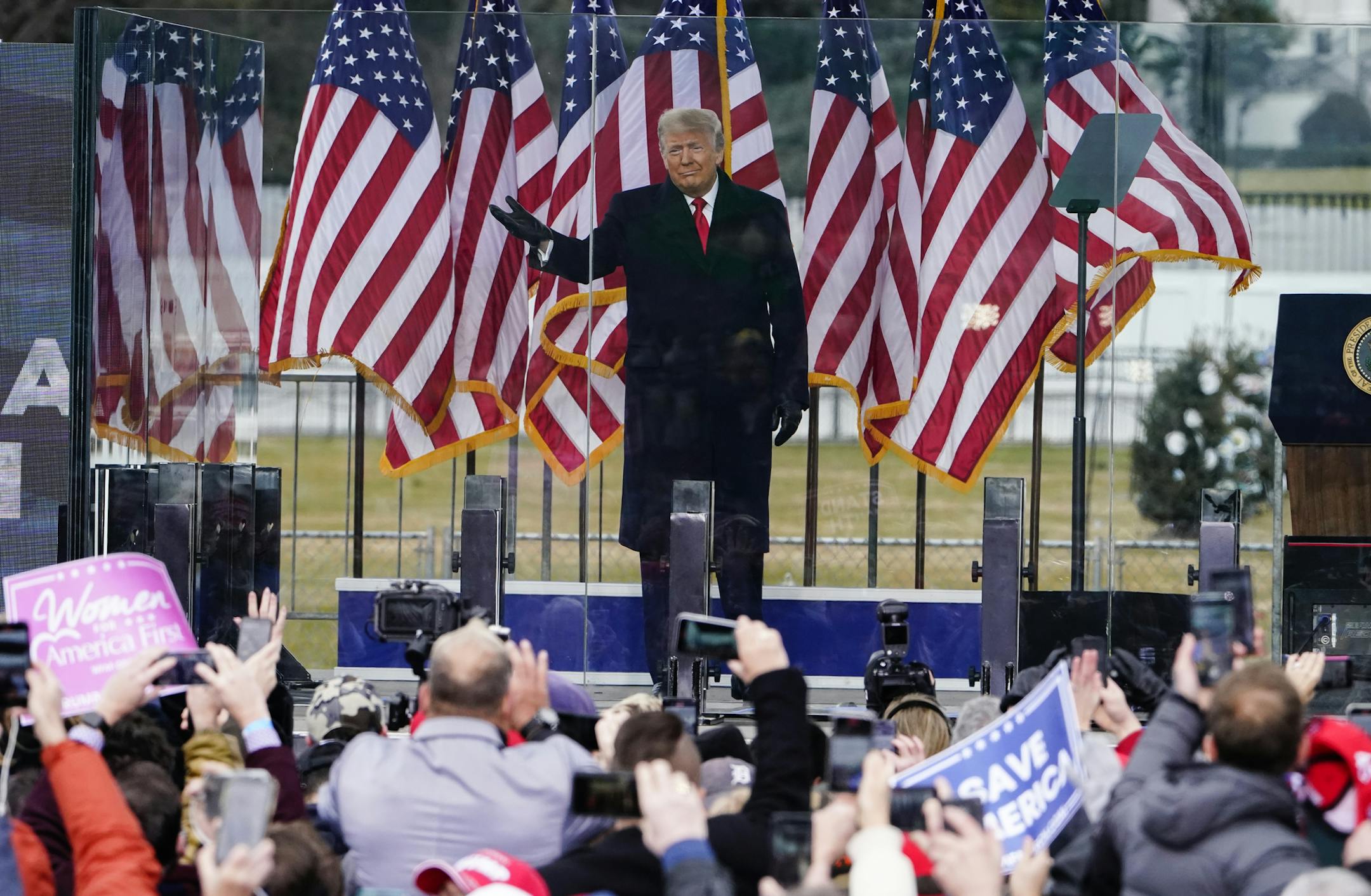
Donald Trump has routinely declared his presidency the most amazing in U.S. history. And now, having at last found the limit of malpractice that could be endured — and with his multiplying enemies seemingly determined to help Trump exit with a bang and not a whimper — he seems certain to surpass all his estimable predecessors in at least one way.
Trump will undoubtedly go down, way down, as the sorest political loser in the long and storied history of American sore losers.
This is no small distinction. Nearly a century ago, in 1926, famed bare-fisted Baltimore Sun columnist H.L. Mencken noted that the long-suffering subjects of monarchies and despotisms have always enjoyed one advantage over citizens of democracies.
"Unsuccessful aspirants" for the thrones of empires, Mencken wrote, are typically beheaded or at least "exiled to Paris." But American political competition, he lamented, "fills the land with disappointed and embittered [office seekers] savagely gnawing their fingernails." Defeated presidential hopefuls and ousted incumbents go on to spend years, even decades, "exhibiting their ghastly wounds and bellowing for justice."
These days, America seems to need regular reminders that little is entirely new in its current political miseries and malfunctions. The "public nuisance" produced by political "soreheads" was severe enough 96 years ago that Mencken made a modest proposal:
"Let us have a Constitutional amendment providing that every unsuccessful aspirant for the Presidency, on the day his triumphant rival is inaugurated, shall be hauled to the top of the Washington Monument and there shot, poisoned, stabbed, strangled and dissembowled and his carcass thrown into the Potomac."
Nobody listened — fortunately (I guess).
The history of American also-rans began early, and hopefully. John Adams, America's second president, became the first to be defeated in a re-election bid. But he got over his bitterness and rekindled his friendship with Thomas Jefferson, who had ousted Adams, which yielded a brilliant correspondence that continued for decades.


