
Opinion | Public media’s ‘elitism’ is a result of funding failures

But if we take some time we can create a robust, diverse system.

September 7, 2025 at 9:00PM
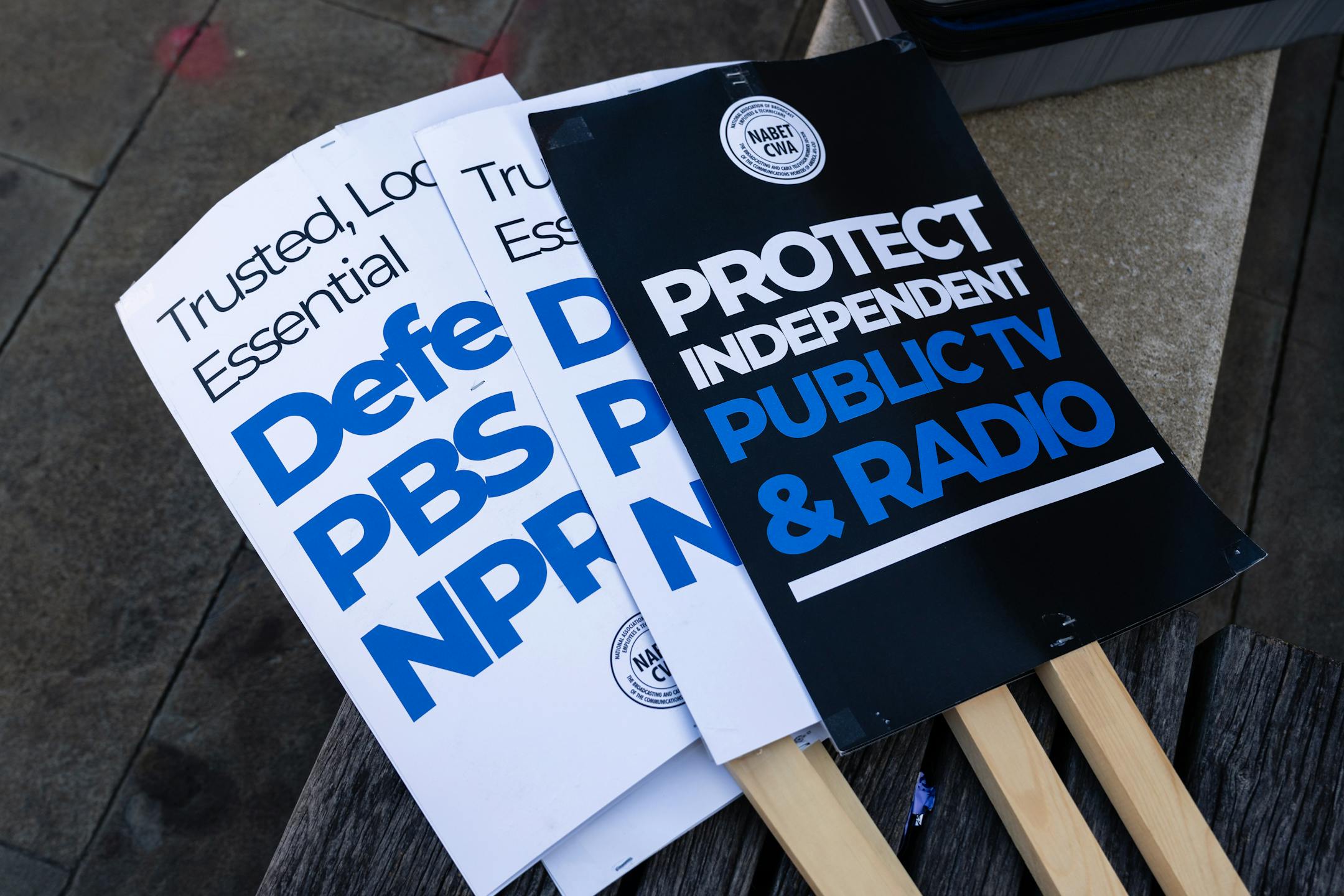
Signs supporting NPR outside its headquarters in Washington on March 26. (ERIC LEE/The New York Times)

Opinion editor’s note: Strib Voices publishes a mix of guest commentaries online and in print each day. To contribute, click here.

•••

Recently, a majority of Republicans in the House and Senate voted to strip back $1.1 billion from the Corporation for Public Broadcasting (CPB), signed into law on July 4. Shortly after, CPB announced its closure. This defunding will deprive low-income, rural populations — people they claim to value — of a crucial source of information. It also deals a large setback to coverage for low-income communities of color. Ironically, any elitism that Republicans charge public radio with is a result of their own attacks on the system.

Due to decades of budget cuts led by Republican administrations, public radio has become reliant on a set of mostly white, affluent donors for its financial survival. Underfunding by the state leads to a dependence on these donors, which promotes their personal attachments to public radio at the expense of serving a broader public. The dependence on these donors makes it difficult for truly racially inclusive programming.

I conducted a sociological research project on racial dynamics in the public radio industry between 2020 and 2022. During that time, I interviewed 83 public radio employees of color. When I asked who they are speaking to when on air, many of these interviewees noted that they conceive of their audience as older and white. This conception has consequences for the kinds of stories they feel they can and cannot make.

The challenges these employees of color face are rooted in funding. Since its founding, public radio in the United States has been mired in a cycle of financial crises.

Right-wing legislatures and politicians regularly spread rhetoric about seeking to “defund public media.” A common counter to this rhetoric has developed: that public media allocations are only a drop in the bucket when it comes to overall government funding, and outlets are supported mostly by donors and sponsors. This argument is often coupled with pledge drives: We rely on “listeners like you” to save public radio.

This cycle keeps public media in a defensive position; rather than seeking more government funding, defenders of public radio call for legislators to not further chip away at the meager public funding, then turn to private donors and sponsors for help. And again, this cycle has consequences for who has influence in public media. This dynamic — the emphasis on looking to listeners as donors – leaves working-class audiences across racial demographics out of the loop.

In the months and years to come, we need to build up what civil rights lawyer Sherrilyn Ifill calls our democratic imagination. As she urged in her blog post reflecting on President Donald Trump’s re-election, “we must dedicate time to expanding our thinking and our knowledge, and to building up our democratic imagination. That means our work is to imagine, to ally, to experiment, restore, befriend, study, read, write, serve, and create. Every one of us. Even as chaos swirls around us.”

So let’s imagine together today: What could a robustly funded public media sound like in the future — one that brings these voices to the table? Based on my research on donor relations to public media, one path forward is to promote a much broader understanding of civic engagement around media policy. While individual donations to local stations are important, particularly in times of fiscal crisis, they cannot be mistaken for the only way of being a meaningful contributor to public media.

Campaigns like Protect My Public Media have shown other ways of supporting public radio, like calling and emailing Congress members and articulating the value of public funding. In a new legislative session, could we imagine a major campaign to not only restore funding to public media, but to fund the system more robustly than it ever has been?

Such a campaign would require us to think in more global terms about what public media could be. The United States relies on a more variable and thus more tenuous system of philanthropy and member patronage as compared with its peer institutions in Great Britain, Australia and Canada: the BBC, ABC and CBC. The U.S. spends far less per person on public media than many other countries, including less-developed countries. These examples may give us hope — other nations have clear financial models, ready for study if we are ready as a populace to build up our democratic imagination, and to treat media and information as a public good.

Laura Garbes is an assistant professor of sociology at the University of Minnesota who studies race and racism in the public radio industry. Her book, “Listeners Like Who? Exclusion and Resistance in the Public Radio Industry,” releases with Princeton University Press on Sept. 9.

about the writer

about the writer

Laura Garbes

More from Commentaries

See More
card image
Leila Navidi/The Minnesota Star Tribune

In government leadership, young people need to be ready to accept the torch, but previous generations can’t slow down their leg, or delay the pass.

card image
card image