

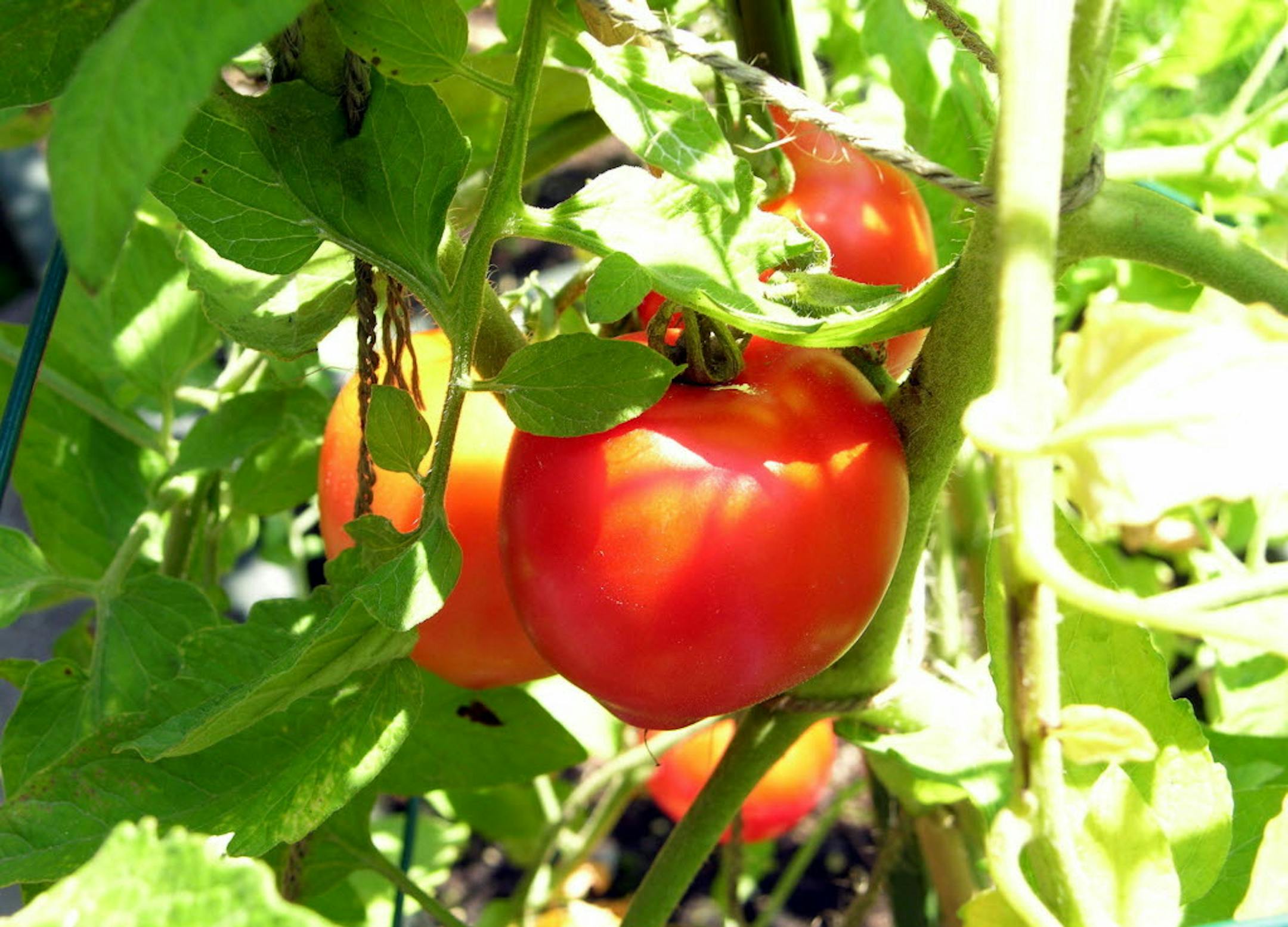
At last it's tomato-picking time. You pluck the ripe red globe off the plant, only to find a mushy black spot at the bottom of the fruit. Ugh!
Just as tomatoes ripen, some plants seem to take a turn for the worse. Leaves get spots or turn yellow. Entire branches dry to a crinkly brown. Fruit cracks and develops hard brown scars. And there's the perennial problem of blossom end rot, described above.
The good news is that tomatoes are pretty tough plants that will keep producing even as they fight disease and environmental issues. But if gardeners want better fruit, they need to help the plants along.
It's too late now to make up for earlier mistakes. Tomatoes that are planted too close together and in the same area year after year are prone to leaf diseases linked to humidity and spores that persist in the soil. If you must plant tomatoes in the same place every year, mulch the plants to prevent splashing, and water with a hose at the base of the plant.
But it's August, and your tomatoes may already be infected with leaf spots and blights. If so, remove those leaves and branches on a dry day, and get them out of the garden along with any fallen leaves. Tomatoes can lose about one-third of their foliage before their ability to bear fruit suffers.
Blossom end rot is often a surprise to gardeners because the tomato, at first glance, seems perfectly fine. Though the disorder is linked to calcium deficiency, the problem often isn't with soil but with the plant's inability to take up the nutrient. This happens most often in hot dry weather when watering is irregular.
Some varieties of tomatoes are more prone to blossom end rot, and the disorder also is linked to excess fertilization. Folk remedies like putting eggshells in the soil don't help, but regular watering does.
The problem often seems to ease on its own as the season progresses.


