

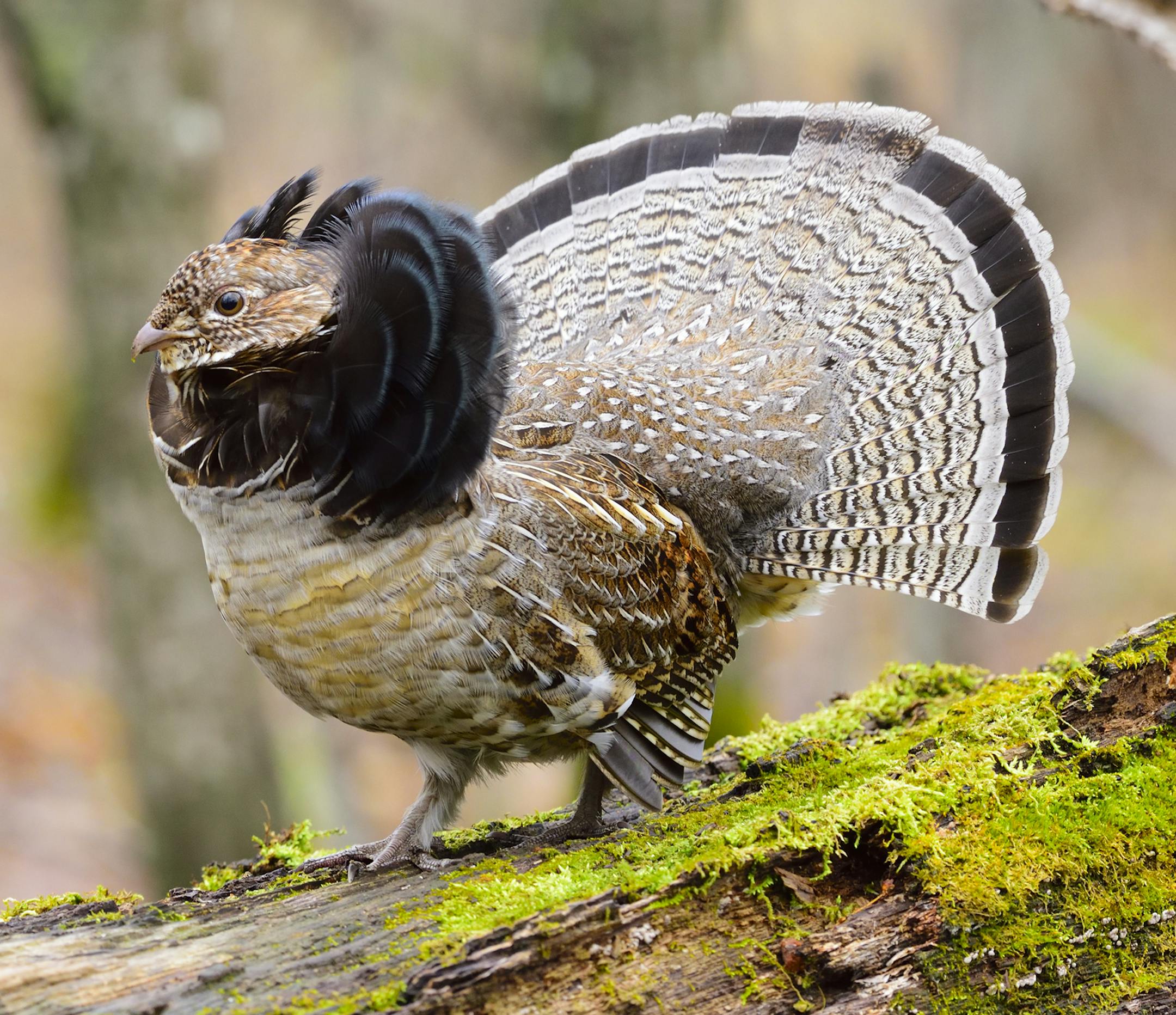
Upland game bird managers in Minnesota are logging trees and mowing down brush to create better habitat for grouse and American woodcock this year in a trio of locations, including state-owned Whitewater Wildlife Management Area near Altura.
The southeastern Minnesota hunting destination hasn't been as well populated with grouse and woodcock as it could be because much of the surrounding forest has matured into veteran woods lacking openings and plant diversity needed by the birds. Ted Dick, upland game bird coordinator for the Minnesota Department of Natural Resources (DNR) in Grand Rapids, said the Whitewater project doubles as a demonstration in the region to encourage other public and private forest-clearing plans.
"We have an interstate group that's trying to promote more cutting," Dick said. "The driftless area in the southeast region used to be a great grouse area."
Anchored by $230,000 in taxpayer money from the Outdoor Heritage Fund and matched by a contribution of $40,000 from the Ruffed Grouse Society, the work will be staged on 1,100 acres of state, county and U.S. Forest Service lands. The partnership will subsidize aspen logging at Whitewater while also paying to grind, cut and shear brush and small trees in Itasca County, as well as on forest land inland from the North Shore, north of Two Harbors. Biologists with the Minnesota DNR also are involved.
"These projects are not extremely expensive and the birds really need these openings," said Bailey Petersen, a DNR woodcock specialist based in Two Harbors. "And anything that helps woodcock habitat also helps grouse and moose for us in northern Minnesota."
Shearing, mowing and logging openings in the woods provides vital forest regeneration for upland birds. For woodcock, in particular, the openings provide space for spring mating rituals. Males fly acrobatically, strut and make buzzing or "peenting" sounds to attract females.
Lindsey Shartell, forest habitat research scientist for the DNR in Grand Rapids, is in her second year of studying the effects of mowing clearings for the game birds in Itasca County. The new cuttings, including some in her study area, will help identify the most wildlife-friendly rate for mowing. Is once every five years enough? Is mowing even necessary when nearby trails provide open space?
Petersen said the ideal habitat for grouse and woodcock includes clearings surrounded by dense alder thickets, young aspen or other dense vegetation. Grouse and woodcock need diversity of age classes when it comes to forest stands.


