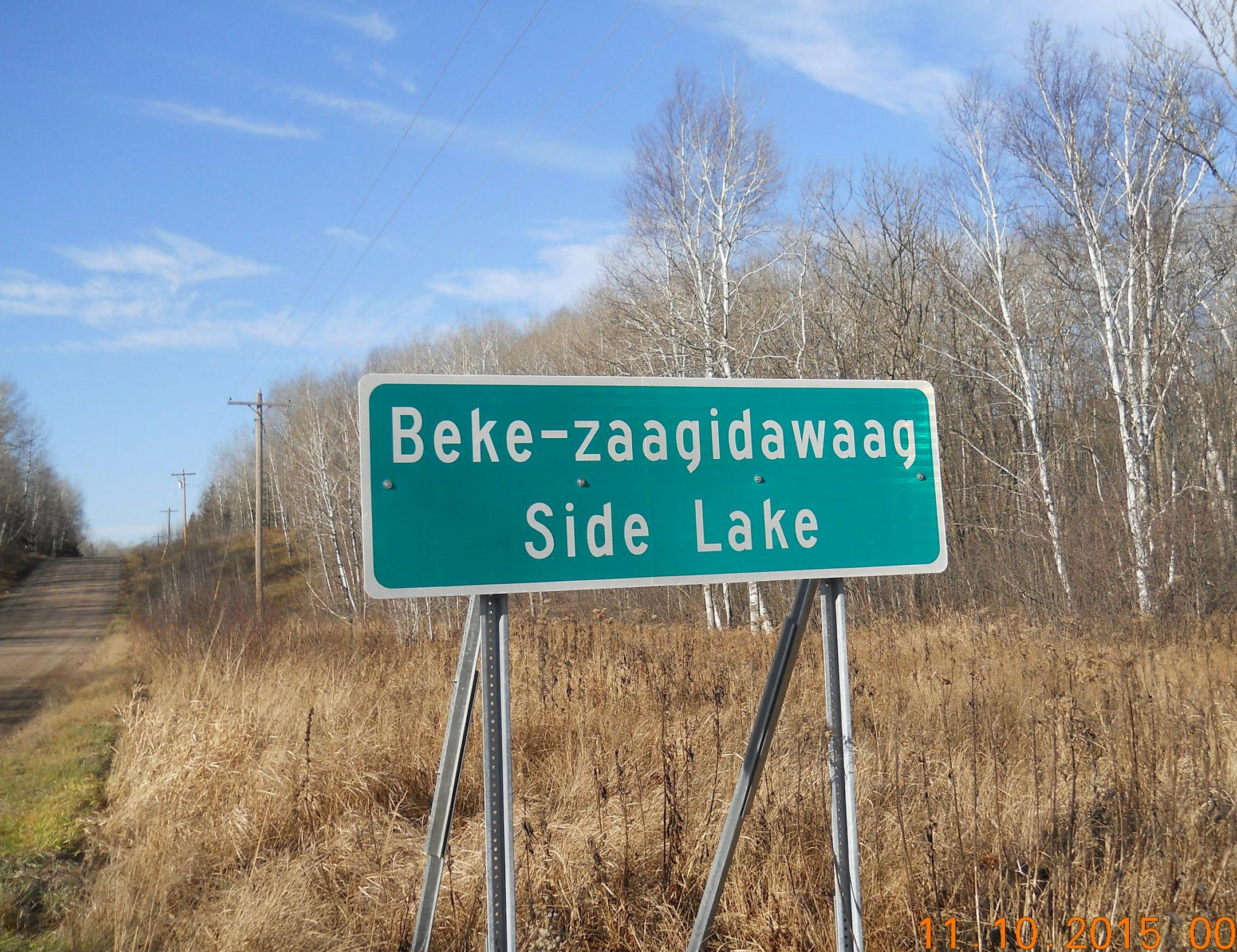
The sign says "Elbow Lake." But the White Earth Band of Ojibwe wants that sign to reflect the lake's Ojibwe name: "Gaaodooskwaani Gamaag."
The band has asked Becker County officials to let them install a dozen bilingual signs along county roads as part of an urgent effort to preserve the language. They hope to start by putting signs on the reservation, in northern Minnesota, eventually placing them beyond its borders.
The signs would boost public awareness of the Ojibwe language and culture, said Mary Otto, White Earth's assistant education director. And they'd mean something special to the band's children, who learn Ojibwe words and phrases in class, she said.
"That they could see their language and part of their culture … on the roads they drive on every day on the school bus or with their parents," Otto said, "it would instill pride and identity for them."
Such signs are becoming more common in northern Minnesota. In recent years, the Fond du Lac Band of Lake Superior Chippewa worked with Carlton and St. Louis counties to install bilingual road signs.
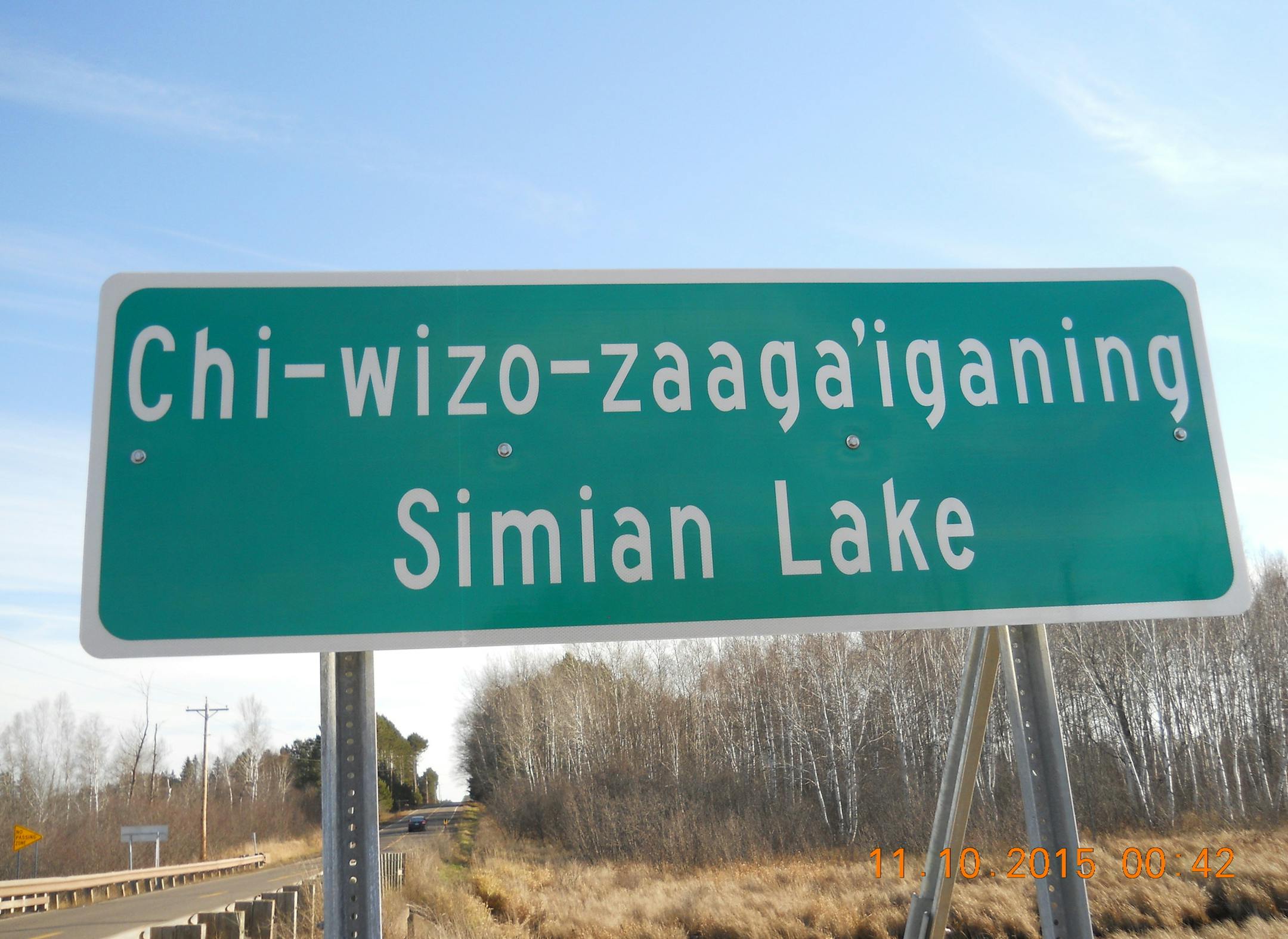
A simple green-and-white sign beside Simian Lake in St. Louis County now reads "Chi-wizo-zaaga'iganing" and below it "Simian Lake," a photo shows.
But at a Becker County board meeting this month, several commissioners raised concerns that such signs could be confusing, especially if they're placed beyond reservation borders.
If people see a sign in Ojibwe, they might believe that they're on tribal land, County Commissioner Ben Grimsley said.