

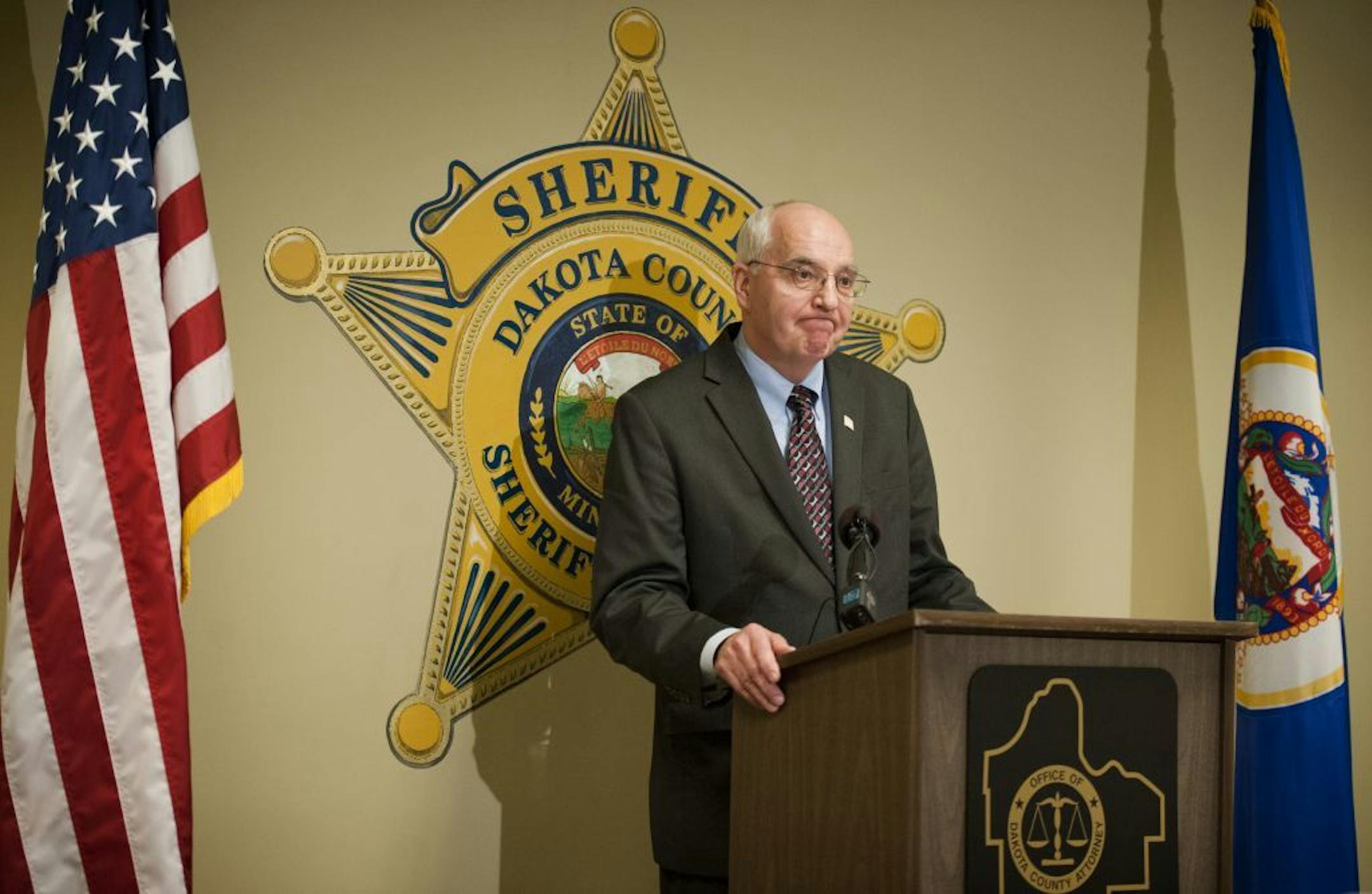
When jury selection begins Monday in the trial of a national right-to-die group accused of helping an Apple Valley woman kill herself, much will have changed since Dakota County Attorney James Backstrom first filed charges three years ago.
Just one of the four people originally charged will be in the courtroom. Meanwhile, the case that prosecutors can present will be limited in scope by a series of rulings issued as the case worked its way through the court system.
Since Backstrom charged Final Exit Network Inc., a Georgia nonprofit, and four affiliates with assisting the 2007 suicide of 57-year-old Doreen Dunn, charges were dropped against one member, another died, and the trial of a third was suspended because of her poor health. Left to stand trial is the corporation itself and Lawrence Egbert, an 87-year-old Baltimore man who served as the group's medical director.
Dunn reached out to the Final Exit Network after 10 years of chronic pain related to a medical procedure. When her family found her dead in her home in May 2007, both police and a medical examiner believed she died of natural causes.
But the Georgia Bureau of Investigation shared evidence with Apple Valley police in 2009 that Dunn sought the Final Exit Network's consultation in ending her life.
Jury selection in Dakota County District Court is expected to take most of the week and the trial itself another two weeks. The case picks up nearly a year after the Minnesota Supreme Court declined to hear an appeal by prosecutors, who challenged a state Court of Appeals ruling that a law against advising or encouraging one's suicide violated free speech rights.
Now, prosecutors can allege only that the Final Exit Network and Egbert directly assisted in Dunn's suicide, which could include physical help or the use of speech. The Final Exit Network and Egbert also face charges of aiding and abetting assisted suicide; interference with a dead body, and aiding and abetting interference with a dead body. Roberta Massey, 69, of Bear, Del., is still charged with aiding and abetting assisted suicide, but a judge suspended her involvement because of poor health and a yet-to-be-scheduled hearing will determine if she ever goes to trial.
Dakota County District Judge Christian Wilton also ruled last month that the prosecution cannot characterize Dunn's illness as terminal or near-terminal nor can it introduce evidence of Dunn's clinical depression. Robert Rivas, the Final Exit Network's attorney, argued that such evidence would be a technique to elicit sympathy from jurors.


