

BRAINERD, MINN. – At this time of year, the words "buck sign" are tossed around like autumn leaves in a November gale.
The reference here is not to the many orange signs posted along Minnesota highways that warn drivers of possible deer crossings.
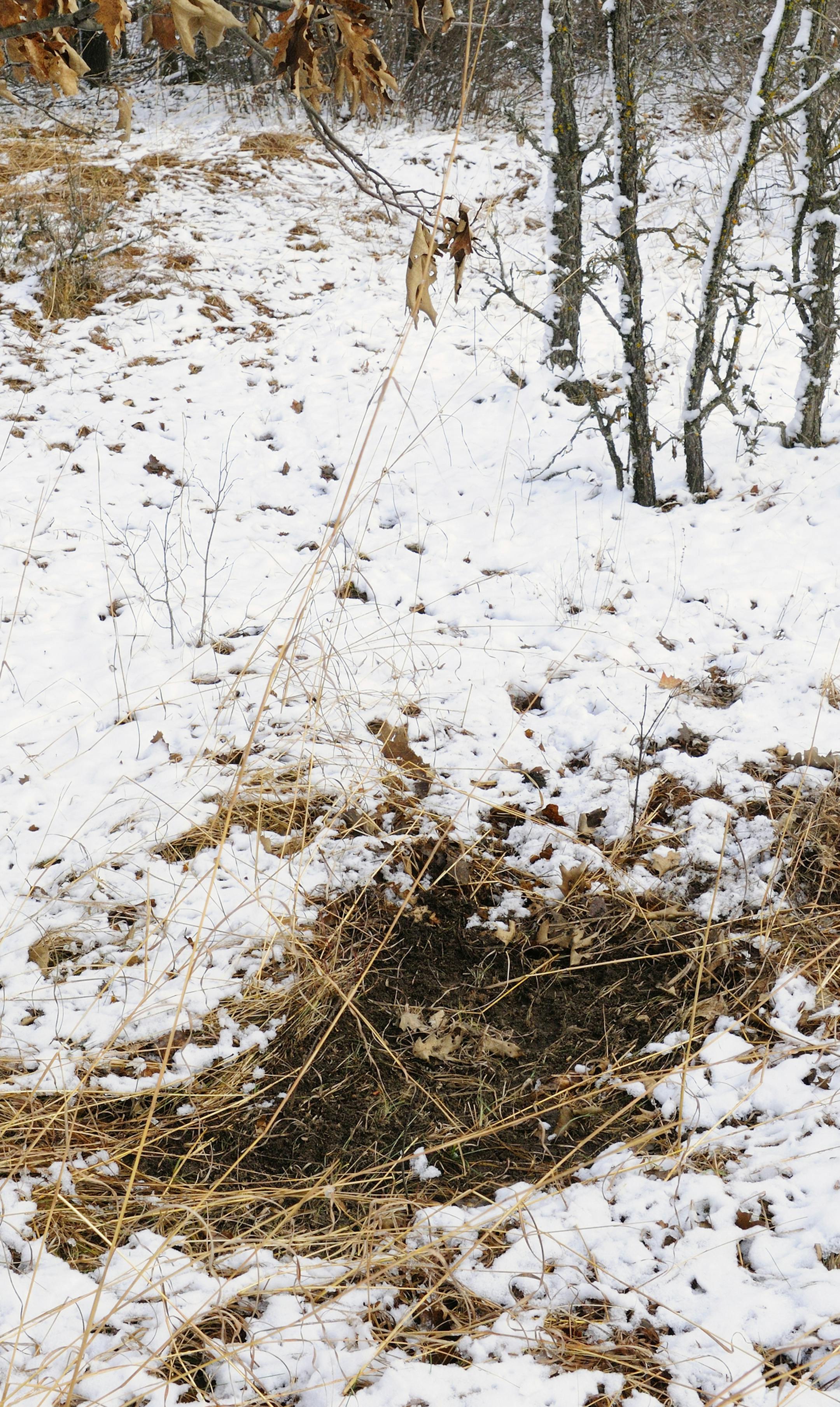
Instead, "buck sign" is a term that hunters use to describe antler rubs on small trees, or saplings, and scrapes made in the ground with bucks' hoofs. Both are calling cards, or "signs," made by amorous white-tailed bucks in preparation for the fall breeding season, or rut.
Let's talk about rubs first.
Sometimes called "antler rubs," these are both visual and olfactory signposts left by bucks on saplings during the rut.
While trees with bark "rubbed off" are easily spotted by deer and people, humans are incapable of analyzing the scent components of rubs, and therefore can't fully interpret the message, or sign, a buck is leaving.
Bucks can leave scent on saplings while rubbing trees because they possess specialized glands in their foreheads. This allows other deer visiting the rub to scrutinize data about the rub maker, such as a buck's social status.
Bucks themselves, while rubbing, frequently stop to sniff rubbed-off portions of a tree.


