

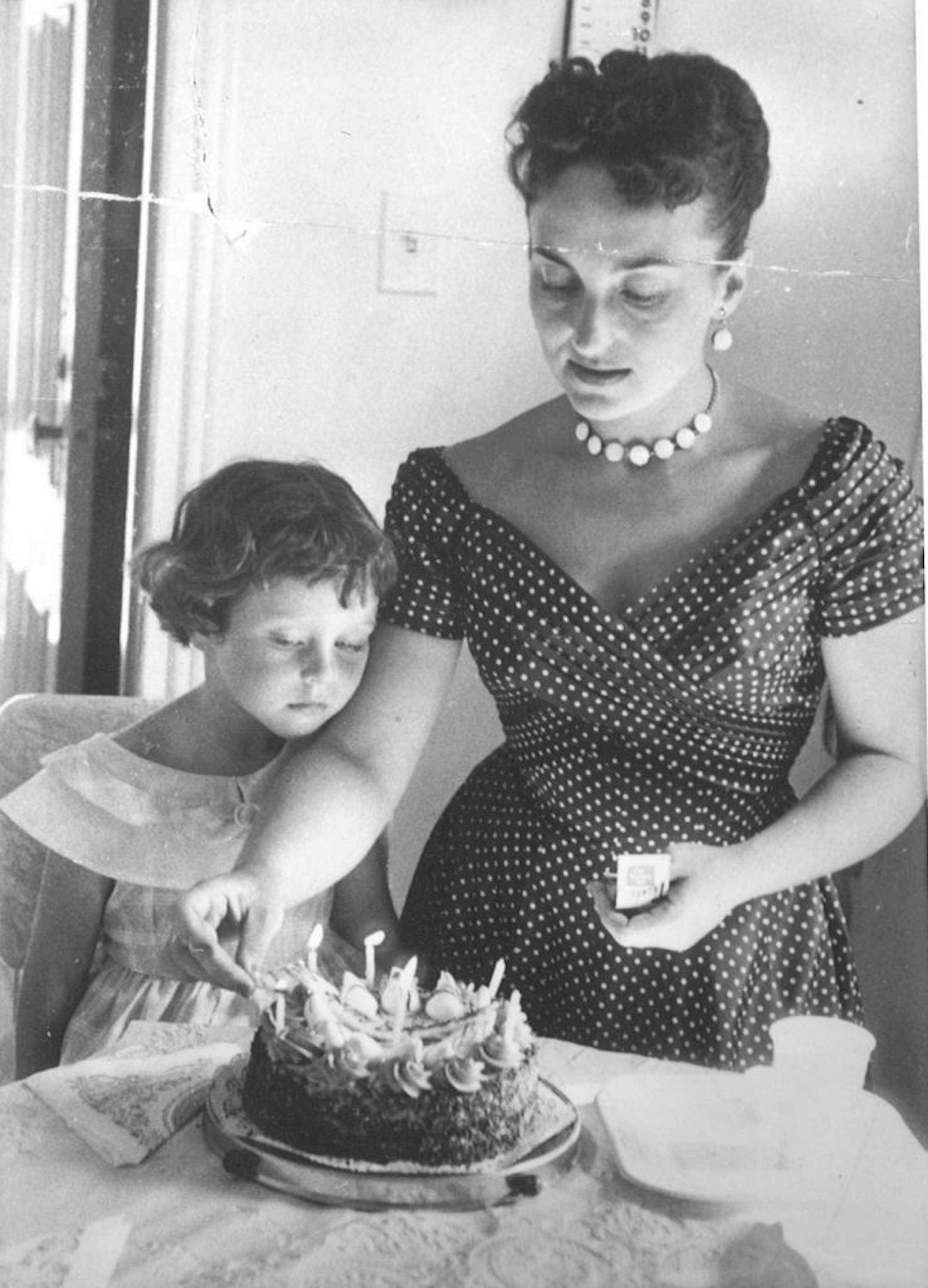
My mother's cooking was legendary. A Hungarian immigrant herself, she cooked as though our family were royalty of the Austro-Hungarian empire: chicken paprikas, thick soups, veal stews and, of course, goulash always accompanied by thick slices of rye bread.
My mouth waters as I think about my mom's tour de force dessert: paper-thin and perfect palacsinta, the famous Hungarian-style crêpes, filled with ground walnuts and sugar, or chocolate, or a ricotta-like cheese with lemon and sugar (my favorite). No other food would do for her family. Anything non-Hungarian was sadly inferior.
My mother's grandest performances took place when guests were invited. She timed her magnum opus perfectly, the kitchen spotless, just as guests arrived at the door. In other families there might be chatting, a drink perhaps, some munchies and the finish of a football game on television. My mother considered such activities out of the question. Our guests were invited for one thing: eating. Everyone was ushered directly to the table while my mother waited on high alert, ready to serve. It shouldn't get cold!
By this time, she would be impatient and vexed, making demands like a drill sergeant. My mother was offended if we protested the large portions she doled out. "Have more!" she'd cajole and would keep the spoonfuls coming unless we protested, "No! I DON'T WANT ANY MORE!" and would pull our plates out of her reach. Offended, she'd retort, "Janetkém, you eat like a bird. You are too thin!"
My mother always began with a thick Hungarian soup teeming with meat and vegetables and perfectly shaped little dumplings. She worried about the main course and couldn't risk the possibility that someone wouldn't like what she had to offer. Problem solved: There would be two main courses.
Oftentimes, she would serve rakott kaposzta, the quintessential Hungarian comfort food. Though labor-intensive, the results are rich and delicious (recipe at right). The first layer is sauerkraut that has been steeped in a paprikas sauce until it is deep red and flavorful (lots of caramelized onions, tomatoes and bell peppers). The second layer is cooked rice. A beef paprikas layer follows and, to add to the excess, all the layers are repeated. Another layer of sauerkraut tops the beef and, like icing on a cake, the whole dish is covered with a generous layer of sour cream, garnished with chives. The entree is then baked to perfection. (Kosher households omitted the sour cream.)
For my mom, rakott kaposzta was merely one main course, woefully inadequate; hence it would be paired with a scrumptious veal stew.
On top of this Hungarian abundance, every Jewish occasion also revolved around food: weddings, bar mitzvahs, the high holy days of the New Year, and Yom Kippur, our day of atonement. We had the delectable Hungarian food and we had all the Jewish traditional delights, as well.


