

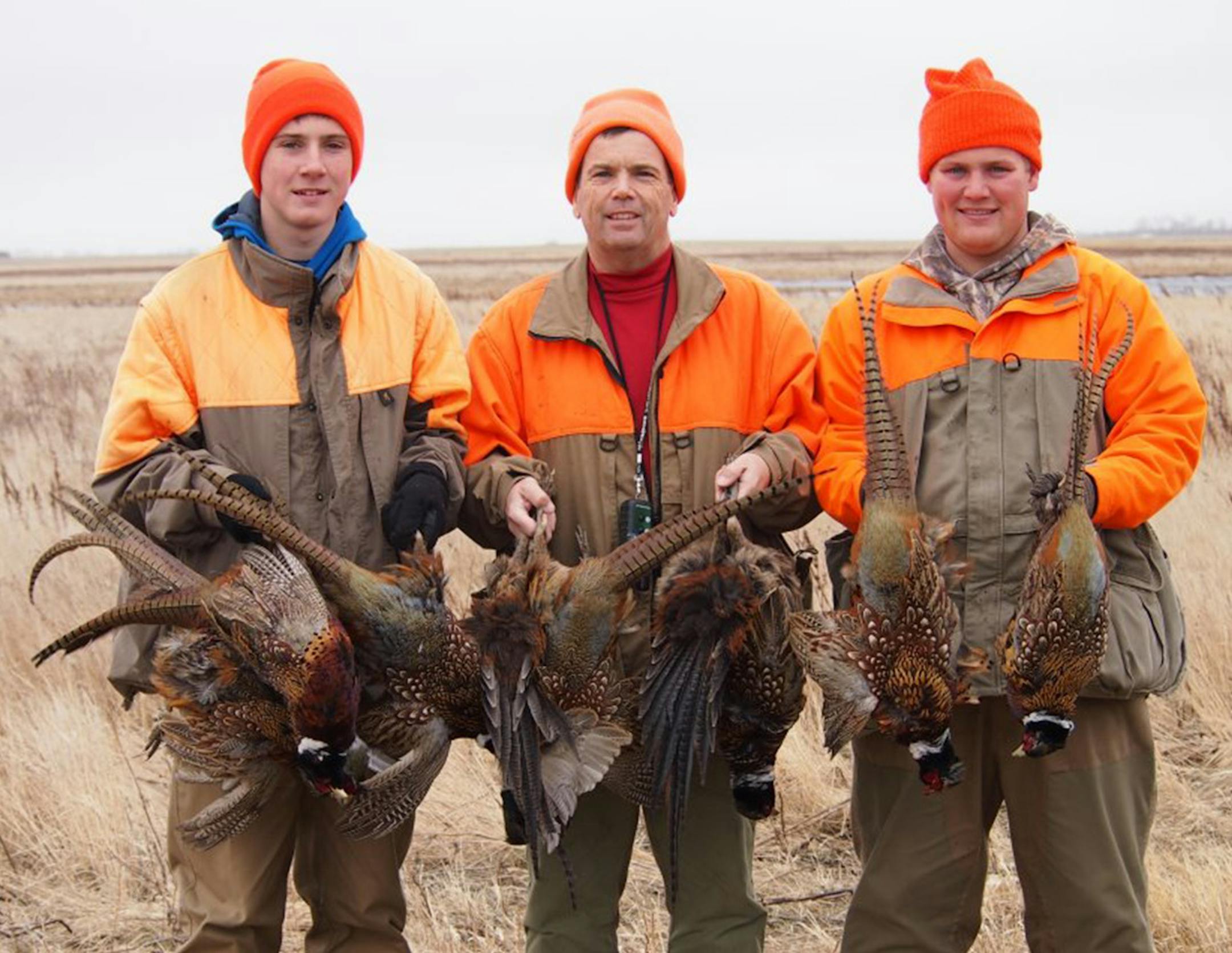
Last autumn, on Minnesota's warm and windy pheasant opener, a rooster flushed from a grassy hillside near a picked bean field. In that split-second, and acting on instinct honed over many years of upland hunting, Chris Buckingham swung on the bird, slapped the trigger and watched the rooster tumble to the ground.
Seconds later, his young springer spaniel retrieved the bird to hand.
"I sat on the hillside and savored the moment a little bit," said Buckingham, 54, of Glenwood in west-central Minnesota. "I had to get out there to prove to myself I could do it again. My doctors advised me to take it easy, but I'm a little bullheaded. I thought it was time. I felt good enough to go."
But this was no ordinary pheasant opener. Buckingham was hunting for the first time with a new organ. A year ago this month, and with his life in danger, Buckingham had a liver transplant, courtesy of his "living donor" and wife, Diane. Today, despite a few setbacks typical of organ transplants, Buckingham said he feels deep gratitude for his new lease on life.
"I'm thankful to be able to get outdoors and do the things I love to do with my family," he said. "I wasn't sure I'd ever hunt again. Truth is, right before my transplant, I didn't even care … because I was so sick."
Like many Minnesota kids, Buckingham grew up hunting with his father. Over the years he developed a particular fondness for upland hunting, which he passed on to his sons, Dylan, 22, and Brett, 18. "I love walking and I love watching the dog work," he said. "Pheasant hunting is my passion."
Over the past decade, however, Buckingham's health started to deteriorate as his liver enzyme levels rose — a mysterious condition, he said, that likely dates to his early teens. Still, he continued to go on hunting trips. "I felt like I was walking around with the flu all the time," he said, recounting his last decade before his transplant. "When I'd go on a trip, I was the first one to bed and the last one to get up."
Last February, Buckingham started to bleed internally and was airlifted to the Mayo Clinic in Rochester. A stent was eventually inserted through his liver — a temporary fix for a chronic problem. Buckingham needed a new liver and was put on a transplant list. But he'd likely have to wait two to three years. Ironically, the stent surgery improved his condition but moved him down on the donor list. "The sicker you are, the higher you're put on the list," he said.


