

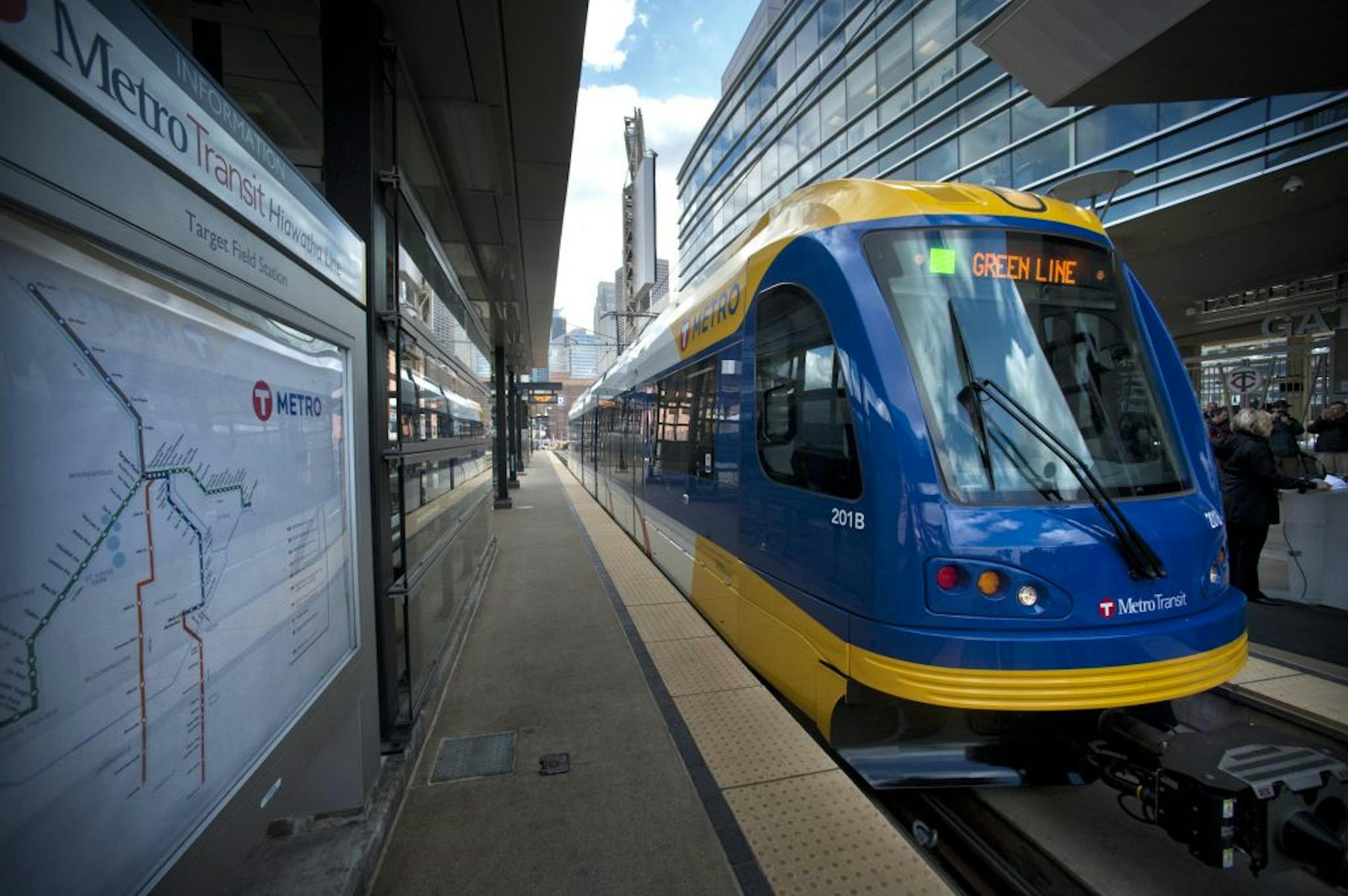
A bold proposal on transit funding from Gov. Mark Dayton offers the potential to not only break a chronic legislative logjam, but also reduce traffic jams and make the metro area more economically competitive. With growing support from citizens and business leaders, the Legislature should react positively to the proposal.
Funding transit projects usually involves a mix of local, state and federal funding. In 2008, five metro counties -- Hennepin, Ramsey, Dakota, Anoka and Washington -- invested in the future by adopting a quarter-cent sales tax for transit projects.
The federal government has also shown a willingness to invest, by funding up to half of key projects such as the Central Corridor light-rail line. But it's been more difficult to get the state government to consistently pay its share, even though it's usually only 10 percent of a project.
Dayton's plan would effectively take the Legislature out of the equation, and instead count on the metro counties that most directly benefit from expanded transit options. A quarter-cent sales tax would be added to sales in seven metro counties -- the original five plus Carver and Scott. The quarter-cent sales tax that's already in effect for the five counties would remain (although there is a long-term opt-out provision), meaning a half-cent sales tax would be in effect for those counties.
The result would be dramatic.
According to Metropolitan Council calculations, a more consistent funding stream would result in $350 million in new transit-dedicated revenue in the 2014-2015 biennium and $500 million in 2016-2017. It eliminates the need for a 2014-2015 general fund increase request of $18 million, and provides a one-time, $46.8 million reduction from current general fund spending.
The new revenue would fund the remaining $118 million of the state's share of the Southwest light-rail line, and fund capital and operating expenses of future transitways and expanded bus service. The revenue would also cover all funding shortfalls for current bus and rail commitments.
In addition, the plan would expand the regional bus system by 1 percent annually, equating to more routes, increased frequencies and longer service hours. And over the next 20 years a major strategic build-out of the transit network would be completed.


