
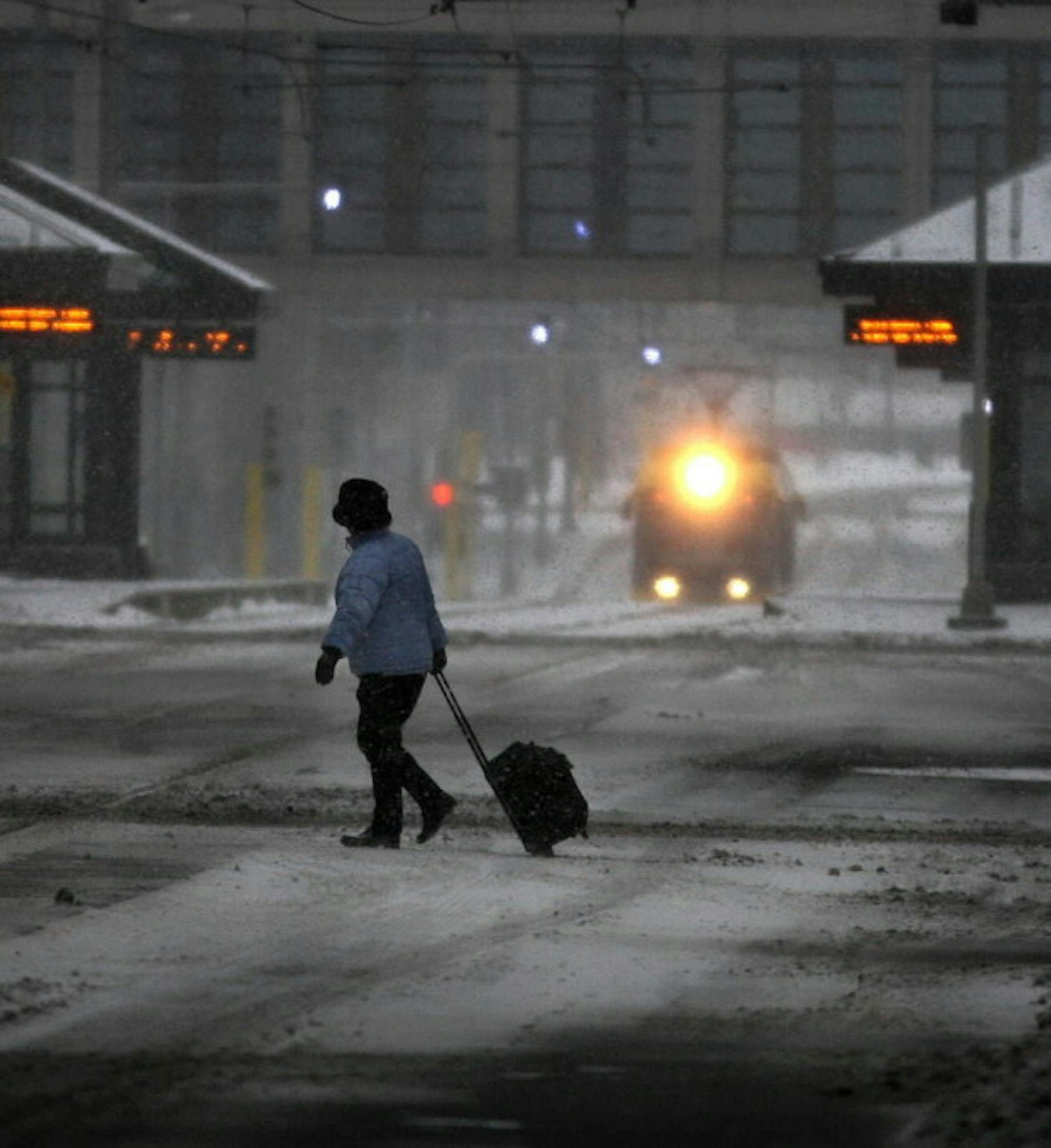
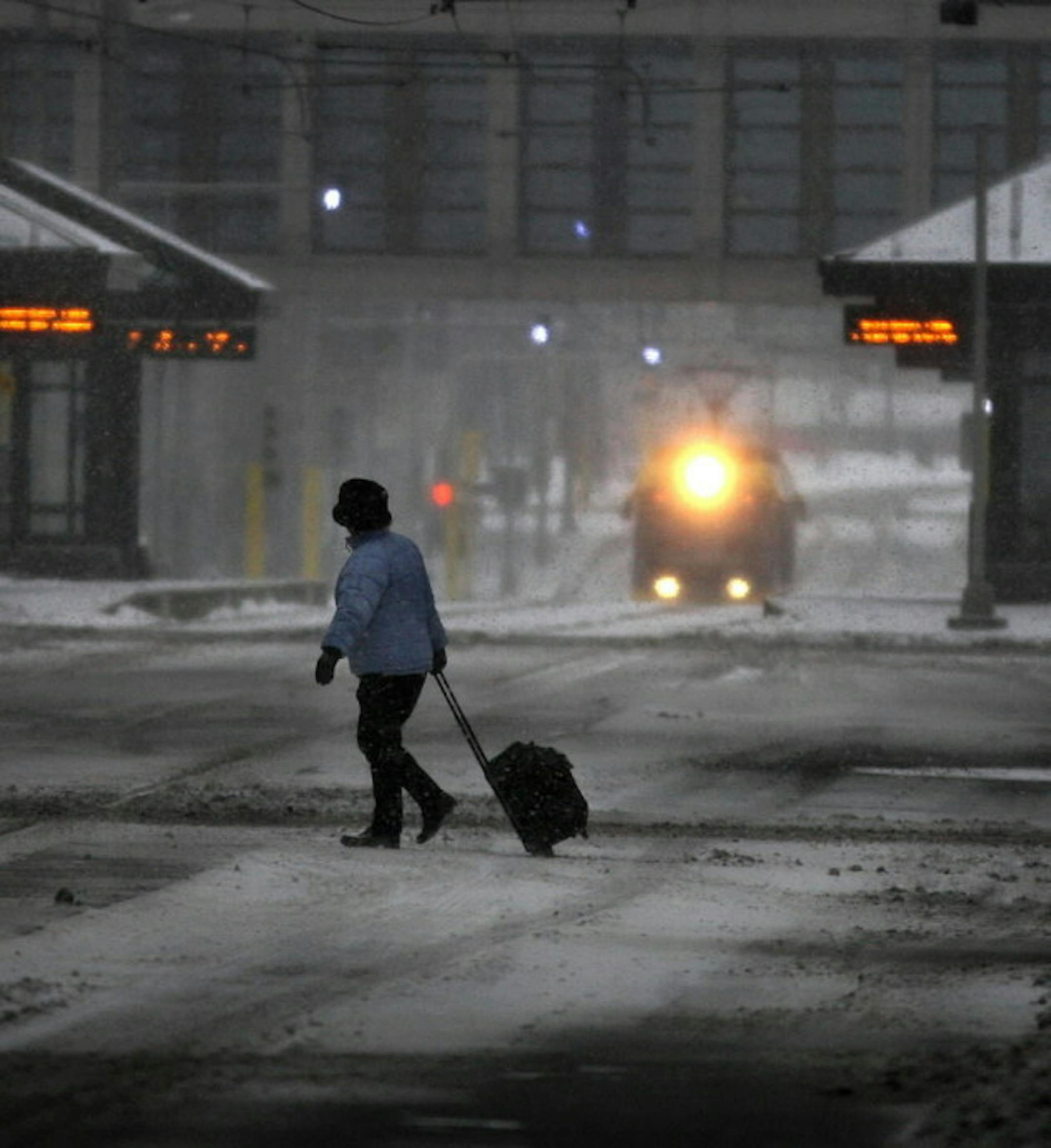
Transit agencies, MnDOT prepare for a slow afternoon commute

Short of having one of those Amazon drones featured Sunday on 60 minutes deliver you home in 30 minutes or less tonight, the best option for commuters traveling by car will be to leave work early and face the fact that it will take lots of extra time.

December 5, 2013 at 11:14AM
(The Minnesota Star Tribune)

Short of having one of those Amazon drones featured Sunday on "60 Minutes" deliver you home in 30 minutes or less tonight, the best option for commuters traveling by car will be to leave work early and face the fact that it will take lots of extra time.

The same advice applies to those going by bus or rail.

"Errrrrrr," said MnDOT spokeswoman Bobbie Dahlke when asked to describe Wednesday's morning rush hour and preview tonight's commute home.

MnDOT had a full compliment of plows clearing the roads and dropping chemicals in the metro area all afternoon and they'll remain on the roads through Thursday. But that does not mean the roads will show bare pavement,Dahlke said. With snow predicted to fall until 5 p.m., "it will be a slow commute. Things could be tricky. Our goal is to make the roads passable and safe."

As traffic goes, so does mass transit in most cases. The Minnesota Valley Transit Authority has extra buses parked in "strategic locations" to help move passengers along should afternoon buses start running late due to heavy traffic or inclement conditions, said spokeswoman Robin Selvig.

Morning service was generally on time, but some local routes were running up to 5 minutes late, she said.

Metro Transit saw up to 60 percent of its routes behind schedule at the peak of the morning rush hour. Light rail trains also were 5 to 10 minutes behind due to a switching problem on south end of the line. Trains are back on schedule now.

For this afternoon, Metro Transit has extra buses ready to roll and drivers on the ready to be dispatched from its five garages. A Winter Incident Commander at the agency's headquarters in Minneapolis will monitor Metro Transit's 125 routes, and send extra buses on routes that begin lagging, said spokesman John Siqveland.

He cautioned, however, that even with extra buses to fill the gap, buses can still run late and overall trip times could still take longer than usual. Drivers will use transit advantages such as ramp meter bypasses and bus shoulder only lanes when possible to speed things along. But "it's safety first," he said noting that buses can only move at the speed of traffic when using regular lanes.

Southwest Transit parks six to seven extra buses near the University of Minnesota and near downtown to make sure passengers get home. "We maximize all of our resources," said Len Semich, the agency's CEO. He also said drivers start their shift 30 minutes early to get to their routes on time.

Riders can get up-to-the-minute train or bus status by using the NexTrip application or by calling 612-373-3333. Both features include information for Metro Transit, MVTA, Southwest Transit, Maple Grove Transit and Plymouth Metrolink. The agency will also post information about delays on its Facebook page and the Metro Transit website

Rail lines fared better than buses or traffic Wednesday morning. There were no delays on the Northstar Commuter line, but there were more riders than usual, Siqveland said. Preliminary numbers indicate 3,600 rides will be provided on Wednesday. That is above the daily average of 2,537 rides provided on weekdays during December of 2012.

The Blue Line suffered delays of 5 to 10 minutes during part of the morning rush due to a switching problem on the south end of the line. That has been fixed and all trains are back on schedule, Siqveland said.

about the writer

about the writer

Tim Harlow

Reporter

Tim Harlow covers traffic and transportation issues in the Minneapolis-St. Paul area, and likes to get out of the office, even during rush hour. He also covers the suburbs in northern Hennepin and all of Anoka counties, plus breaking news and weather.

See Moreicon

More from No Section

See More
FILE -- A rent deposit slot at an apartment complex in Tucker, Ga., on July 21, 2020. As an eviction crisis has seemed increasingly likely this summer, everyone in the housing market has made the same plea to Washington: Send money — lots of it — that would keep renters in their homes and landlords afloat. (Melissa Golden/The New York Times) ORG XMIT: XNYT58
Melissa Golden/The New York Times

It’s too soon to tell how much the immigration crackdown is to blame.