

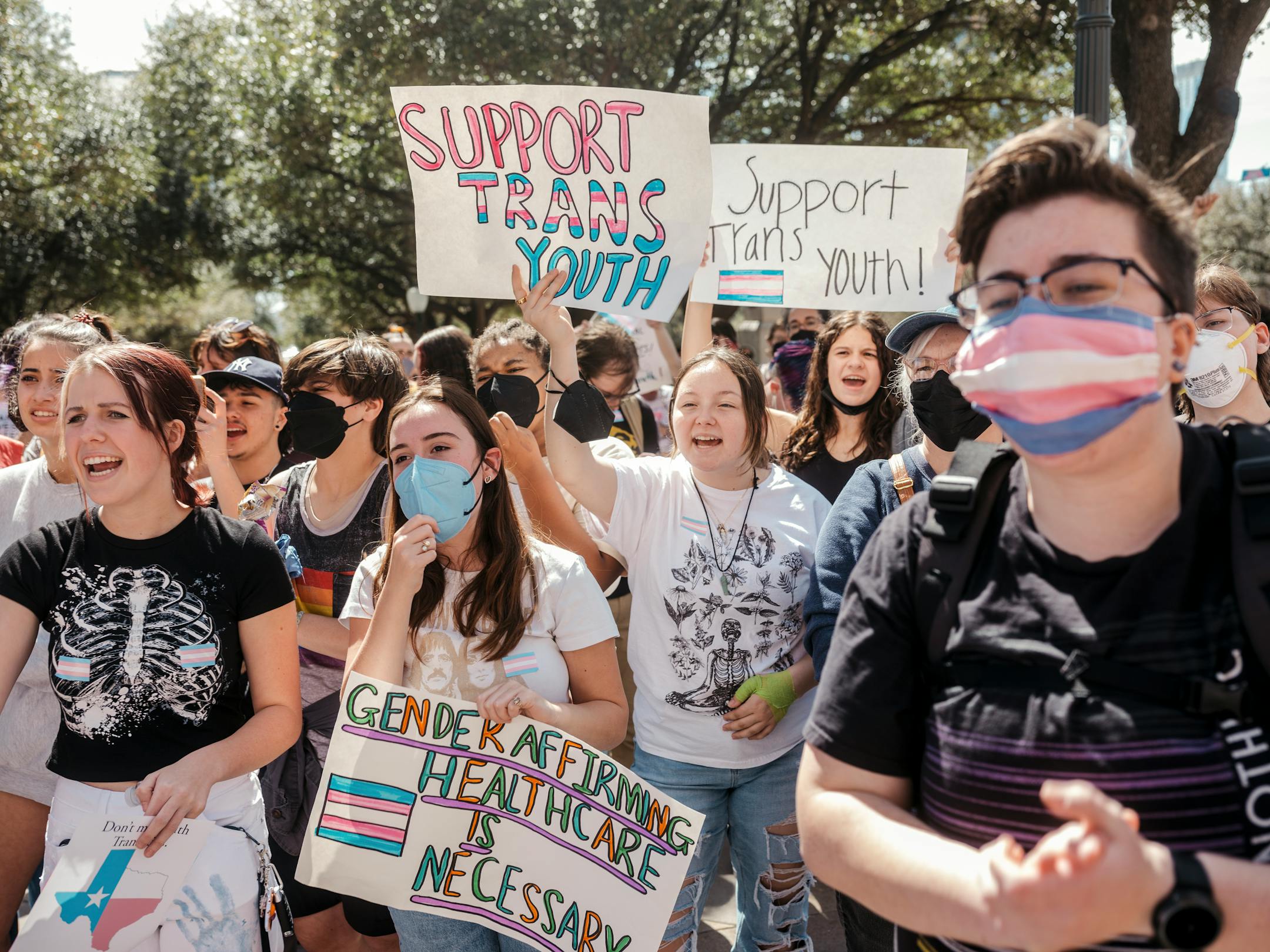
Alejandra Caraballo is used to seeing anti-transgender hatred.
As an LGBTQ rights advocate and a transgender woman, she has received death threats, and her and her family members' personal information has been published. When she goes to her favorite bar in New York, she sometimes wonders what she would do if someone came in shooting.
But last weekend, it became too much. Members of the Proud Boys and other extremist groups, many of them armed, converged outside a planned drag event in Columbus, Ohio. Neo-Nazis protested another event in Lakeland, Florida. There was an anti-LGBTQ rally in South Florida, also attended by the Proud Boys. All of this just two weeks after the killing of five people — two of them transgender, a third gay — at an LGBTQ club in Colorado Springs, Colorado.
"I had a full panic attack and breakdown," said Caraballo, a clinical instructor at the Cyberlaw Clinic at Harvard Law School. "It's one thing knowing there's this extremist hate on the internet and seeing it in the abstract, and I can kind of compartmentalize. When this hate becomes manifested in real-life violence and there's a celebration of it, is when it becomes too much to stomach."
It was one more month in a year in which intimidation and violence against gay and transgender Americans has spread — driven heavily, extremism experts say, by inflammatory political messaging.
Since far-right social media activists began attacking Boston Children's Hospital over the summer for providing care for transgender children, the hospital has received repeated bomb threats. Doctors across the country who do similar work have been harassed. The Justice Department charged a Texas man this month with threatening a Boston doctor; it also recently charged at least two others with threatening anti-gay or anti-transgender attacks.
Twelve times as many anti-LGBTQ incidents have been documented this year as in 2020, according to the Armed Conflict Location and Event Data Project, which tracks political violence.
"Being a trans person in particular in this country right now is walking around thinking that it's possible this could happen any day," said Sam Ames, director of advocacy and government affairs at the Trevor Project, an LGBTQ suicide prevention organization, adding, "We are hearing every day from trans youth who are being impacted by that political rhetoric."


