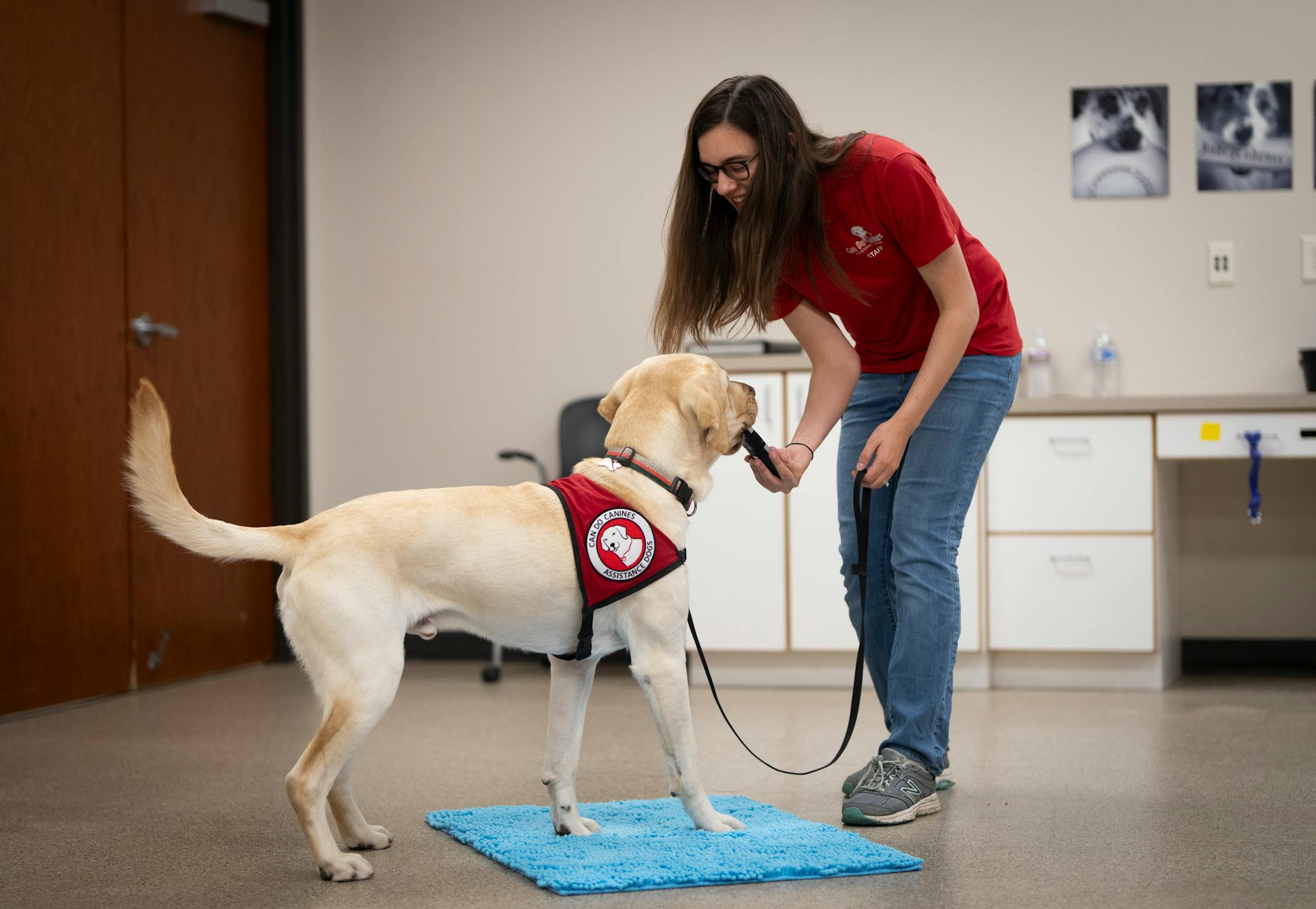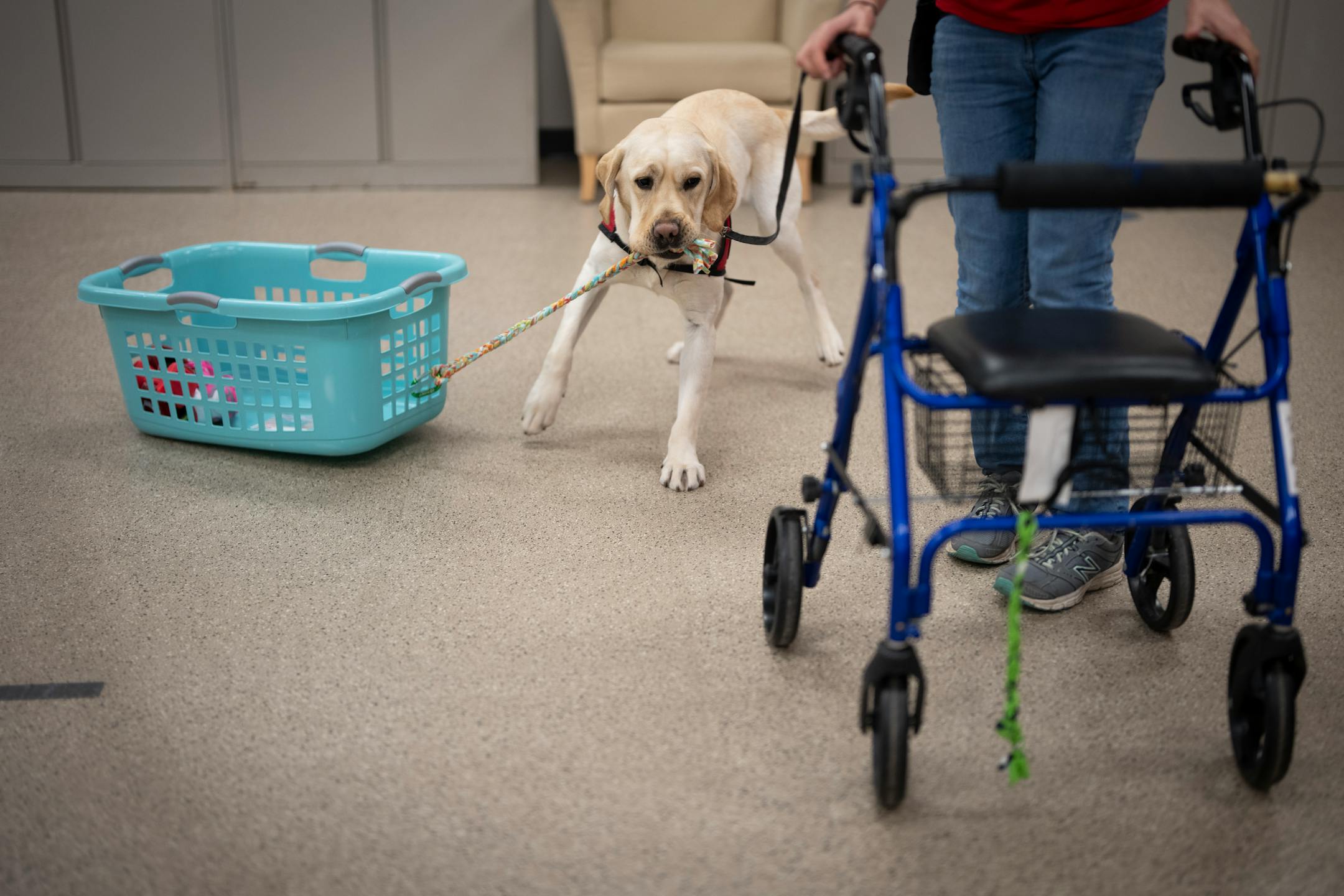
In short order, Teddy — a bright-eyed and bushy-tailed 3-year-old yellow Lab — punched a wall button with his nose, yanked a rope to open a kitchen cabinet door and tugged a walker across the floor.
After each feat, trainer Emma Hetrick rewarded Teddy with a well-earned piece of kibble. With just a few months to go before graduation, Teddy is close to starting his “career” as a mobility service dog, Hetrick said.
It’s what he was born to do.
Across Minnesota, more than a dozen organizations are breeding, raising and training a growing legion of service dogs to help people with a widening range of disabilities — from autism spectrum disorder to diabetes — live their best, most independent lives.
The importance of the work has become so recognized that a new law that took effect Aug. 1 protects people who train service dogs from paying more in rent. The move is expected to increase the number of volunteer trainers and, eventually, the number of available dogs.
Can Do Canines in New Hope is the largest service dog operation in the state.
Teddy is one of 50 dogs the organization gives free-of-charge each year. Since its founding in 1989, the nonprofit has placed nearly 1,000 dogs who have been trained to open doors, summon elevators, pick up remotes, fetch telephones and sense seizures when their people cannot.
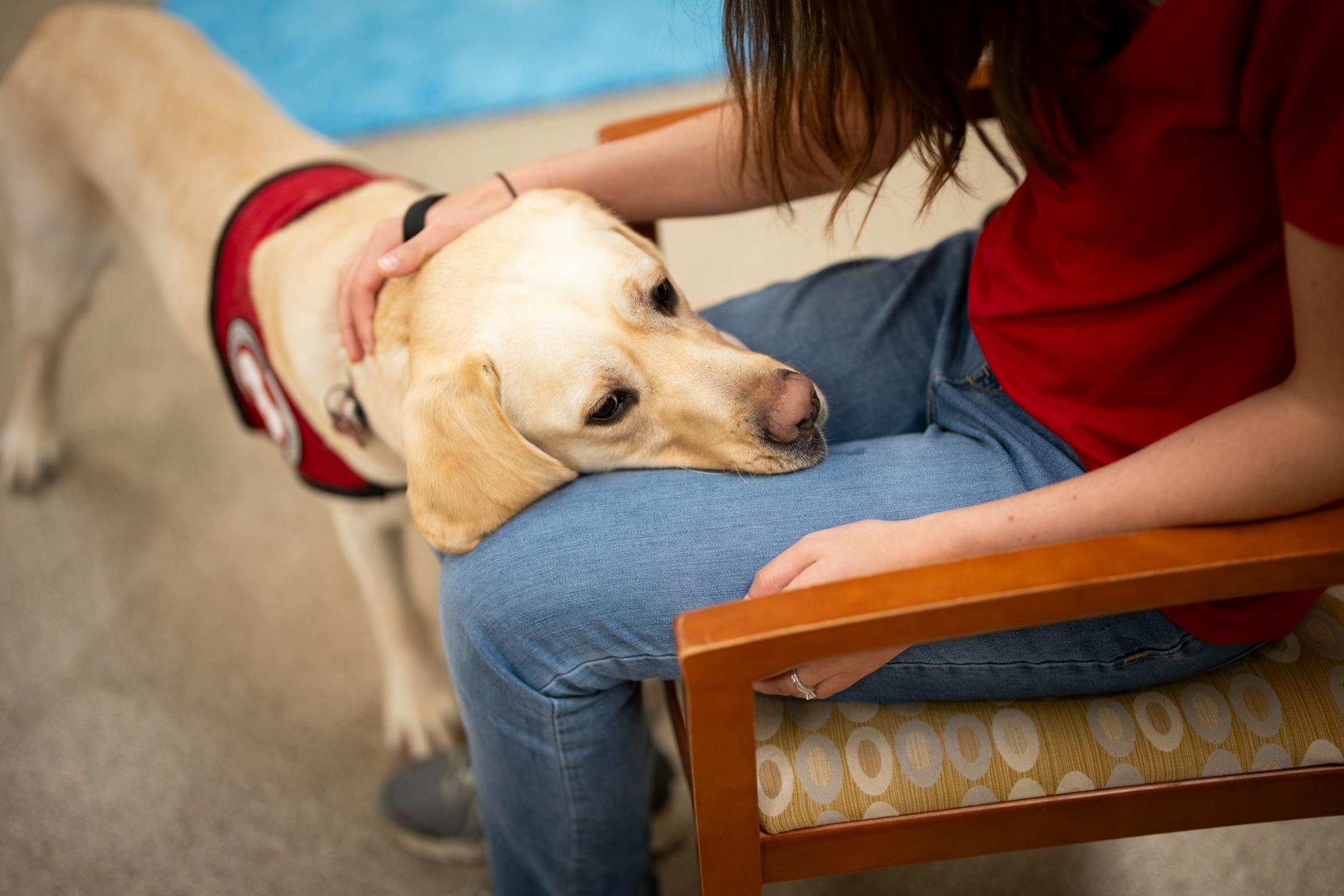
“They have a real joy in helping,” said Jeff Johnson, Can Do Canines executive director since 2020. “It’s really important to us that each of our dogs get joy out of the work.”