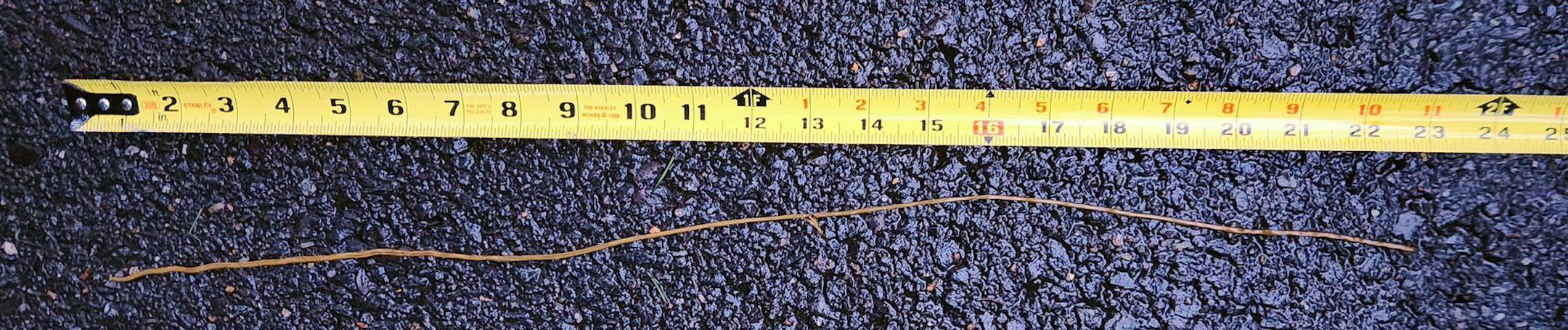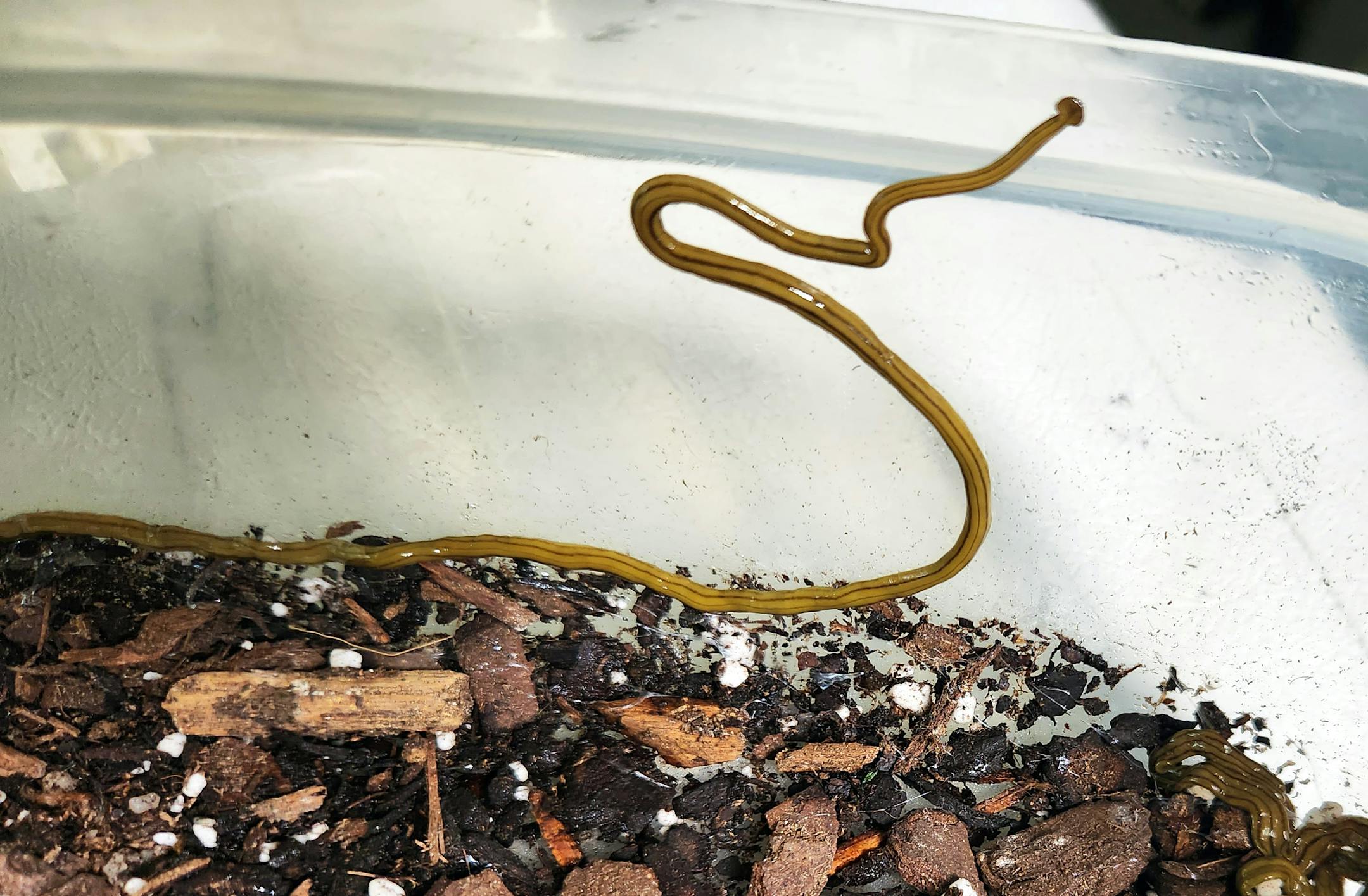
The hammerhead worm immediately stops you in your tracks. The striped flatworm slithers like a snake and resembles a piece of whole-wheat spaghetti, led by its mushroom-shaped head. And it also secretes tetrodotoxin, the same debilitating neurotoxin found in puffer fish.
This month, one was spotted in Oakton, Va.
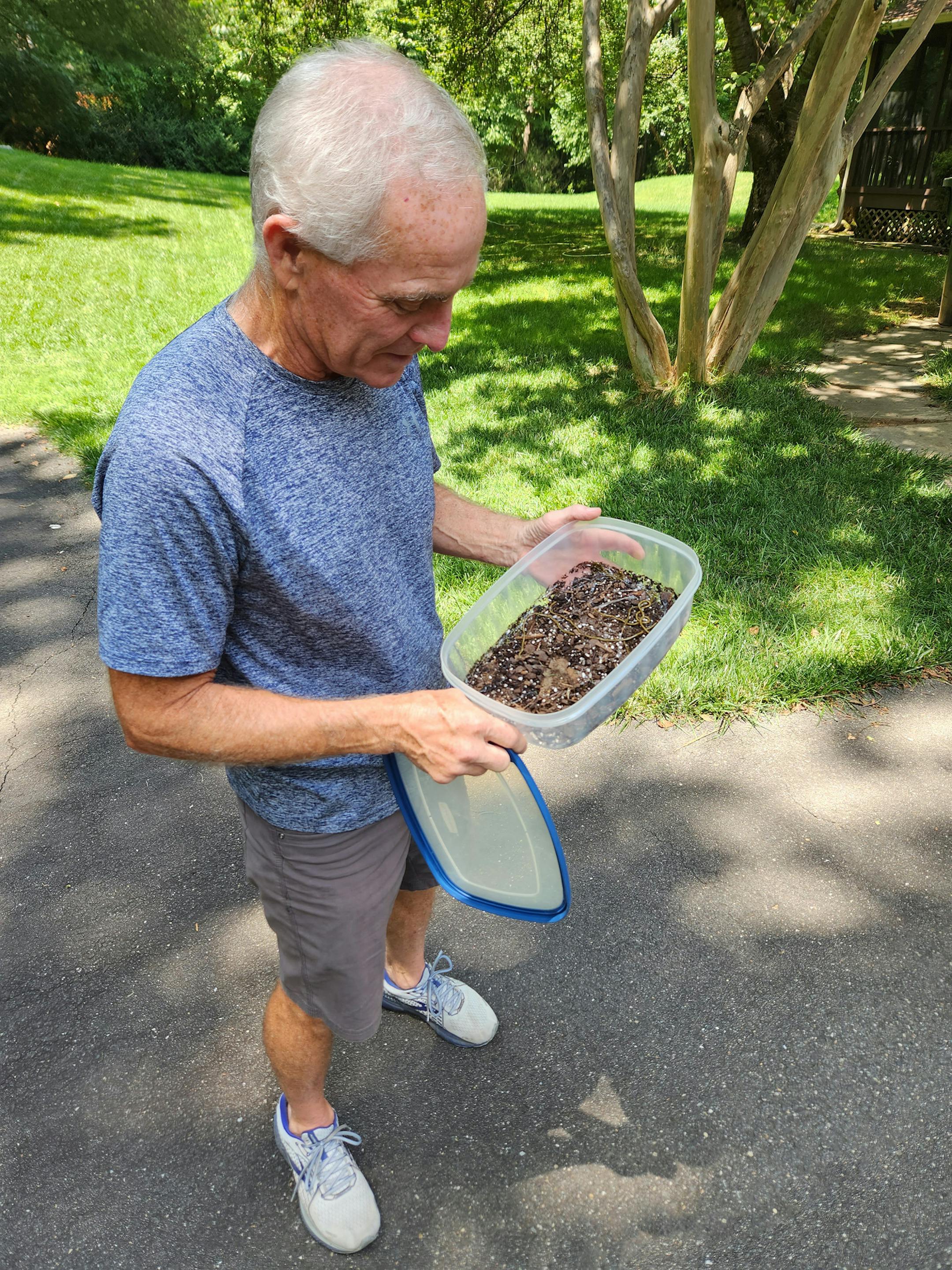
More accurately, Peanut, a 6-year-old miniature dachshund, stepped on a 14-inch hammerhead worm. The worm stuck to Peanut's foot, flipped up and entangled itself around Peanut's legs. Then it broke into several pieces. Each piece can function as an independent worm, squirm away and regenerate into more worms.
"These worms are one of the craziest creatures I have ever seen and are pretty darned creepy," said entomologist Michael Raupp, who drove to Peanut's house and collected a sample of the worms. Raupp, a professor emeritus at the University of Maryland, theorized the worms may have been introduced into Peanut's yard with sod or mulch.
The hammerhead worm (Bipalium) is an invasive flatworm from Asia, probably spreading to many new locations through the exportation of exotic plants. Research shows the genus has spread across the world, especially along the East Coast of the United States. Computer models show the Eastern United States will continue to be a suitable environment for the worms as the climate warms.
University of Minnesota researchers say hammerhead flatworms have not been reported in the state. EDDmapS — a mapping system for invasive species — shows them present in Green Bay and Milwaukee, so they may appear in Minnesota in the near future.
The good news is that the worm isn't a threat to humans unless ingested or handled, biologist Amber Stokes said.
"Yes, they are poisonous, but they are so small that you would have to actually eat many of them to have any ill effects. I feel pretty doubtful that most people are interested in eating them," said Stokes, a professor at California State University at Bakersfield.