

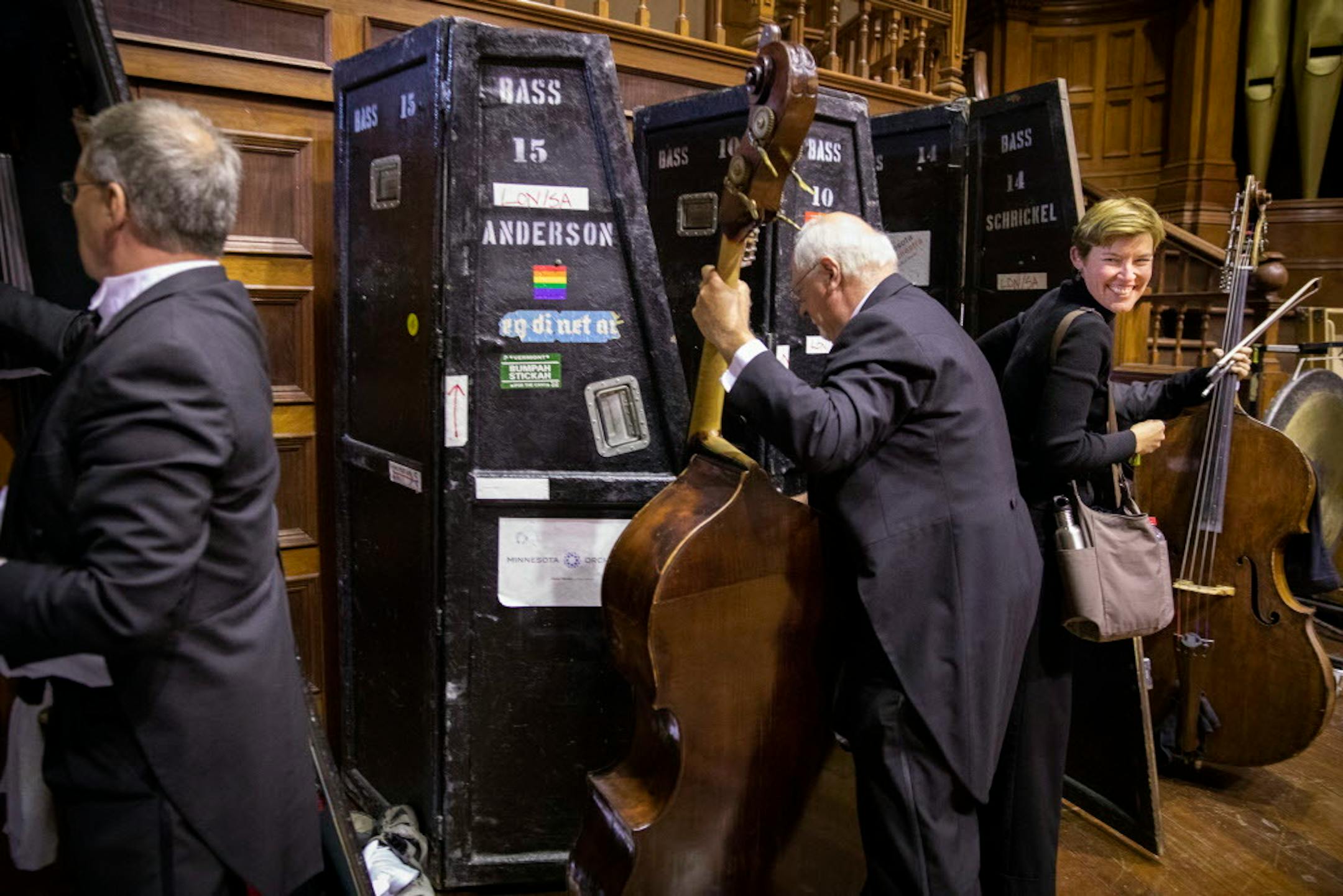
DURBAN, SOUTH AFRICA – Backstage before last Friday's concert in Cape Town, the first on this South African tour, bassist Bob Anderson searched for a key to his crate. He hadn't seen his 200-year-old instrument for some 72 hours, and it was time for rehearsal.
"Oh, Bill, do you have your key?" he asked a fellow bassist.
Anderson has been with the Minnesota Orchestra since 1974, and just once in those decades has he ever opened his tall, black, worn crate — labeled BASS 15 — to find his bass damaged. That was in 1998, on the orchestra's European tour. Four basses arrived split.
"We found a shop that could repair them, and they brought a couple basses we could use," he recalled.
This time his crate's odyssey included a stop in Britain, for a performance at the prestigious BBC Proms.
"I got to London," he said, laughing, "and the bass was still in tune."
From there, it journeyed by cargo plane to Munich to Luxembourg to Johannesburg, then took a high-stakes truck ride to Cape Town.
The instruments even need their own kind of visas: About a fifth of the orchestra's instruments are made of materials not allowed under an international treaty called the Convention on International Trade in Endangered Species of Wild Fauna and Flora. Brazilian rosewood, for example. Mother of pearl. Tortoise shell. And ivory — many bows have, on their tip, a piece of ivory the size of a thumbnail.


