

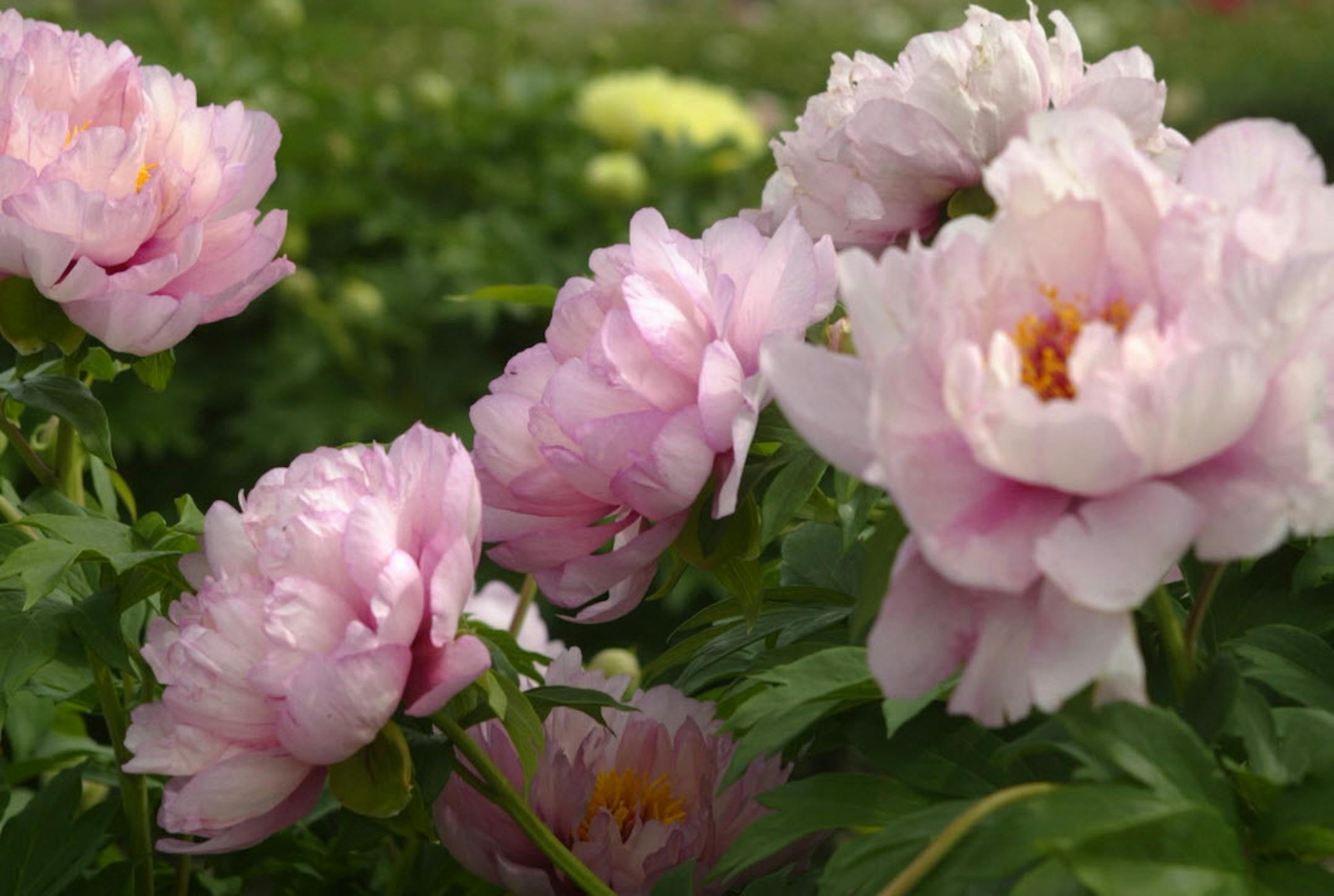
If I could have just one shrub in the garden, it would be a peony. They're tough, beautiful and oh-so-easy to grow.
When I was young, I thought of them as a "grandma flower," an old-fashioned perennial that had its heyday in the first half of the past century. But I saw peonies everywhere, in gardens and even abandoned farmsteads and neglected cemeteries. One of my earliest flower memories is of bending over a neighbor's pink peony, not to marvel at its impressive flowers, but to watch ants swarm over the sticky flower buds.
Peonies never fell out of favor in Minnesota and Wisconsin, which have the cold winters the plants need. Some of the nation's premier peony nurseries are right in our area. While it's too late to order peony roots for planting this fall, now and into early October is the time for gardeners to divide their own peonies to share these gorgeous plants with friends and neighbors.
First, some facts about peonies:
• The plants we grow today have their roots in Asia, around the Mediterranean and even parts of North America. The Chinese were cultivating peonies more than 1,000 years ago, and peonies are a feature of classical Chinese painting.
• Peonies are one of our longest lived perennials. Individual plants can live to be more than 100 years old.
• Contrary to legend, ants gravitate to peony buds for the sap, not to help the flower buds open. If there were no ants, peonies would still flower.
Today's peony enthusiasts have more choices in flower and plant form than ever before. In addition to the classic ruffled-ball herbaceous peony with masses of petals that I remember from childhood, there are peonies that have flowers with single petals, double petals, semidouble petals and big clusters of colorful stamens at the flower's center. Tree peonies mature into 4-foot shrubs that remain standing through the winter, and showy intersectional or Itoh hybrids have huge flowers and dense, disease-resistant foliage that looks good all summer.

