

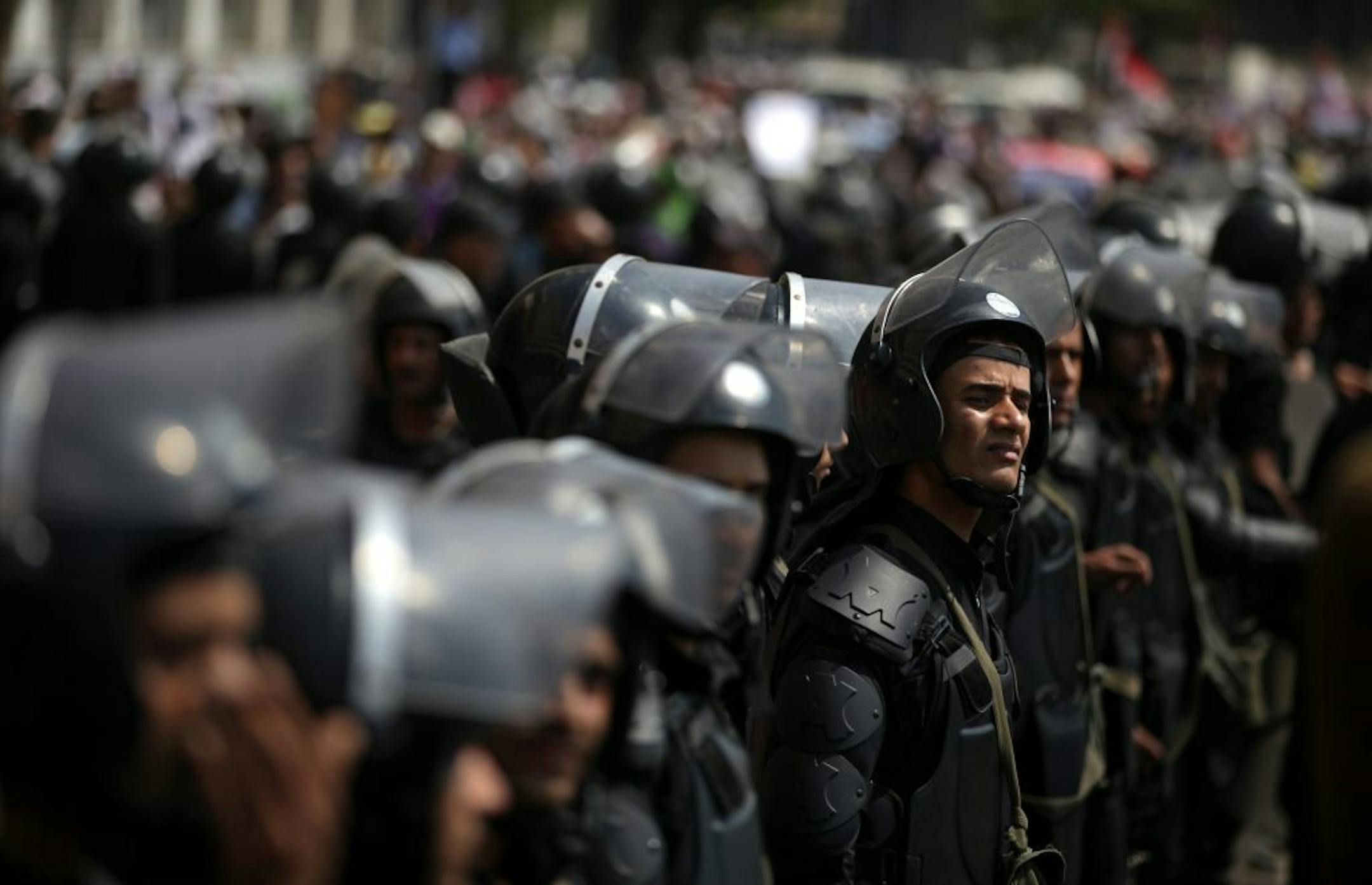
CAIRO — The European Union's top foreign policy official urged Egypt's interim leaders and supporters of the ousted Islamist president Wednesday to cooperate in a political process that moves the country toward democracy. But Mohammed Morsi's backers expanded their protests in Cairo, denouncing the new government and casting doubt on the prospects for reconciliation.
The Muslim Brotherhood, from which Morsi hails, has rejected the new political order and demanded the reinstatement of Egypt's first democratically elected president two weeks after he was toppled by the military.
There was no sign that protests were dying down, a day after the interim president swore in a 34-member Cabinet that included several prominent figures from liberal and secular factions as well as officials who served under the regime of ousted President Hosni Mubarak — but no Islamists.
EU foreign policy chief Catherine Ashton was the second foreign dignitary to visit Egypt this week, and the first to meet with Muslim Brotherhood officials since the July 3 coup, which followed mass protests calling for Morsi to step down.
Ashton also met with interim President Adly Mansour, his vice president Mohammed ElBaradei, army chief Gen. Abdel-Fattah el-Sissi and members of Tamarod, or Rebel, the movement that sparked the huge demonstrations against Morsi's year-old rule.
Ashton said she stressed in all her meetings the need for a political process that includes all sides, but acknowledged that the players are deeply divided.
"It is important not just for (the Brotherhood's political party) but for all those involved in the future of the country to know that the future really is about ensuring that everybody can be engaged," Ashton told reporters at the end of her one-day visit to Cairo. "Inclusivity means that you have to move forward and you have to find a way that those who wish to participate in the future can do so."
She was the second foreign official bearing that message this week.


