
Tolkkinen: Despite federal surge, Minnesota continues to try building trust across party lines

The work has been obscured by the ICE conflict, but it continues.

Columnist Icon
The Minnesota Star Tribune
February 3, 2026 at 12:00PM
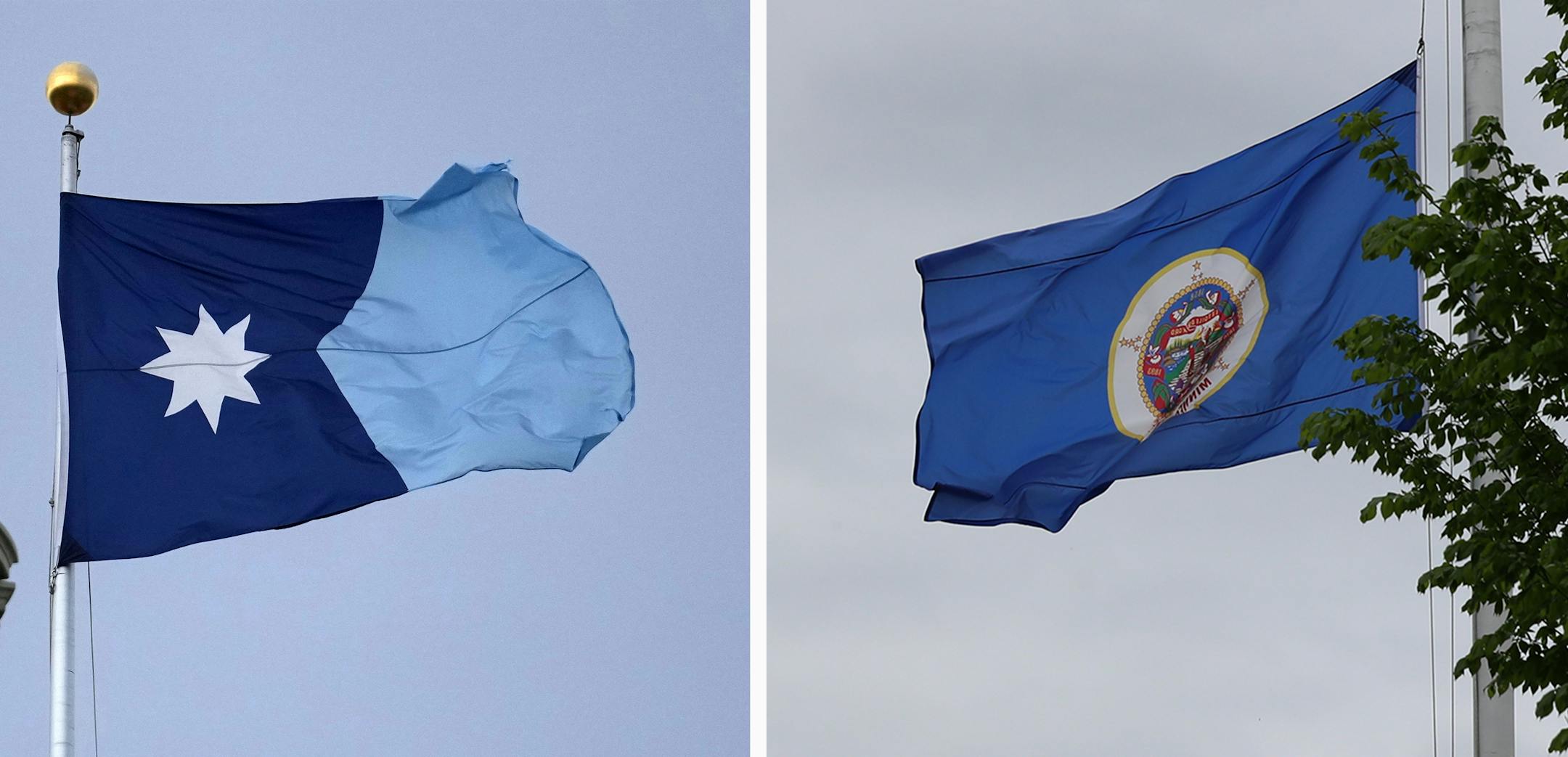
The old state flag, right, still flies above some homes and businesses in greater Minnesota, a sign of the state's divisions. Still, nonprofit groups are continuing work to remind us that we're all Minnesotans. (The Minnesota Star Tribune)

It is tiring these days to be a Minnesotan.

Those of us in greater Minnesota are insulated, to some extent, from the direct conflict between protesters and ICE agents, but not from the social damage and economic disruption inflicted by inhumane federal tactics.

So it brought me some cheer to hear that in Minnesota, the work to heal our divisions marches on. From across the state, legislators of different stripes are spending time together. Republicans and Democrats from urban and rural Minnesota have ridden bicycles and ATVs together and even zipped down the Giant Slide at the State Fair.

It’s part of an effort to rebuild trust and bipartisanship in a state that for decades has been known for level-headed politics but is now, well — we all know what it has become in recent years.

The project, the Minnesota Legislative Exchange, is organized by the nonprofit Citizens League. In January, it recapped the first year of this groundbreaking work in a webinar. Eight lawmakers took part in 2025 in what the organization says is the first of its kind among state legislatures.

It’s how Rep. Mary Frances Clardy, DFL-Inver Grove Heights, ended up visiting schools in Willmar, home of GOP Rep. Dave Baker.

“I was fascinated when I visited Willmar with the amount of diversity that was there,” Clardy said during the webinar, which was co-hosted by the Citizens League and the Mankato-based nonprofit Center for Rural Policy and Development. “Because living in the Twin Cities area, sometimes when you look at greater Minnesota you don’t know that exists.”

Willmar, a city of about 22,000, is a prime example of how demographics in parts of greater Minnesota have changed. The city is 66.5% white, significantly less than the state average, and immigrants run many of its small businesses.

In exchange, Baker visited Clardy’s district in the metro. The State Fair was going on at the time, so they went down the Giant Slide together, Citizens League Executive Director Jake Loesch told me.

Among the first to sign up for the exchange, Baker said he strives for bipartisan cooperation in order to pass laws, policies and rules that won’t be overturned when another party takes power. As a businessman, he cares deeply about workforce issues and other needs of the business community.

“I get sick when I see things that are super hyperpartisan,” he said.

Loesch said the project continues this year, and he hopes legislators will continue to sign up.

“Disagreement doesn’t mean we have to be enemies, but it does mean we need to try harder to understand each other,” he told me.

Also heartening recently was the St. Cloud City Council decision to affirm the city’s identity as a place that is “welcoming, inclusive and safe for everyone who calls St. Cloud home.”

St. Cloud has been a place of strife in recent weeks, with ICE agents reported at school bus stops, two international students at St. Cloud State University detained, and people afraid to leave their homes.

And while the risk has not abated, it must boost morale among those most besieged to know that the city council supports its residents.

It may seem like minor news. After all, a resolution can’t protect people or keep ICE out of the city or restore the profits lost when businesses had to close their doors.

But resolutions set the tone and expectations for a city. And at a time when communities throughout the state are braced for the arrival of masked federal agents, the St. Cloud declaration is a timely, welcome shout of humanity.

A third bright spot? Austin Mayor Steve King asked his city of 26,000 to check in on their neighbors.

“During challenging times like this, when hope seems illusive and we recognize more than ever that we live in an imperfect world; faith, compassion and people matter,” he said in a statement.

He’s not alone. Earlier in January, Rochester Mayor Kim Norton urged her city’s residents to support immigrant neighbors.

“Be caring - be creative,” she wrote.

Ethnic restaurants are starting to re-open in greater Minnesota. Don Pablo’s Mexican Restaurant announced that its locations in Fergus Falls and Detroit Lakes are open again. In Alexandria, Casa Jalisco also began serving food for dine-in customers.

“We missed you guys so much!” one woman wrote on Casa Jalisco’s Facebook page. “I drove by every day and my heart just ached for you all!”

It is tempting to say we’ve turned a corner in Minnesota. But we haven’t. The ICE Out app is still tracking ICE activity across the U.S., and Minnesota is still lit up with reports in English and Spanish.

People are still divided over ICE. At the Powerhouse Bar & Grill in Rothsay, customers and staff shared with me their frustration that anyone would try to impede a federal agency. They had nothing good to say about protesters.

But there are signs of alliance between rural and urban. Throughout greater Minnesota, people opposed to ICE have staged protests, formed community groups and shared photos of the agents’ vehicles and locations.

So maybe. Maybe ICE itself is helping Minnesotans remember how much we share. Maybe people are starting to realize that masked federal thugs breaking windows and hearts in our communities are not good for our present or for our future.

And maybe the more we work together, we don’t have to rebuild agreement. But at least we can rebuild trust.

about the writer

about the writer

Karen Tolkkinen

Columnist

Karen Tolkkinen is a columnist for the Minnesota Star Tribune, focused on the issues and people of greater Minnesota.

See Moreicon

More from News & Politics

See More
card image
card image