

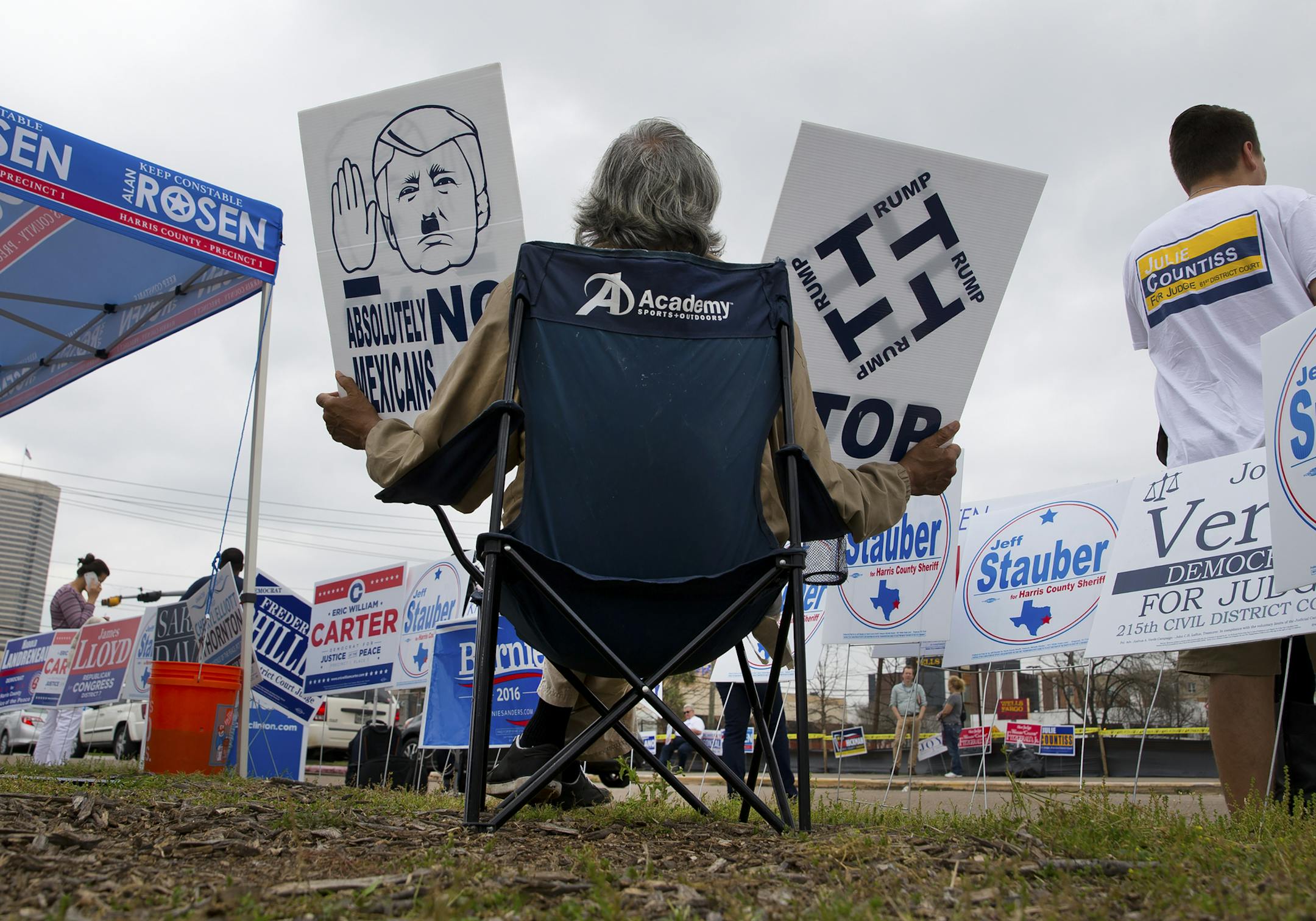
For months, I've resisted the temptation to liken Donald Trump to Adolf Hitler. It seems a bit unfair to Hitler.
"To be greatly and effectively wicked, a man needs some virtue," explained C.S. Lewis's devilish connoisseur of human corruptions in "The Screwtape Letters." "What would Attila have been without his courage, or Shylock without self-denial as regards the flesh?"
It's reassuring to suppose that such villains, shorn of their self-mastery, might have resembled the Donald — all bluster and self-regard, but not enough sincere grit to wreak major havoc.
Hitler was a pillar of perverted integrity in Screwtape's sense — driven by maniacal, pitiless commitment to a tribal cause that was entirely evil but not entirely about himself.
Trump's egoism and lack of durable principles may ironically represent Americans' best hope that if worse comes to the worst, a President Trump simply wouldn't have the strength of purpose to be "greatly and effectively" disastrous.
That said, I'm haunted by a memory from a 1993 study trip to Berlin. One day I attended a luncheon hosted by an aging Deutsche Bank executive. Old enough to remember Hitler's rise, he said he'd long struggled to explain to younger people how such a madman hoodwinked a large, sophisticated nation.
He added that as it happened, American politics just then, in the early 1990s, featured a prominent figure with Hitler-style appeal.
He meant Ross Perot, the plain-talking Texas tycoon who ran two feisty third-party campaigns for president.


