

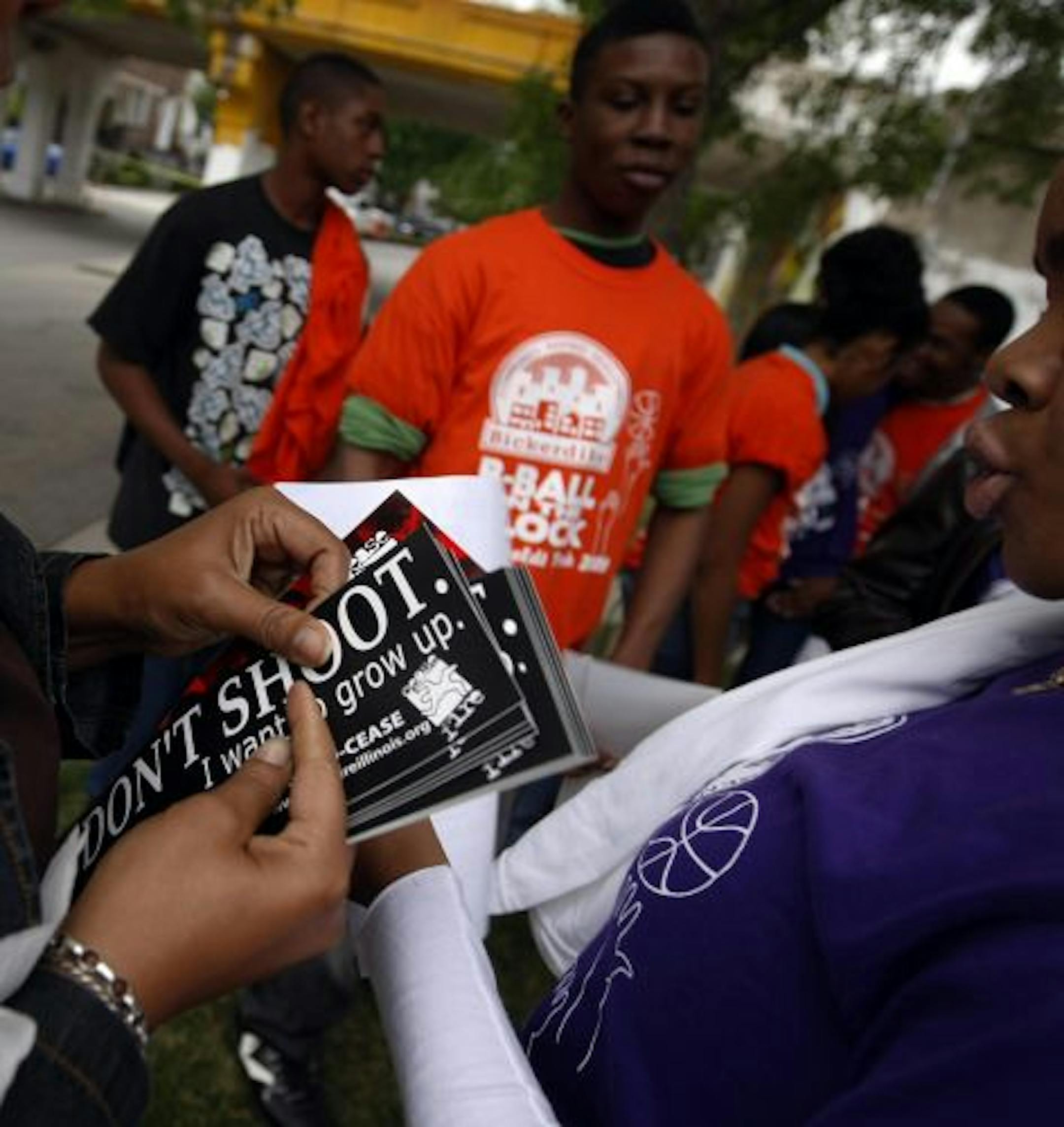
When representatives from a Chicago nonprofit came to the Twin Cities recently to discuss how they might help Minneapolis reduce the number of murders, the group was met with both hope and suspicion. Some longtime activists criticized the city for pursuing federal grants that would replicate the Chicago program CeaseFire, arguing many agencies and individuals already do that work and could use the money instead.
One of CeaseFire's strategies is to use violence "interrupters," paid former gang members who keep an eye on the mean streets and intervene when it gets tense between rival gangs, or after a shooting.
To some in government and law enforcement, that plan sounded familiar.
In the early 1990s, a group called United for Peace emerged from the North Side in an effort to stem a rash of shootings and revenge killings. The group was initially lauded by the police chief.
Then four gang thugs assassinated Minneapolis police officer Jerry Haaf at a pizza parlor. Cops said the killers were associates of those running UFP, and they believed UFP leader Sharif Willis may have been involved. A former gang leader, Willis was later convicted of drug and weapons charges and sentenced to 26 years in prison.
The group dissolved, the murders continued.
"When I read about CeaseFire I had to chuckle," said retired homicide cop Jim DeConcini. "It seems like every decade they take an old idea and wrap it differently to get grant money. It's a nice concept to get somebody who can reach these kids and talk the language," but the results are mixed at best, he said.
"United for Peace was a sham," said William Finney, former St. Paul Police Chief. "The purpose was to get the gangs to divide up the drug territory under the guise of not hurting each other, and they wanted police to cooperate."


