

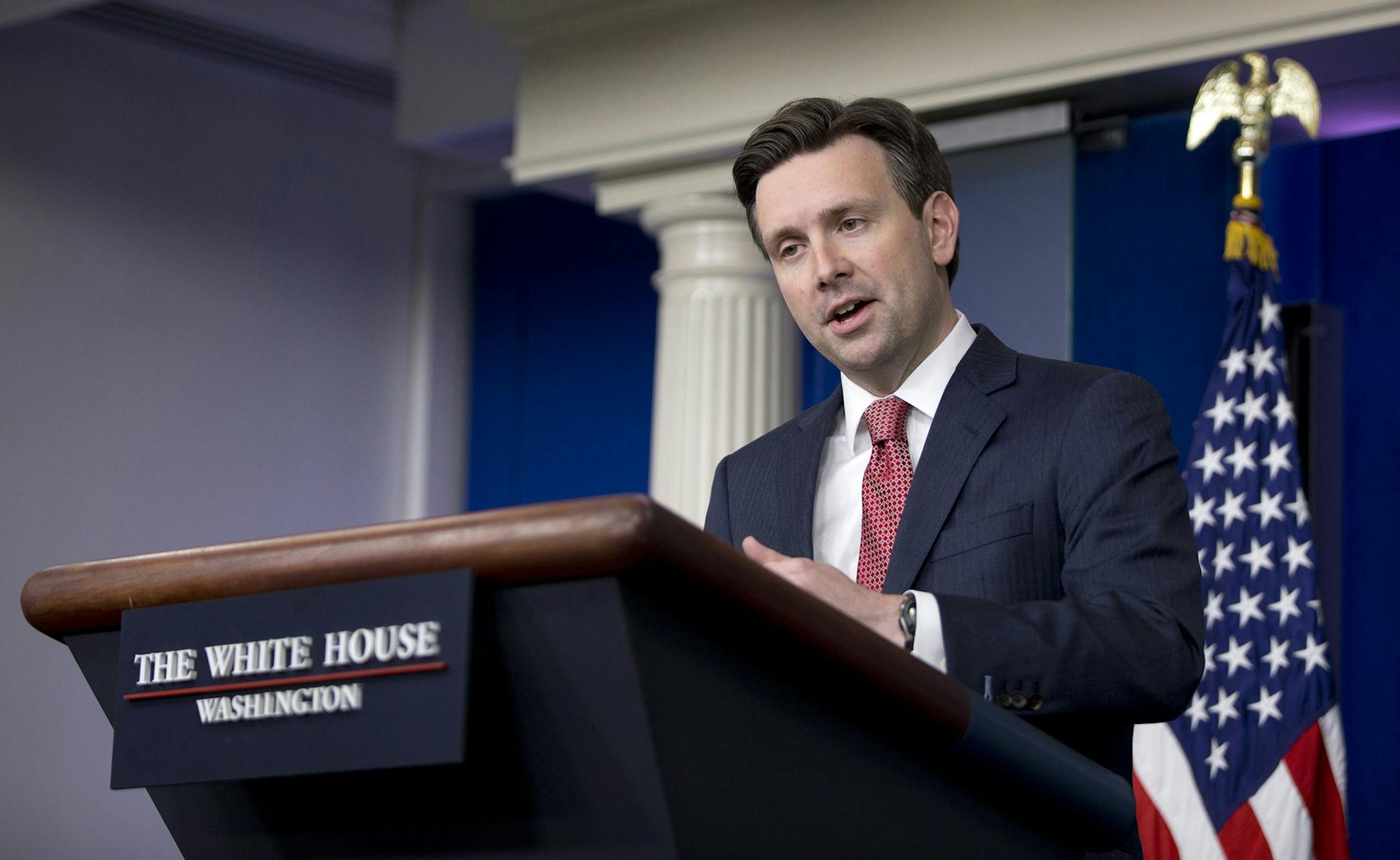
There is an Orwellian cost to the Obama administration's refusal to use the term "War on Terror" to describe its … war on terror. In his briefing after the White House's admission that two hostages were killed in a U.S. "operation," press secretary Josh Earnest struggled mightily to avoid the word "war" to describe what the U.S. is up to. Finally, he gave in and stated that under the Authorization for Use of Military Force Against Terrorists, the nation is "at war" with Al-Qaida.
Why do the words matter? Because the inevitability of civilian casualties, even in the most justified of wars, is accepted both in international law and in the ethics of war. Civilian casualties must be avoided whenever possible. But in wars, they happen.
The problem the White House faces is its stubborn insistence that its non-war is being fought with precision. Earnest used that very word repeatedly. But it's hard to take the claim seriously in light of calculations, like those published in the Guardian last November, that U.S. efforts to kill just 41 leaders of Al-Qaida and other groups had caused some 1,147 civilian casualties.
The sort of war that the administration is waging requires extraordinarily accurate intelligence. Earnest said in his briefing that a strike is not permitted unless there is "a near certainty" that no civilians will be harmed. In wartime, that standard would be impossible to meet. Claiming that a war isn't a war doesn't make it any easier.
I am not suggesting that calling the War on Terror a war would make civilian casualties any more justified. But it might force the administration to concede that we simply lack the intelligence resources to establish a guarantee against killing noncombatants. And once the administration admits the inevitability of significant numbers of civilian deaths, we might be able to engage in serious public conversation about the morality of the drone war.
That's a conversation we need. Although the frequency of drone attacks has tapered off lately, they have been the Obama administration's principal anti-terror weapon. During Obama's first year in office alone, the U.S. conducted more drone strikes than in the entire eight years of George W. Bush's presidency. Given military budget constraints, Obama's successor will likely operate a similar policy. So the time to thrash out the ethics is now.


