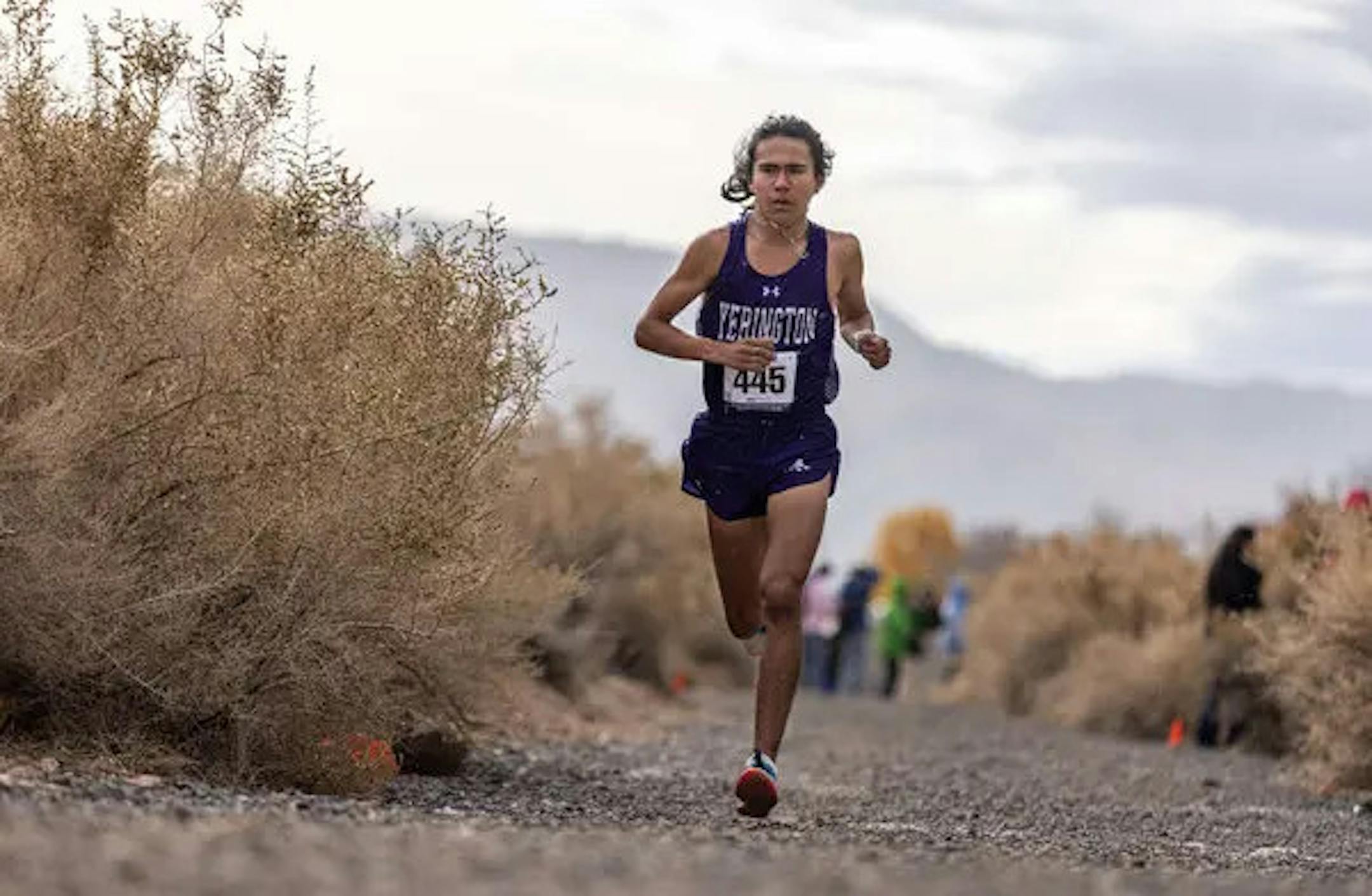
RENO, Nev. — Ku Stevens ran toward the rising sun. His feet dug into the gravel trail, his legs burned with pain, and he fought doubt. He ran on. A pair of straggling spectators crossed his path, and he swerved to avoid them, nearly losing his balance, and he ran on.
The five-kilometer race's trail climbed into the foothills. He had no teammates and his competitors had fallen far back. There was no one to push him toward the time he needed to be the best. But Stevens ran on.
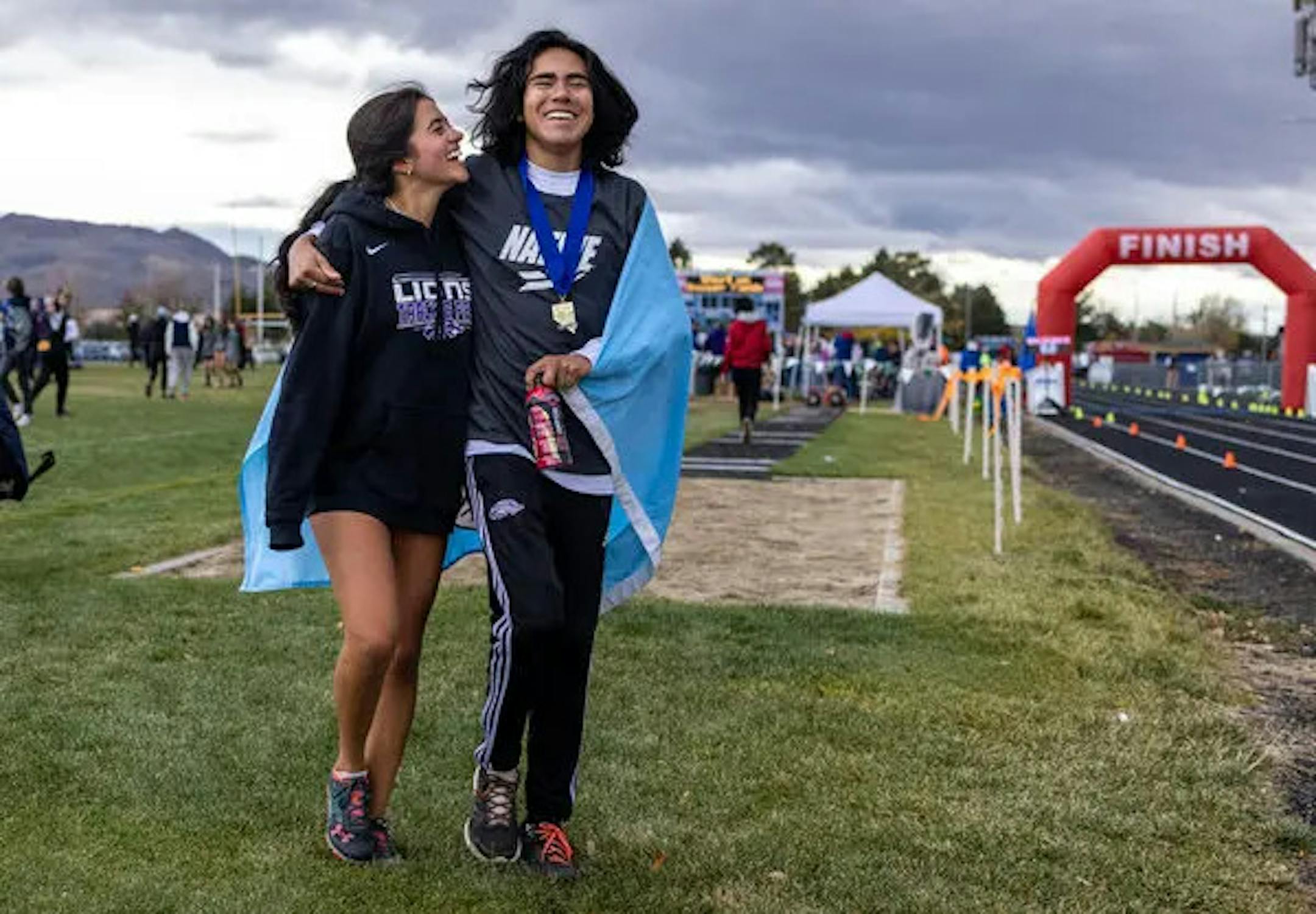
A senior at Yerington High School in western Nevada, Ku — short for Kutoven — raced in the Nevada state interscholastic championships in early November. Though he lived on a struggling Native American reservation and participated in a sport where few competitors shared his background, he dreamed for years of being the state's fastest high school distance runner. He wanted to show that Native Americans could be champions.
Winning would honor his tribe and his forebears, especially his great-grandfather and others like him, who endured brutal treatment at federal and church-run boarding schools and the often violent efforts to strip Native Americans of their language, religious beliefs and all other vestiges of their culture.
To Stevens, that had been a crime against nature, deeply wrong and unforgivable.
Stevens's paternal great-grandfather, Frank Quinn, a Yerington Paiute Indian born in the rugged Nevada desert, suffered a fate all too common for Native American children in the early 1900s. At around 7 or 8 years old, he was forced to leave his parents and attend the Stewart Indian School, three miles outside Carson City and a world away from his tribe.
The boarding school was one of over 350 similar institutions across the United States created to forcibly assimilate Native Americans. "The intent was evil," said Stacey Montooth, executive director of the Nevada Indian Commission. "It was genocide."
In Quinn's era, children as young as age 4 arrived on campus after being ripped from their parents' arms by agents of the school. Mothers and fathers traveled from tribal land and camped just outside Stewart's sprawling campus, hoping to steal glimpses of their children. Corporal punishment and solitary confinement were common. Like at many of the Native American boarding schools, a cemetery sat nearby. Its graves are said to hold the remains of students who died at the school.