

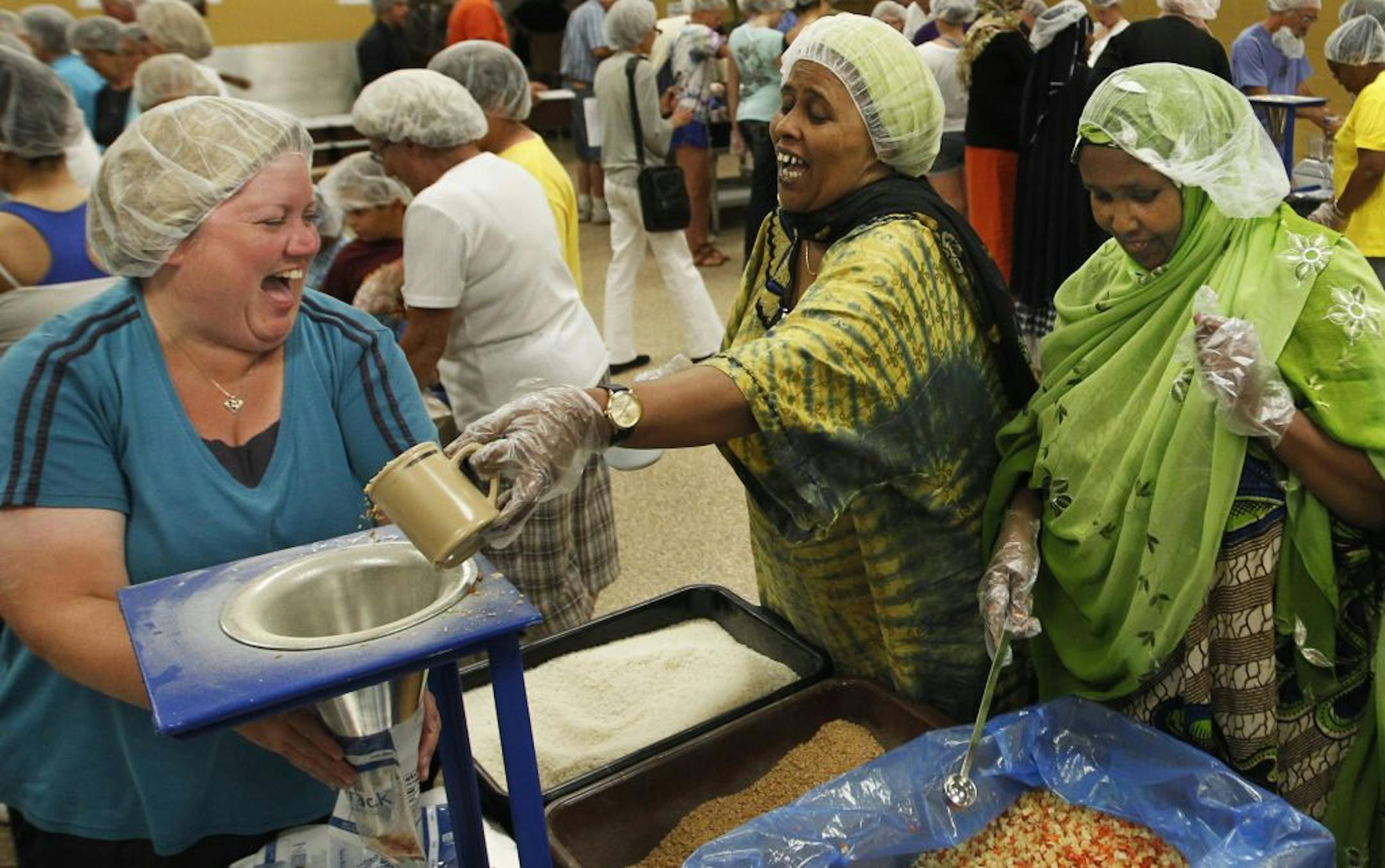
In Mark Crea's eyes, to go through the trouble of developing highly nutritious food, packaging it, shipping it to the Horn of Africa and then lose control of it before it reaches famine victims is "a crime in the end."
Despite recurring reports of aid being stolen once it hits Somalia, Crea, executive director of Feed My Starving Children, is confident his organization's food is reaching the people it's intended for.
Coon Rapids-based FMSC already has sent more than 300,000 meals to famine victims in the Horn of Africa, and has a goal of reaching 2 million by the end of August. The organization's ultimate goal is 5 million meals, but Crea says, "I wouldn't be surprised if our number, by the time we hit February, isn't closer to 10 million."
The number of people who need food in Somalia is 3.7 million, but more than 2 million of them are inaccessible because of security problems in their region, according to the U.N.'s World Food Program.
The most important factor in delivering food to an unstable area is knowing with whom to partner, Crea said. FMSC has longstanding connections with local leaders in the famine-stricken areas that provide the group a clear picture of where the greatest need is and which routes will ensure the food's safe arrival. It also depends on a handful of aid groups embedded in the area to distribute the food, such as Reach International and the Qoryoley Development Community.
"There will be a lot of organizations rushing into that region," Crea said, "but some aren't going to know what the heck to do."
Over the course of 20 years and 400 million meals, Crea said 99.97 percent of the meals sent by FMSC ended up where they were supposed to. He did not have a statistic specific to the Horn of Africa.
FMSC prides itself on having scientifically developed nutritious meals that provide all the vitamins and minerals a person needs in a day. Its newest formula is potato-based, designed for babies too young to eat solid foods.


