

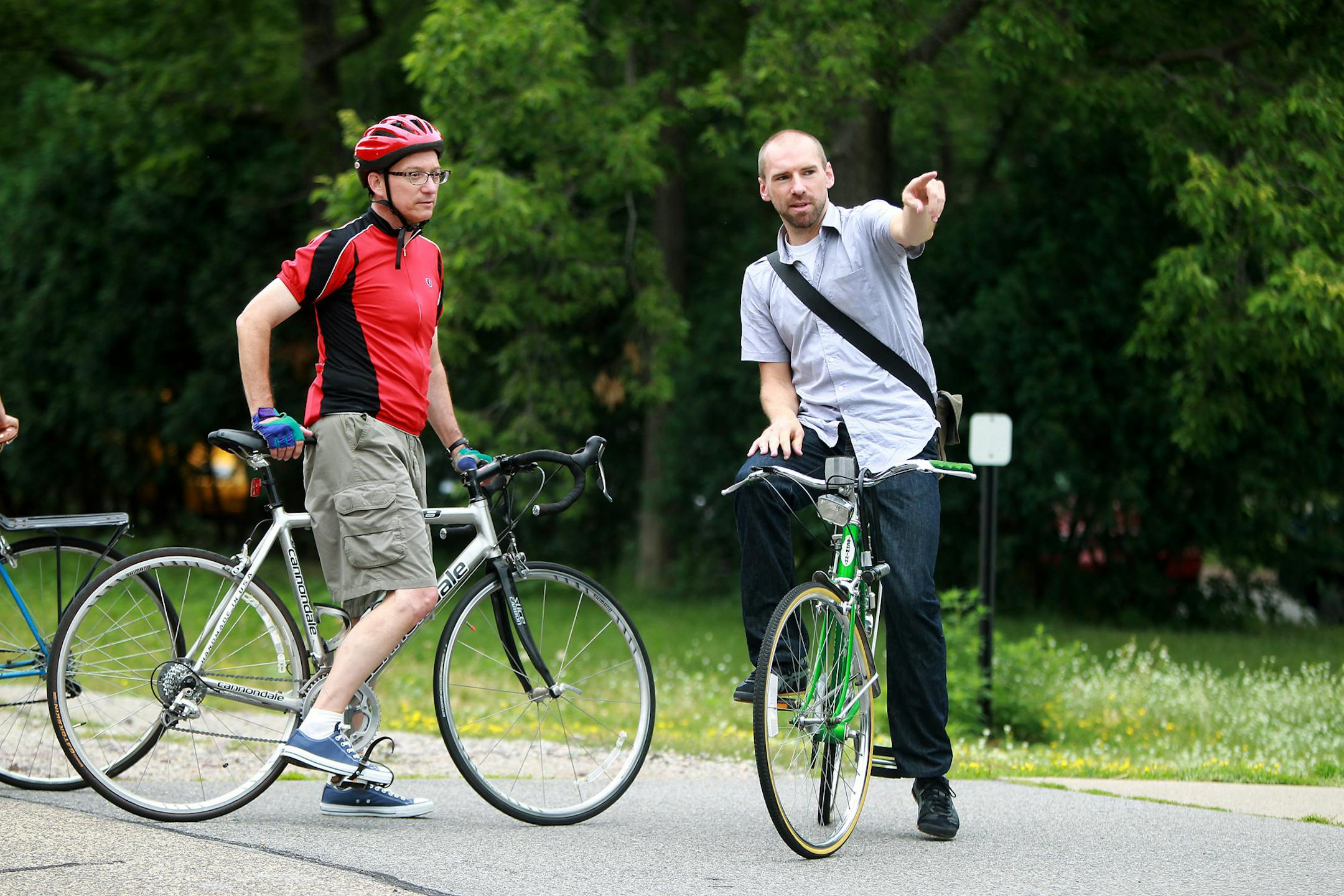
Two years ago, I was quoted by a Star Tribune reporter saying that I do not wear a helmet while bicycling because I don't want the activity to appear dangerous or scary. "I just want it to be seen as something that a normal person can do. You don't need special gear. You just get on a bike and you just go." ("King of the road," Aug. 7, 2012.)
This issue has been a struggle for me, because I used to believe in helmets. But when I went to northern Europe to understand how a city can become bicycle-friendly, I was struck by how few people wear helmets when biking.
My research revealed that there are many causes for head injuries, including slipping while showering, walking down a sidewalk, falling off a ladder and being in a car accident. I began to question why I would wear a helmet while bicycling, if I was not willing to do so during these other everyday activities.
In Australia and New Zealand, helmet laws have had no effect on the already-declining numbers of head injuries in bicyclists, but they have been shown to reduce the number of people bicycling.
This is unfortunate, because people who use a bicycle increase average life span by months due to health benefits, and they only reduce it by days due to traffic collisions. And research in Minneapolis and around the world has shown that bicycling becomes safer as more people bicycle.
This is even true for children. In the United States, the rate of child head injuries did not decrease after bicycle helmet use increased threefold during the 1990s. But as in those Down Under countries, the number of children bicycling did decrease. That has a real effect on kids' long-term health.
I understand why many people wear helmets when bicycling: It feels uncomfortable on busy streets. But I also understand something else: Most people in Minneapolis don't bicycle regularly. Which brings me to the question that is more pertinent than: "To wear a helmet or not wear a helmet?"
"To bicycle or not to bicycle?" That should be the question.


