

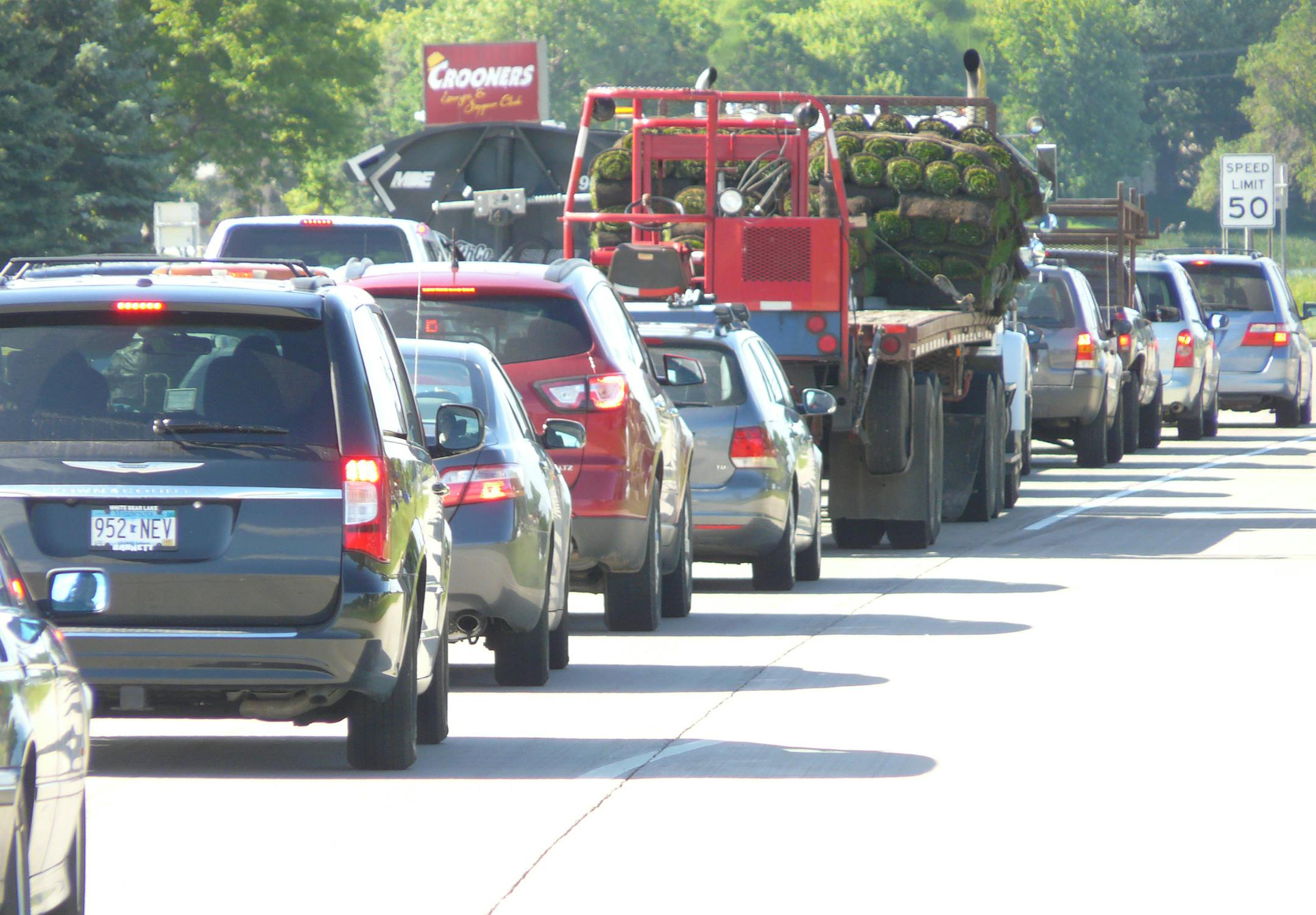
A slew of major intersections in Anoka County, and a few in Ramsey and Washington counties, are among metro-area junctions being considered for expensive upgrades that would eliminate the traffic signals that hinder free-flowing movement.
Mind you, the officials doing the research aren't yet promising fixes for any of them.
But the exercise itself is a revealing peek into which metro-area intersections are the most frustrating — and possibly dangerous — roadways in the metro area to stop at red lights.
Said Arlene McCarthy, the Metropolitan Council's transportation director, at a briefing for Met Council members: "Let's try and identify ahead of time, using transparent methodology, which we would recommend."
The Minnesota Department of Transportation (MnDOT) is teaming up with the Met Council on studies of high-volume intersections where motorists now have to sit at stoplights, notably Hwy. 65 and Central Avenue, and on Hwy. 36 in the northeast suburbs.
The issue concerns what engineers call "principal arterials," meaning freeways and other roadways whose purpose is longer-distance travel at higher speeds and fewer interruptions than in other parts of the system.
The elimination of signalized intersections on such thoroughfares has been a major point of emphasis in recent years, with palpable results on arterials such as Hwy. 13 in Scott County.
Analysts identified 374 potential targets and then narrowed that list to 104 for closer examination.


