Tired of living in fear, this family decided to deport themselves

February 2, 2026
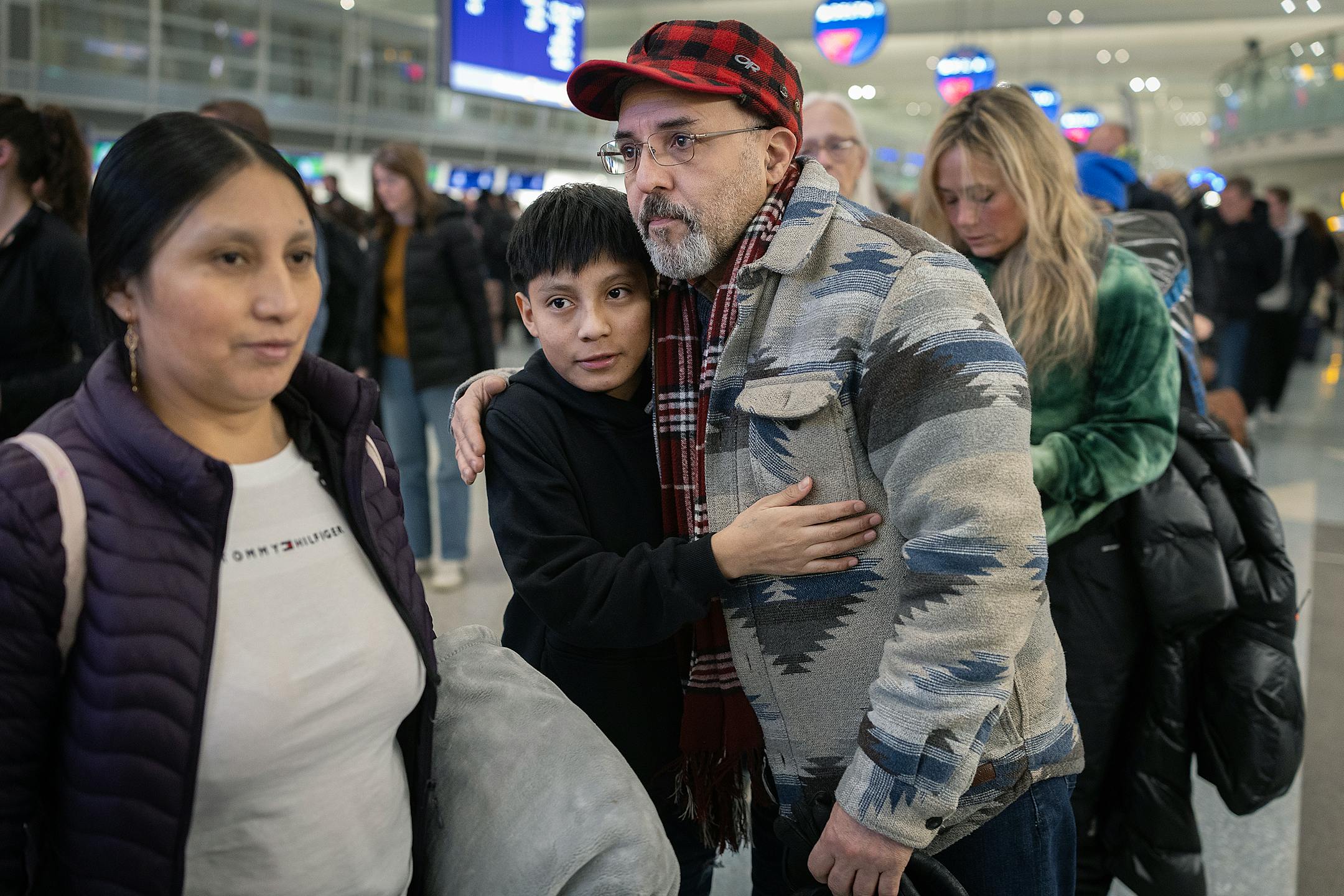
Segundo, center, tearfully says goodbye to family members in Minneapolis on Jan. 23 before going to the airport to return to his home country of Ecuador with his wife and youngest son. Segundo, his wife, Maria, and their youngest son, Jairo, were on a path to legal status and say their immigration case was up-to-date. They are among the estimated tens of thousands of immigrants who have left the U.S. voluntarily in the past year rather than risk detainment and deportation. (Elizabeth Flores/The Minnesota Star Tribune)

An immigrant family from Ecuador said they felt like prisoners in their Minneapolis home.

The Minnesota Star Tribune

Segundo’s family kept watching the street, afraid to leave the house.

All around their south Minneapolis neighborhood, the Trump administration’s Operation Metro Surge was raging. Immigrants were being pulled from their cars through smashed windows and marched out of their homes into the freezing cold.

Sengundo, 43, his wife Maria, 40, and their five kids were on a path to legal status and say their immigration case was up-to-date. But the Ecuadorian family was increasingly afraid to go to work, school or to the store for food and diapers for their grandson.

“We didn’t come here with bad intentions,” Segundo said. “We came here to work. Now we are afraid to stay. We’re afraid to go outside.”

On Jan. 23, Segundo, Maria and their youngest son, Jairo, who at 14 is too young to work, made the difficult decision to return to Ecuador. The move came after months of deliberation and the sudden deportation of immediate family members.

They are among the estimated tens of thousands of immigrants who have left the U.S. voluntarily in the past year rather than risk detainment and deportation.

The Star Tribune is only using their first names because they fear family members remaining in Minnesota could be detained.

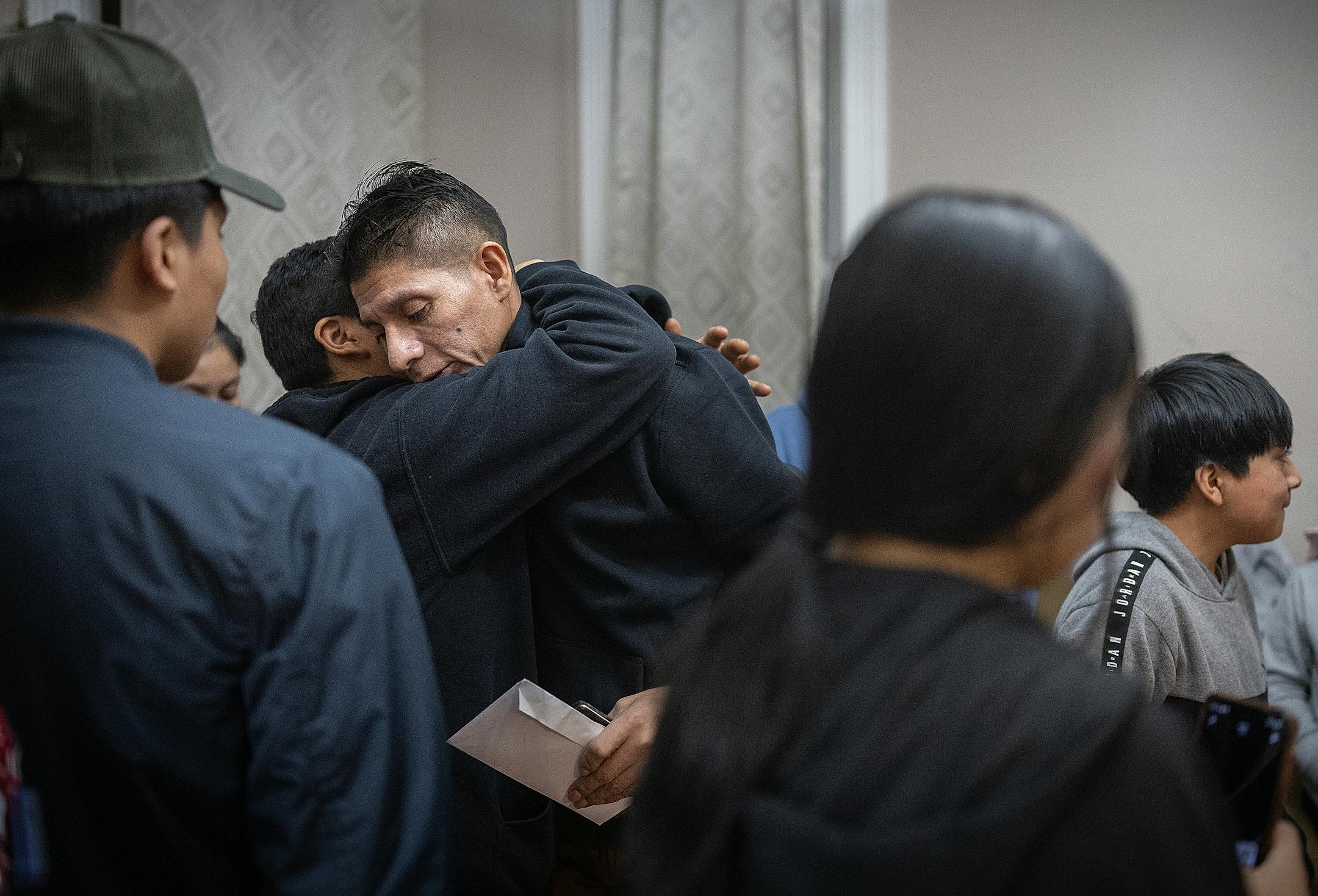
In late December, Segundo, Maria and their youngest son, Jairo, made the difficult decision to self-deport and return to Ecuador. “I don’t want to go,” cries Jairo, 14, at left, third from right, as he says goodbye to his brother and cousins. At right, Jairo's father, Segundo, 43, prays alongside his family during the goodbye gathering at his home in Minneapolis on Jan. 23. Photos by Elizabeth Flores

Trying to build a new life

The family came to the U.S. in 2021, crossing the border near Eagle Pass, Texas, to seek asylum. Segundo worked for a Minneapolis company as a roofer, and Maria made wreaths in a factory.
Over nearly five years, they watched their kids grow up in the U.S. Two of their daughters married and had children. Their youngest son, Jairo, was learning English.

Asylum cases are always a long shot, so on the advice of an attorney, the family dropped their claim and instead applied for U visas, a temporary legal status for crime victims that is a pathway to permanent residency.

About a year ago, Segundo began struggling with chronic kidney infections that he believes were the result of a previous work injury. Last winter, his fever spiked so high he had to be hospitalized for several days.

As Minnesota’s immigration enforcement ramped up, the family limited how often they left their apartment. They relied on donated food and other necessities from friends and fellow church members.

By late December, the risk of being detained and Segundo’s ongoing health problems increasingly worried his family in Ecuador.

In late December, the family decided Segundo, Maria and Jairo would leave. An older son, two daughters and a grandson, who is a U.S. citizen, would stay behind and hope the enforcement surge dies down.

“We feel like prisoners,” Segundo said. “We don’t make a lot of money in Ecuador, but at least we can enjoy life.”

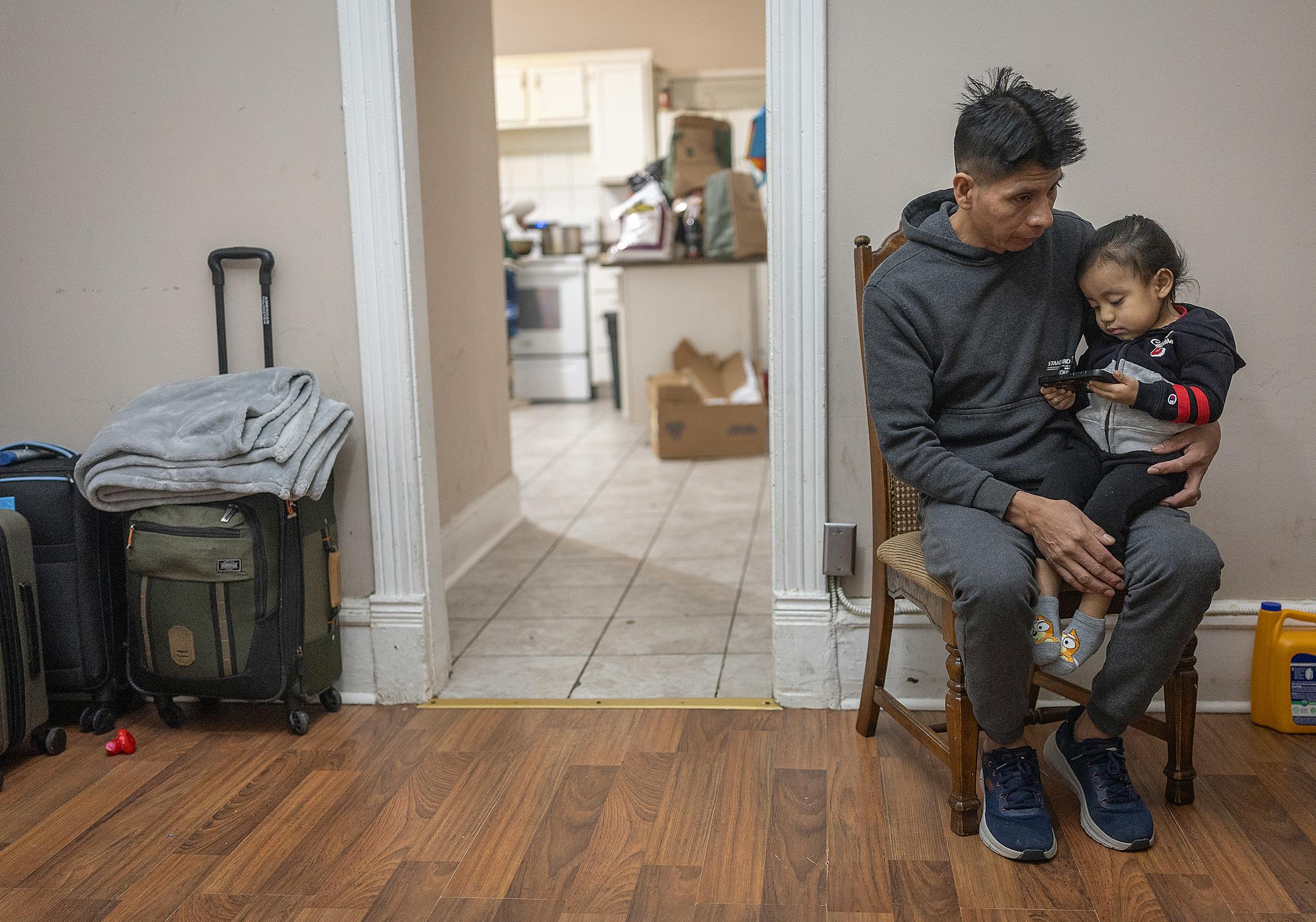
Segundo plays with his grandson before a family gathering in Minneapolis on Jan. 22, the day before he, his wife, Maria, and their youngest son, Jairo, returned to Ecuador. They are among the estimated tens of thousands of immigrants who have left the U.S. voluntarily in the past year rather than risk detainment and deportation. (Elizabeth Flores/The Minnesota Star Tribune)

Thousands leave voluntarily

It’s unclear exactly how many immigrants have decided to leave the U.S. because of President Donald Trump’s mass deportation push.

The administration claims, without providing evidence, more than 2 million have departed voluntarily. In March, Customs and Border Protection launched the CBP Home Mobile App, which provides an incentive of up to $2,700 to immigrants who voluntarily leave the country, but it has not released numbers on who received the payments.

An analysis of U.S. Census data by the Brookings Institution found that, for the first time in at least 50 years, tens of thousands of immigrants left the U.S. in 2025.

Segundo’s family initially wasn’t aware of the departure incentives. They wouldn’t have applied because they’re leery of the government and fear for family members staying behind.

Preparing to leave

It took a few weeks for Segundo to get their travel plans in order. They’d fly from Minneapolis-St. Paul International Airport to Atlanta and then on to Quito, the capital of Ecuador.

While they were preparing for the journey, the enforcement operation ramped up even more. Renee Good was shot and killed by ICE agent Jonathan Ross less than two miles from their apartment.

They kept a close watch on the street and asked visitors to park out of sight. One time, ICE agents approached the front gate to their yard but eventually left.

Segundo and Maria’s daughter, Natalie, and her husband were not so lucky. They planned to stay in the U.S. with their son, who is a U.S. citizen, but those hopes were dashed in mid-January when they were detained at work.

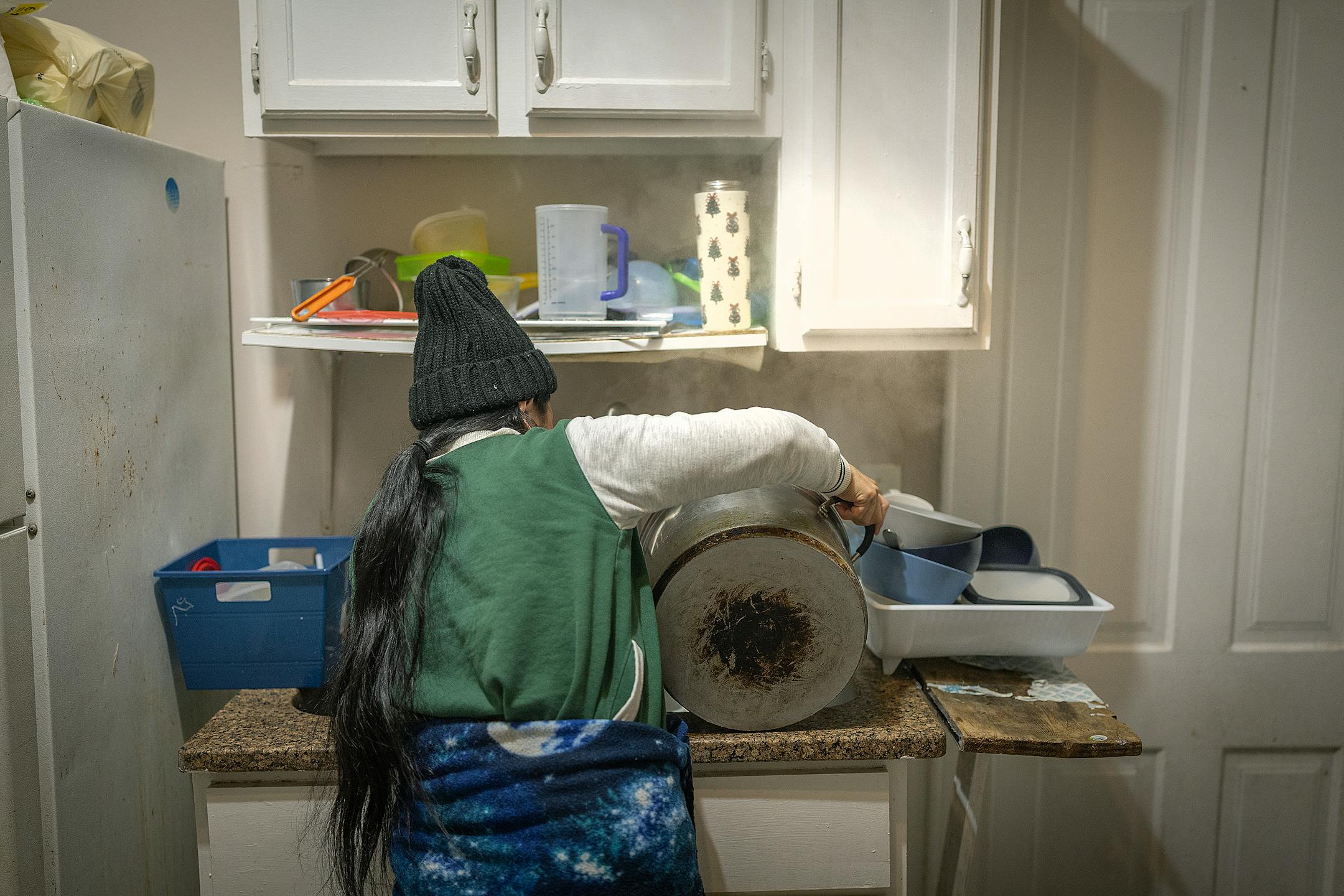
Maria said that she wanted to cook for her family one last time during a goodbye gathering in their home in Minneapolis on Jan. 22. (Elizabeth Flores/The Minnesota Star Tribune)

Natalie and baby Ethan were sent to a hotel in Texas before agreeing to return to Ecuador. For weeks, Natalie was unsure where her husband was being held.

Family and friends gathered with Segundo, Maria and Jairo the night before their flight to say goodbye. The mood was solemn with thank you speeches and songs.

A local bishop gave the family a blessing for their journey.

The transition has been hard on Jairo, who says he’ll miss school, his friends and going to places like Walmart and the Mall of America. He already has plans to return in 2030.

“Then I will be 18, and there will be a new president,” he said.

At left, Bishop Kevin Kenney prays over Segundo, his wife, Maria, and their youngest son, Jairo, the night before they fly back to their home country of Ecuador. At right, Jairo, 14, breaks down after his friend JP, a former Marine veteran, gave him an American Flag badge as a parting gift. “Remember the good times,” his friend JP told him. Photos by Elizabeth Flores

A nervous trip

It was a frigid 22 degrees below zero the morning the family arrived at MSP before dawn. Terminal 1 was bustling with travelers, and later that morning, more than 100 ICE protesters would be arrested.

The family checked a bag and nervously got in line for airport security, worried they could be detained even though they had travel documents from Ecuador. When they got to their gate, they breathed a sigh of relief.

That night, Segundo, Maria and Jairo landed in Ecuador. They’d soon reunite with Natalie and baby Ethan, but they don’t know when they’ll see the rest of their family again.

Segundo was sorry to leave the U.S., but he doesn’t have any animosity toward their adopted home.

“I understand this hate is not from the people, it’s from the federal government,” Segundo said. “Every country has good and bad people. When people do bad things, good people suffer.”

Abel, wearing a buffalo plaid hat, keeps a watchful eye for ICE agents as he waits in line to make sure Segundo and his family make it out safely at Minneapolis-St. Paul International Airport on Jan. 23. (Elizabeth Flores/The Minnesota Star Tribune)
about the writer

about the writer

Christopher Magan

Reporter

Christopher Magan covers Hennepin County.

See Moreicon

More from Minneapolis

See More
card image
Elizabeth Flores/The Minnesota Star Tribune

An immigrant family from Ecuador said they felt like prisoners in their Minneapolis home.

card image