

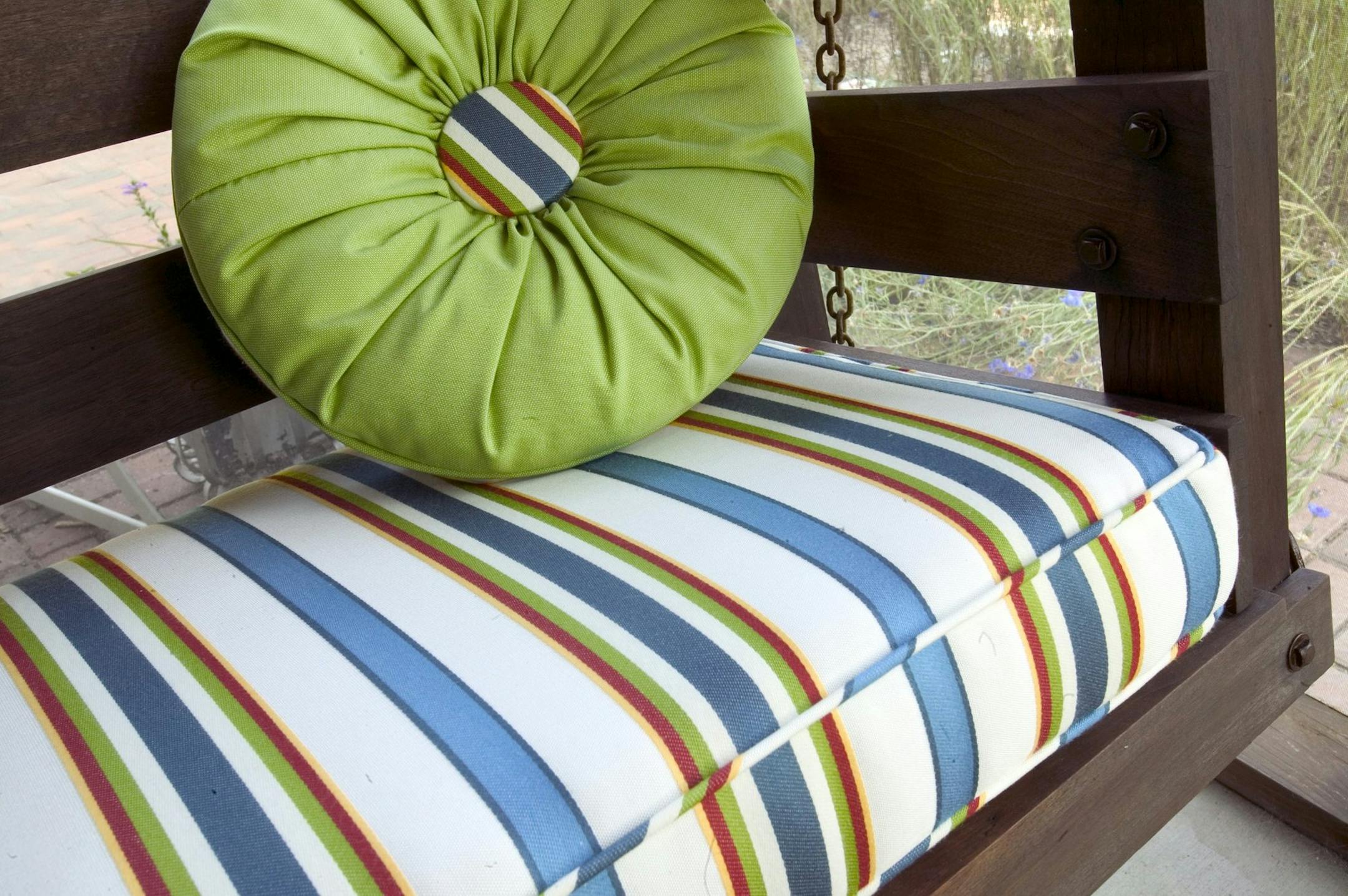
Q: I have all-weather fabric, and I want to sew pillows. What should I fill them with? Can I make them waterproof?
A: Most outdoor pillows and cushion inserts are not fully waterproof, but most are water-repellent. Water is bound to seep into pillows that are left uncovered and subject to rain. If you are sewing your own covers, construct them with an opening that lets water drain out.
Pillow inserts: When buying inserts, avoid feather and down, which will retain water. Instead, opt for washable polyester inserts. (Sewing an envelope-backed case for your pillow allows you to remove the insert and wash it from time to time.)
Cushion foam: If you're making a cushion for your outdoor couch or chair, certain foams are good to use as inserts: Dryfast foam ($108 for one 3-by-50-by-45-inch sheet, thefoamfactory.com) dries quickly and is less prone to mold and mildew. An alternative is durable, elastic Dacron foam, a synthetic polyester that can be found in most fabric or upholstery shops, and can go through the washer and dryer.
Maintenance: To ensure a fabric's vitality through several summers, it's important to properly care for your outdoor items. The best-quality outdoor fabrics are made of a breathable 100 percent solution-dyed synthetic fabric, such as Sunbrella or Sun N Shade. These cloths can be wiped down (if casing isn't removable) or hand-washed (if casing is removable) with warm water and a mild soap. If mold or mildew becomes an issue, spot-treat with a bleach-and-water solution, and then lay the fabric flat and let it air-dry.
Reviving a Berber rug
Q: My large Berber rug looks matted down in some areas because of heavy foot traffic. How can I revive it?
A: Many Berber rugs are durable and ideal for busy areas, but their looped style is more susceptible to matting than a cut-pile rug. This is because dirt and soils that lodge in the looped fibers are very difficult to remove, says Mike Reed, president of Austonian Fine Rug and Carpet Care in Austin, Texas. When people walk on the carpet, the entangled particles separate and abrade the threads, crushing them.
How you clean the rug will depend on what material it's made of. Leave wool, which may bleed or shed profusely, and handwoven rugs to an expert. If you have a wool or nylon Berber carpet, a professional cleaning every two to three years should restore it. Often this involves a machine known as an extractor, which sends hot soapy water into the carpet and then sucks it back up, along with the embedded grit.


