

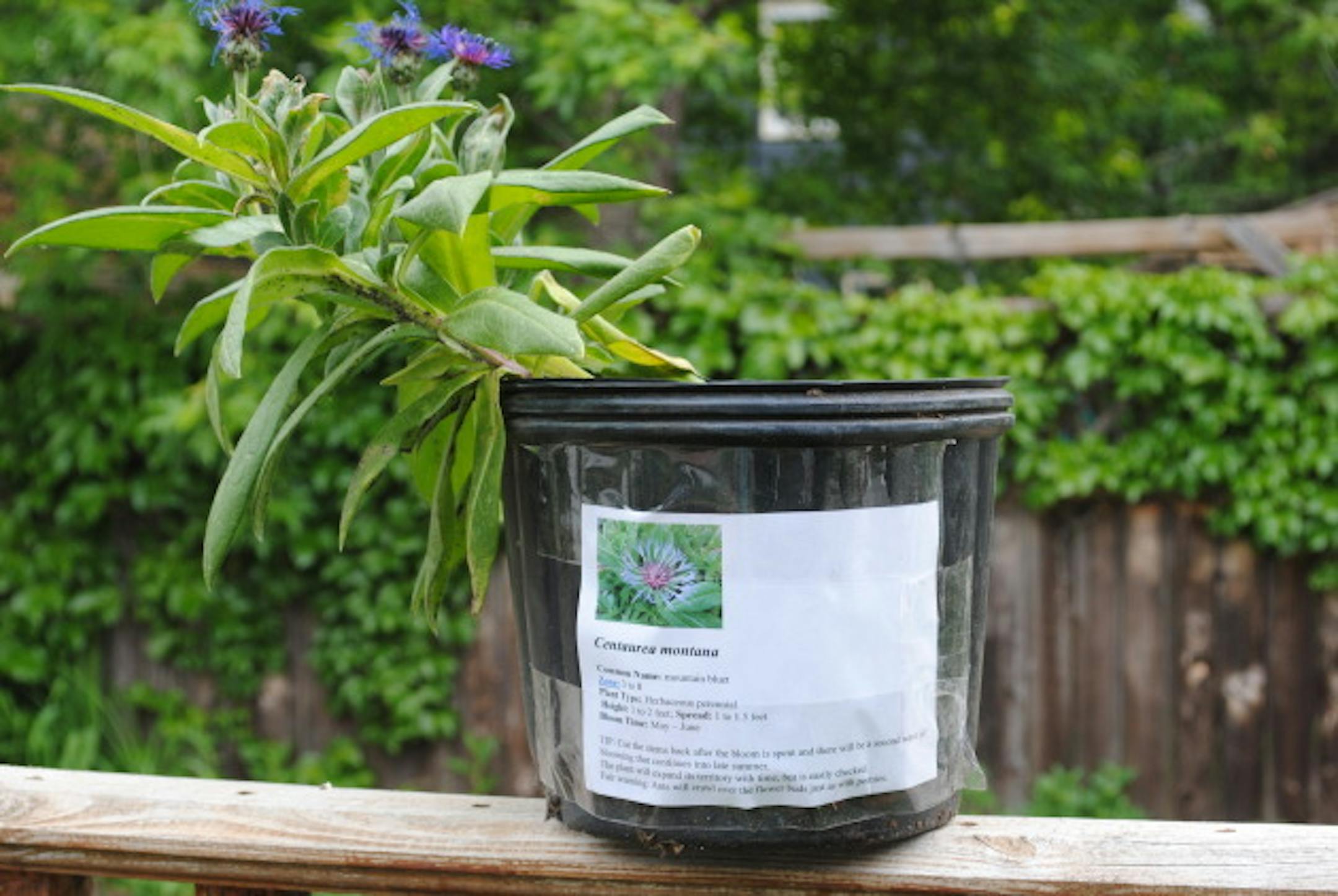
I took advantage of the cooler morning to dig up some plants for this Saturday's Greengirls plant swap (10 a.m. to noon, May 19 across from the Star Tribune, more details below and at www.startribune.com/lifestyle/homegarden/150638725.html).
The best thing about plant swaps is they're free. The next best thing is that there's no wrong way to go about them. They require no more effort than putting garden clog to shovel to dig up some of your extra plants and plop them in a bag to bring along. That said, here are some tips to help you get the most return on your time investment:
1. If you opt for the transplant in a bag method, it's best to dig up the plants shortly before the swap. They won't last as long out of the dirt, especially if they spend any time in Friday's heat. Plus, they'll look a little bedraggled if they've spent too much time in a bag, and won't look as appealing to potential traders. I always keep back a few plastic garden center pots for transplanting and put the plants in a bit of dirt. Then I put even the sun-loving transplants in the shade for a few days to help them get over the shock.
2. Got any leftover garden flats? It's handy to have a way to carry home your finds. I always go into the plant swap figuring I'm just there to get rid of my excess plants, but a few gems always seem to follow me home. One woman came well-equipped with a little red wagon she pulled around to make her trades.
3. Should you arrive early or late? Well, both have their advantages. The most gung-ho swappers tend to arrive at the beginning, and if you're set on finding a specific plant, your best luck is to come at the beginning and stay until that plant shows up. But last year someone with a treasure trove of heirloom veggie seedlings arrived well into the last hour, so you never know. Many people who get what they came for leave their excess plants on the leftovers table when they go, so throughout the event you may be able to score swap-free plants, especially in the last hour.
4. Labels aren't necessary, but they don't hurt. If it's clear what your plant is, you needn't bother. But a lot of plants are hard to identify before they reach the bloom stage, and people are more likely to offer to trade if they don't have to ask what the plant is. Just putting the name on a strip of masking tape will help. I get a little carried away with labels that include name, description of size, bloom time and sun/shade requirements and possibly a picture of the bloom, but then again, I do this sort of thing for a living. But any sort of label can help your trading prospects. That said, if you have a plant you'd like to swap but aren't sure of its name, don't let that stop you; just be prepared to describe it when people ask. (Anyone want a volunteer clematis that I'm not sure what kind it is?)
5. Don't be afraid other people won't want your plants just because they're the usual suspects. Sure, there are a lot of hosta, daylilies, lily of the valley and snow on the mountain. But someone always seems to have a place they need some more of those. One year my offerings included some curly-leafed green and white hosta I figured no one would need, but some woman wanted them who said, "You wouldn't want snow on the mountain would you?" As it turned out, I had a shady, otherwise weedy patch bounded on four sides by concrete where they've been perfect.
6. If you wind up bringing home some plants in a bag, be sure to get them in soil right away if you can. It doesn't have to be in their final resting spot if that's not ready. Just put them in a bit of soil in a pot so they have a fighting chance. If you don't have time for that, at least keep the bags moist so your trades don't go to waste.


