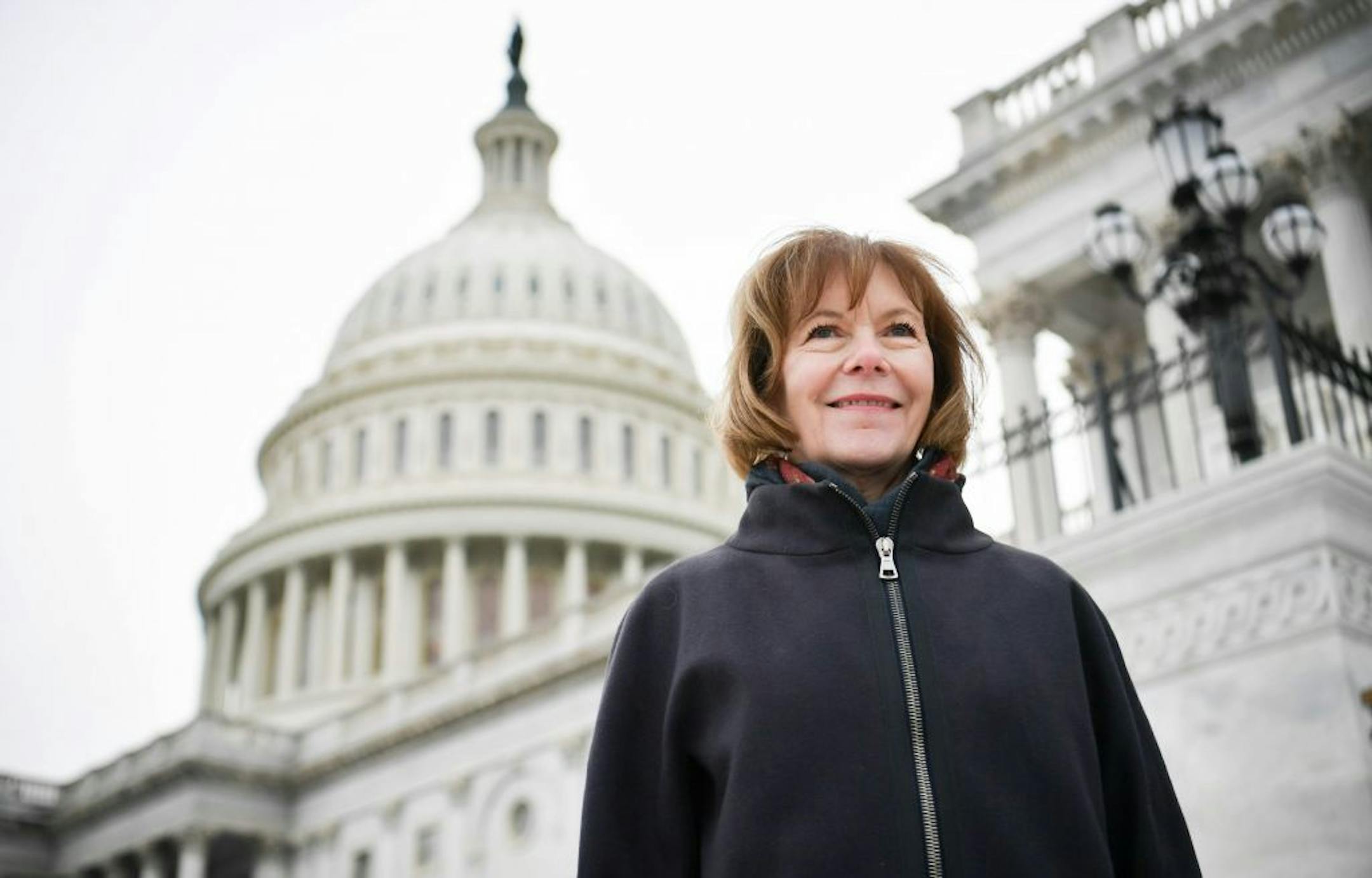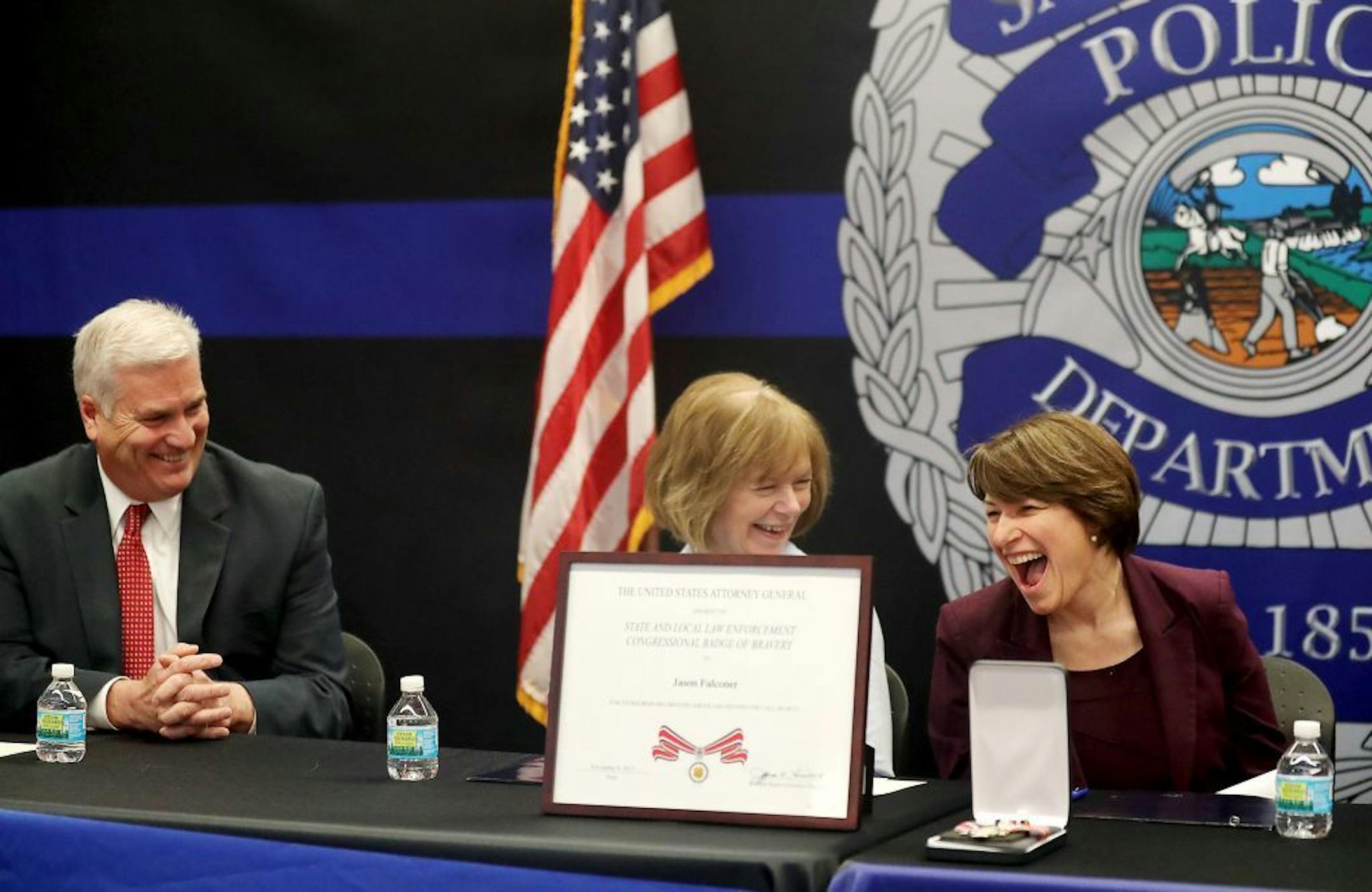
WASHINGTON – U.S. Sen. Tina Smith was trying, with limited success, to fold a tiny paper crane.
Around Minnesota's newest senator sat some of the most powerful women in the country, grumbling and mangling paper birds under the watchful eye of their host and impromptu origami instructor, Sen. Mazie Hirono of Hawaii. The 23 women of the 100-member Senate share a bipartisan meal every month, but every Senate tradition is a novelty for a newcomer like Smith, who can still number her tenure there in weeks.
"I thought to myself, 'Who ever would have imagined four months ago that I would be sitting around folding cranes with Dianne Feinstein?'" said Smith, Minnesota's former lieutenant governor, who was appointed to the Senate in January after Sen. Al Franken resigned amid sexual harassment accusations.
Smith recently passed the first 100 days in the Senate, and she is just under 200 days away from facing the voters who will decide whether she gets to stay. It's a special election that could cost Democrats a seat they never thought they'd be defending, in a year when control of Congress could easily hinge on a single seat.
As Minnesota's junior senator, Smith has already sponsored her first dozen bills and amendments, weathered her first two government shutdowns and raised nearly $2 million for her campaign.
"Learning how to be a good senator isn't something you're born knowing how to do," Smith told the Star Tribune. "That takes time to figure out."
Racing against the clock
Time is one thing Smith lacks. Republican state Sen. Karin Housley is challenging Smith in November; whoever wins will have to pivot immediately to campaign for a full six-year term in 2020, turning a run for office into a three-year marathon.
When Smith first entered the Senate, a Star Tribune poll found that more than a third of respondents didn't recognize her name, 41 percent didn't know enough about her to form an opinion, and 17 percent didn't like what they'd heard.