

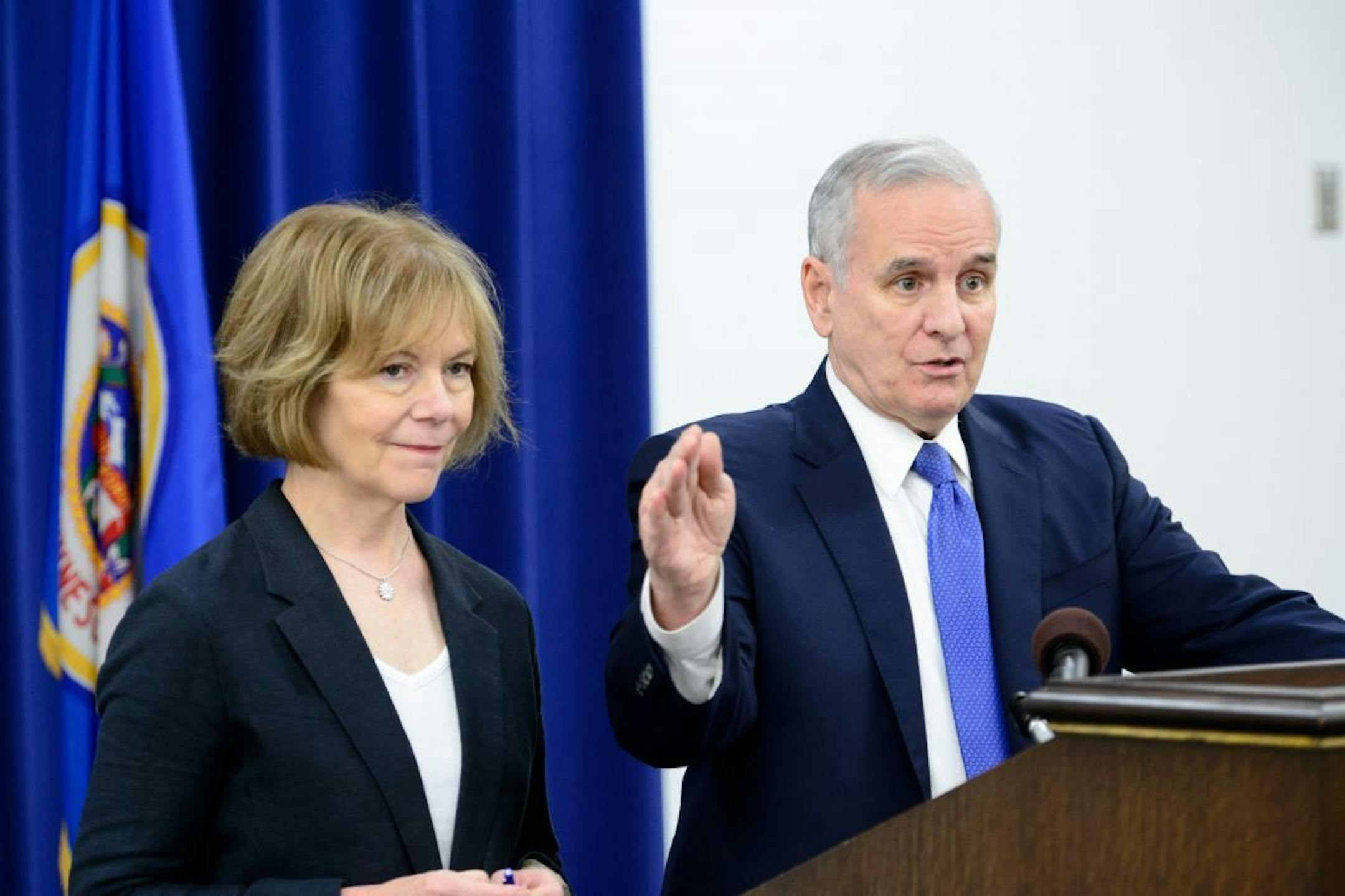
State political leaders fell short Tuesday of finalizing an overall deal on the state budget, trying to iron out final details and clear the way for the special legislative session.
GOP House Speaker Kurt Daudt met on and off throughout the day with top emissaries of DFL Gov. Mark Dayton, including Lt. Gov. Tina Smith, who spent time with Daudt in his office near the Capitol.
"Nothing is ever buttoned up until you have the button in the button hole," Smith said as she left Daudt's office. "That's what we're working to do."
Dayton and Daudt had come to a tentative deal a day earlier on the total level of state spending on education for the next two years, which had been the principal sticking point in the talks over recent days to bring a protracted legislative season to a close.
But that deal left numerous details to finalize, both in how exactly some of the new money for schools would be spent, and in working out small disagreements across two other state budget bills that Dayton had vetoed, along with questions about whether the special session should include several other spending measures that legislators failed to finish in the harried closing hours of their regular session last month.
Both Daudt and Smith expressed optimism about locking down final details, and throughout the day Daudt was still optimistic about a special session as soon as Thursday or Friday. Other participants to the process said next Monday or Tuesday might be more feasible.
One outstanding question is whether lawmakers in the special session would take up a package of bond-backed construction projects. The state Senate passed a bonding bill of about $100 million in the final minutes of session, but the House ran out of time.
The bonding bill includes several uncontroversial provisions, including money for the Capitol renovation and some disaster relief funds. But bonding bills are always tough to pass, since issuing debt in the state's name requires a two-thirds "supermajority" vote in both the House and Senate. That means such votes must be bipartisan, and House Minority Leader Paul Thissen said Tuesday that House DFL members are likely to see $100 million as insufficient.


