

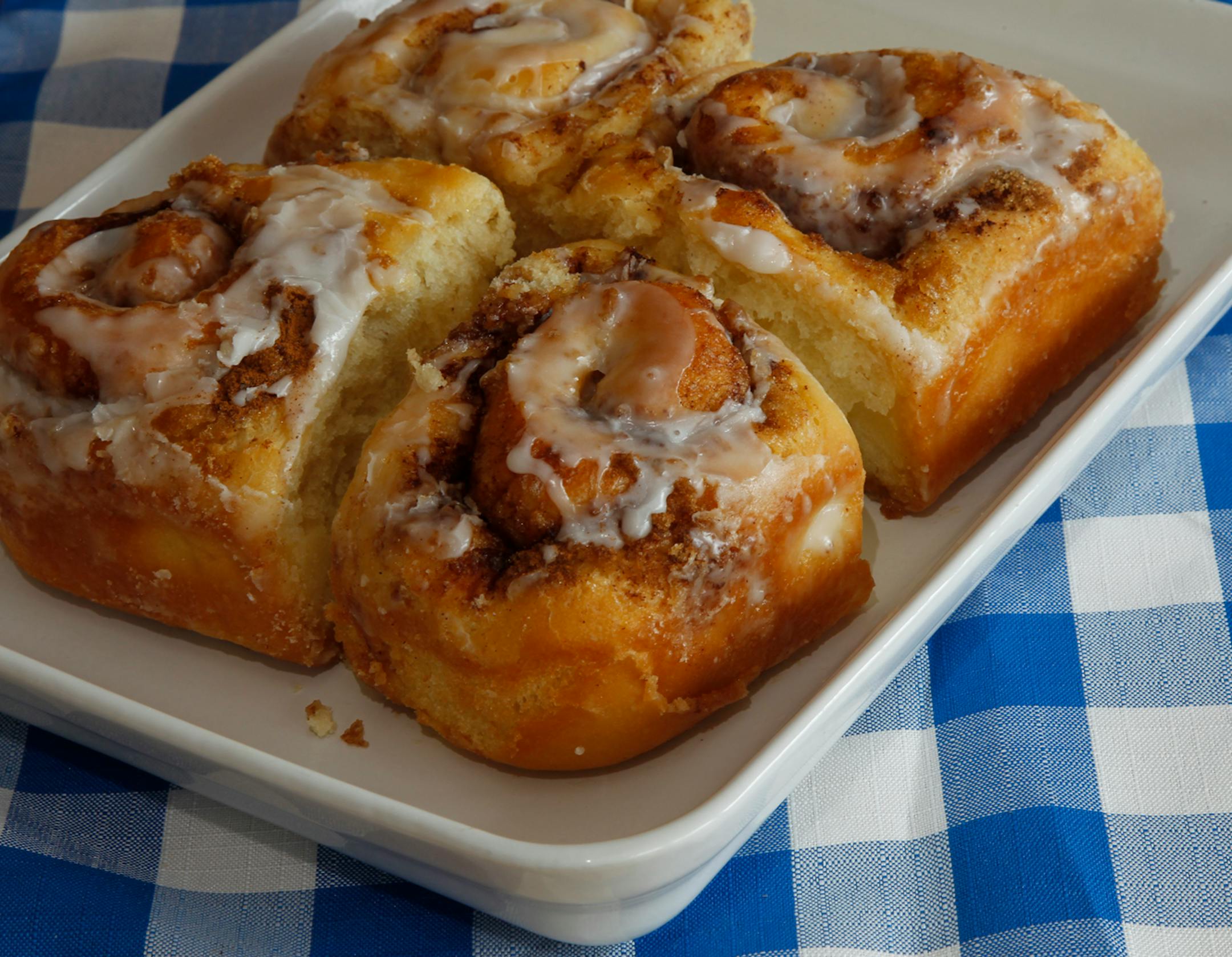
Two words: cinnamon roll.
OK, that was almost too easy. Yet today, while you're on the treadmill, or balancing your checkbook, or changing lanes, or reading a bedtime story, you will be thinking of having a cinnamon roll, ideally within the week. Maybe even sooner.
Such is the power of suggestion, especially when the suggested object is gooey and spicy and soft and sweet all at once.
Cinnamon roll.
Once you get one on a plate, you'll look for that subtle seam where the swirl begins and start pulling the roll apart in soft, cinnamony arcs, edging toward the core of the coil, which you know is the cinnamoniest and the gooiest bite, even as it's also the last.
While some may swear that there are no truly awful cinnamon rolls, there are substandard models. You know the culprits: The bread is dry or dense, the filling is stingy, or the glaze is grainy. The disappointment is tough to swallow, because cinnamon rolls aren't something we eat every day (or shouldn't, anyway).
One way of making sure you're enjoying the freshest, best rolls possible is to make them yourself. Cinnamon rolls aren't difficult, although their feather-light nature starts with a dough that admittedly is on the sticky side. While it's possible to knead it by hand, ideally with a bench scraper, life is a lot easier with a stand mixer and a dough hook.
Because the rolls are a yeast dough, and warm rolls are best, timing can be an issue since the process, from start to finish, takes about four hours. Rolls made the night before can be wrapped in aluminum foil and rewarmed in a 250-degree oven for 15 minutes. Or you can wake up before the sun to mix them, let them rise, shape, rise again and bake. Or schedule a late brunch!


