

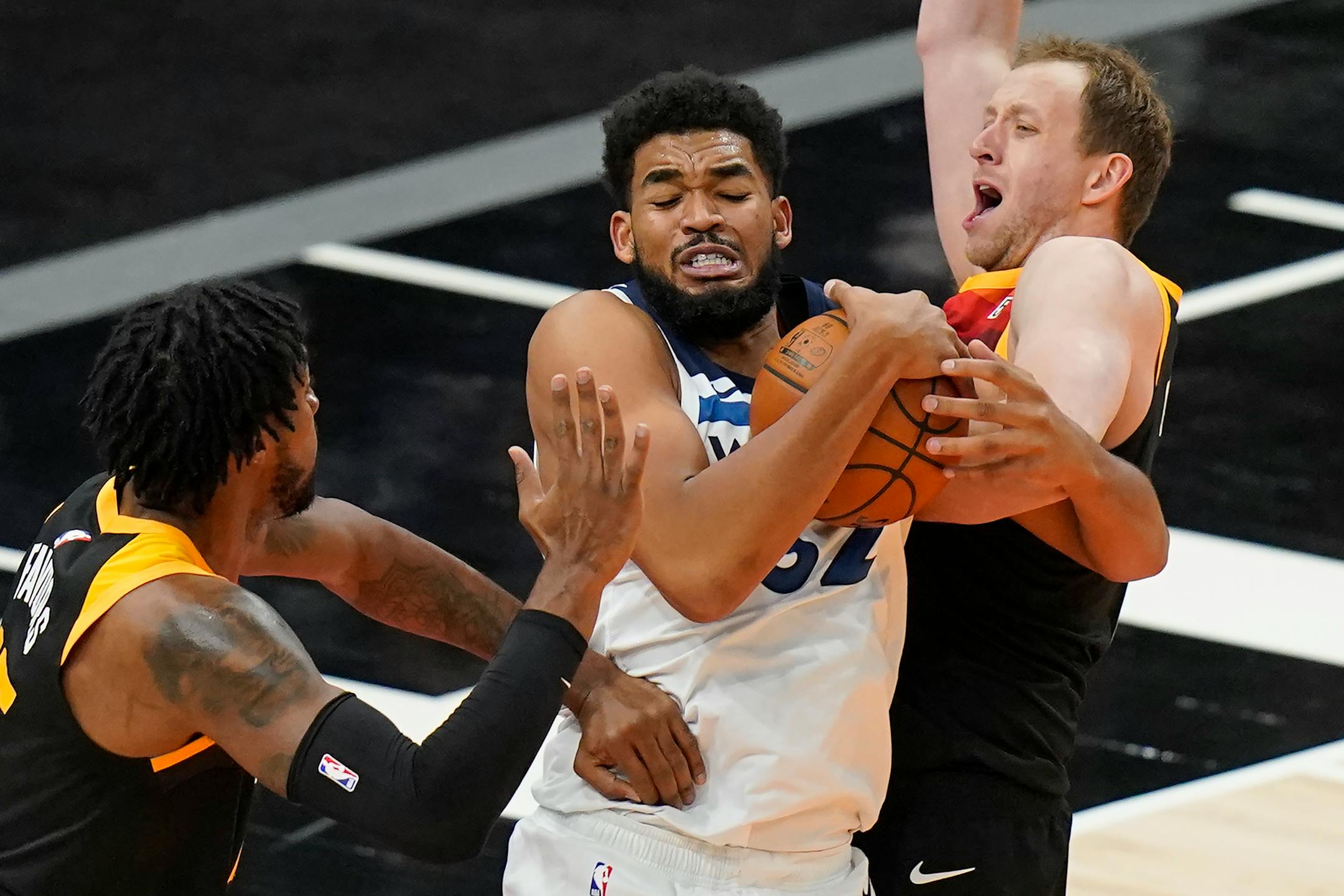
After a Timberwolves practice last week, coach Chris Finch responded to a question wondering if boxing out was a dying art in the NBA.
"No, it died a long time ago," Finch deadpanned. "No one boxes out."
That's just the way of the NBA. Players tend to rely more on their athleticism than making sure they use their body to stay between the player closest to them and the basket.
The Wolves could use all the techniques they can if they are going to improve on the glass this season. They are already a smaller team to begin with that doesn't have a traditional power forward type of player outside of Jarred Vanderbilt. Last season, they finished 24th in defensive rebounding percentage, a stat that measures how many of all available defensive rebounds the Wolves grab.
"I think it's just better fundamentals, better job by me and everybody," center Karl-Anthony Towns said. "It's a team effort. We all got to be better at it and that's what we're planning to do."
The Wolves have designs on making a significant leap in rebounding this year, but their on-ball and off-ball improvements won't matter if they can't end more possession after one missed shot.
"With the depth that we are capable of having, if you're going to rebound the ball, you can get on the floor. If you can't, it's going to be hard," Finch said. "But it's habits. We just got to keep building these habits and breaking some old ones. It's going to take a little while."
The habits the Wolves need to break include just looking up at the ball as the shot goes up and not making any sort of contact with nearby offensive players.


