

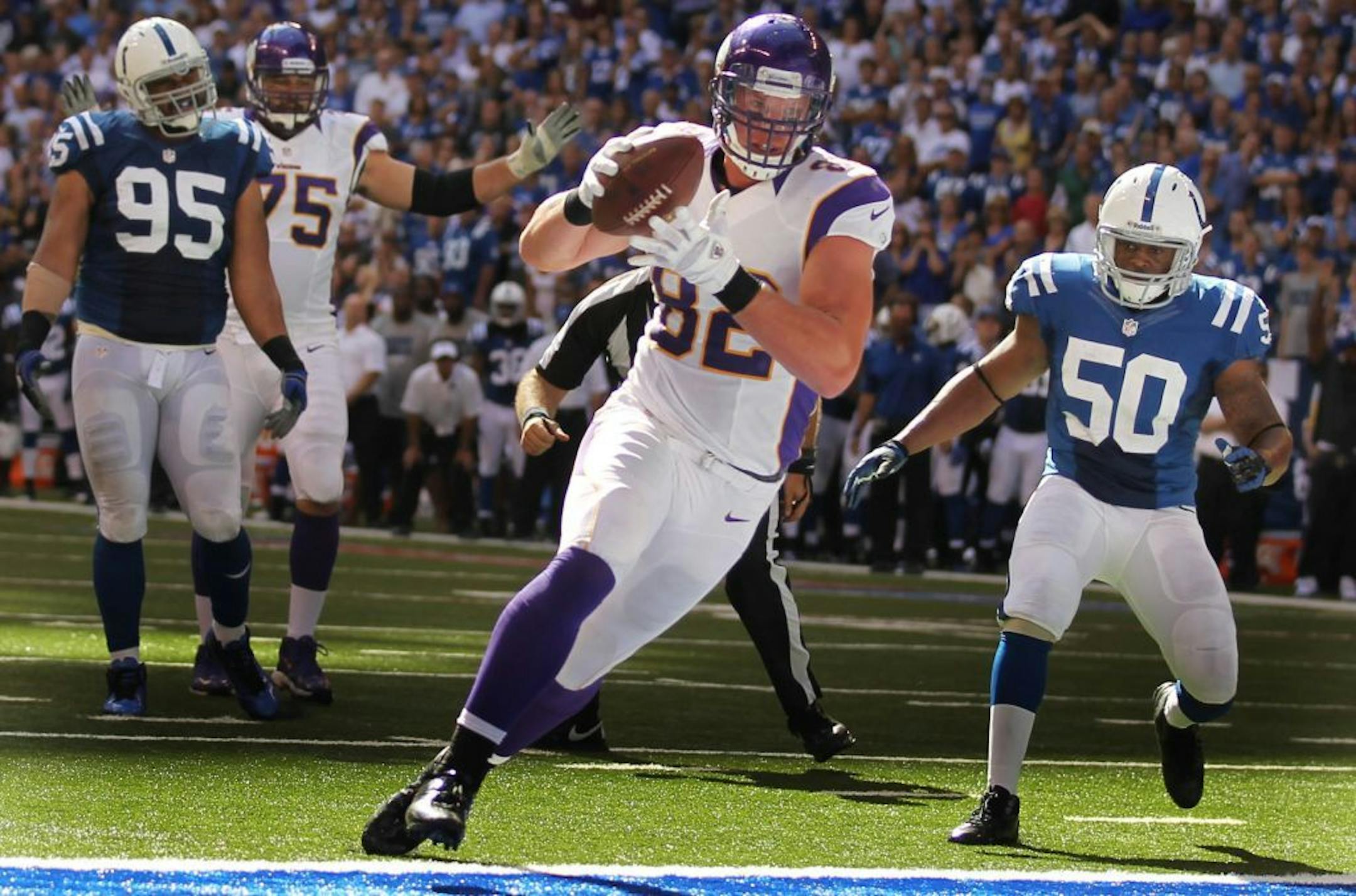
As a high school football player in Cincinnati, Kyle Rudolph marveled at the way Tony Gonzalez and Antonio Gates ran wild through NFL defenses as pass-catching tight ends. Rudolph saw endless possibilities for his position.
"That's when the position was just starting to change where you flex them out, move them around, treat them like a wide receiver type," said Rudolph, a second-year tight end for the Vikings. "That's all I've ever known as far as the position."
Once employed primarily as in-line blockers and anonymous grunt workers, tight ends have evolved, becoming an integral component of offenses as primary receivers. Teams covet big, fast, athletic tight ends because they create fundamental mismatches for defenses. The new breed is too fast for linebackers, too big for safeties.
Statistics reflect the shift in philosophy. In 1990, no NFL tight end caught 60 passes. Six reached that mark in 2000, and 11 did in 2011, led by New Orleans' Jimmy Graham with 99.
Six tight ends finished in the top 17 in the league in receptions last season.
"That position has dramatically changed," Vikings coach Leslie Frazier said. "They have become almost another wide receiver with so many teams today. It creates some mismatches for defenses trying to match up with linebackers and safeties. All of a sudden, [defenses] have to put personnel on the field that doesn't fit, and it creates problems."
The Vikings face another difficult matchup Sunday in San Francisco's Vernon Davis, who caught seven passes for 96 yards and two touchdowns in their 2009 meeting. Pass-catching tight ends have given the Vikings fits in recent years. Since 2009, 10 tight ends have led their teams in receptions against the Vikings.
"Now there are so many," Frazier said. "Almost every team in the league has a guy who has the capability to be distant from the formation, not just in the box like there once was."


