

"Armed with the power of declaring laws to be unconstitutional, the American magistrate perpetually interferes in political affairs. Scarcely any question arises in the United States which does not become, sooner or later, a subject of judicial debate ... ."
So wrote Alexis de Tocqueville in "Democracy in America" nearly two centuries ago. At least in his more conservative moods, the famed French political philosopher thought this meddling by American courts was mostly a good thing.
"When the American [public] is intoxicated by passion, or carried away by the impetuosity of its ideas, it is checked ... by the ... influence of its legal counsellors," Tocqueville added. "Their aristocratic propensities [are a balance] to its democratic instincts, their superstitious attachment for what is antique to its love of novelty, their narrow views to its immense designs, and their habitual procrastination to its ardent impatience."
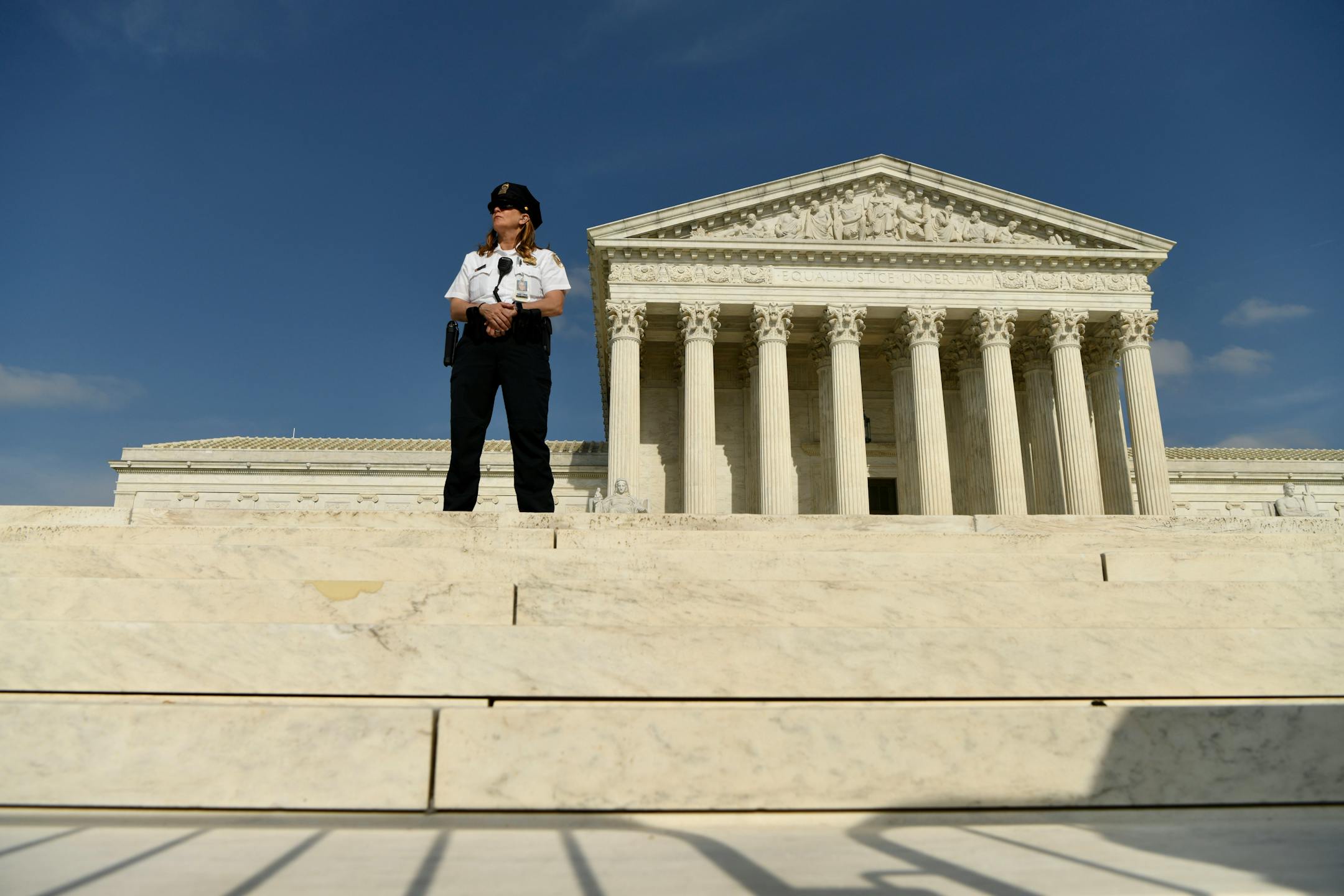
At least since the Dred Scott decision (1857) helped incite the Civil War, it's been debatable how reliably American courts have calmed rather than fueled the nation's political storms. But judges' perpetual presence near the center of the maelstrom persists.
We're about to witness an unusually vivid and timely demonstration.
Within the next few weeks, the U.S. Supreme Court will deliver its final decision on an abortion case in which a preliminary draft ruling overturning Roe v. Wade was leaked in early May. With the potential to bring the ever-smoldering politics of abortion to volcanic life across the country, the case of Dobbs v. Jackson Women's Health Organization has already set off a furious national debate. It only recently quieted a little when a shocking burst of mass shootings inspired an equally deafening crossfire of long-standing recriminations about gun laws.
And before the Supreme Court adjourns for the summer, it also will rule in a potentially explosive gun rights case, deciding to what extent states can restrict the right to carry weapons under the Second Amendment.
These two controversies are likely to inspire some curious contortions — both among the high court justices and among their critics and admirers — concerning the perpetual question for the court: Exactly how forcefully should the judicial power "interfere" with the nation's political affairs?


