

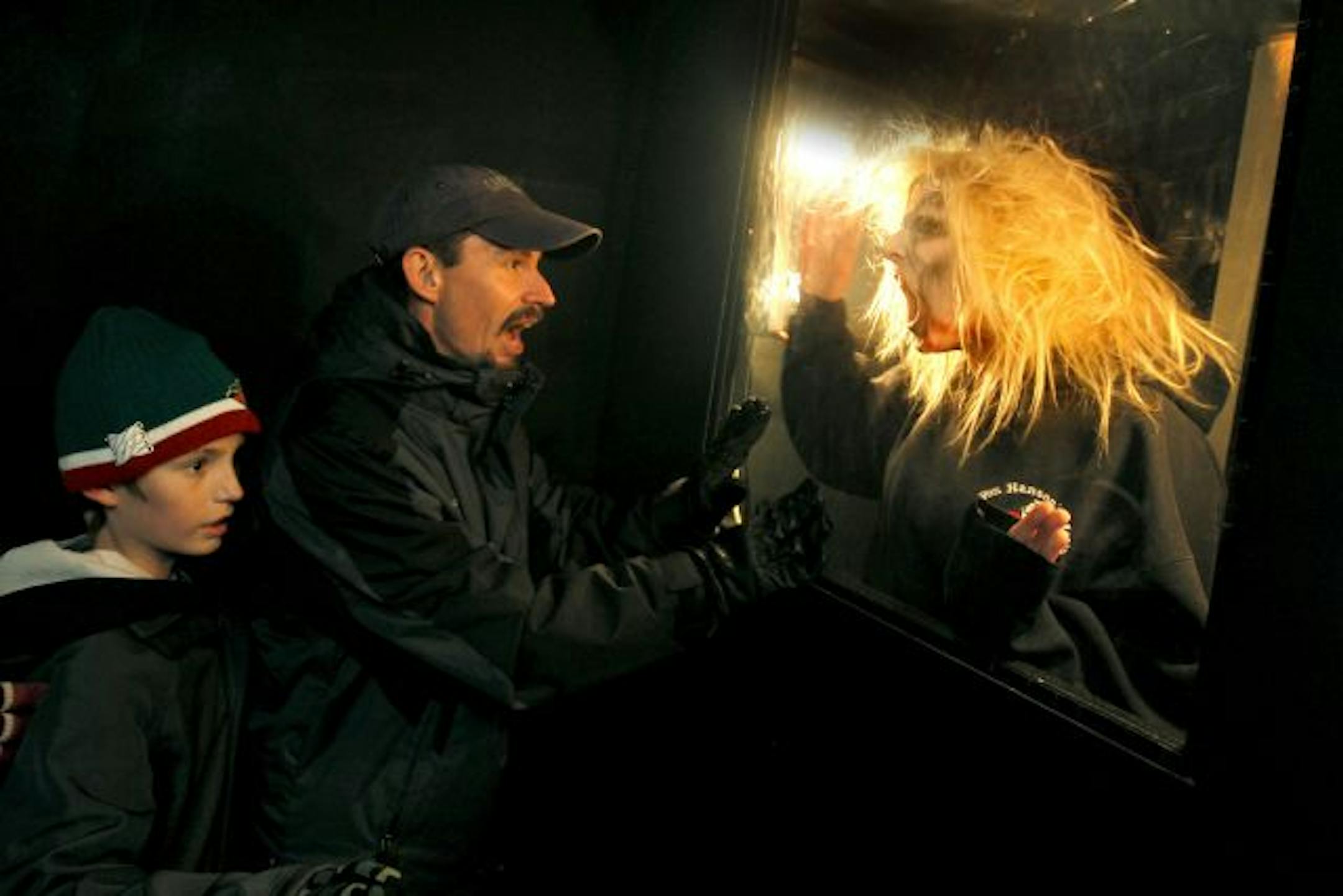
Every year, a few people bail out at the entryway to the "Haunted Basement" in southeast Minneapolis.
They've paid their $20, hoping for a good scare, then get cold feet. Some even call from home, pleading for a refund.
But there are no refunds at the Haunted Basement, says Lillian Egner, one of the hosts.
After all, if they're too afraid to set foot in the door -- well, mission accomplished. It's no accident that people feel their courage start to drain when they walk into the elaborate haunted houses that flourish at this time of year. The creators readily tap into the psychology of fear, using techniques that are known to manipulate people's emotions.
At the same time, experts say, visitors' reactions may depend as much on brain chemistry as on any sense of bravado, which helps explain why some people love a good thrill and others avoid it at all costs.
"Everyone has their threshold for stimulation and titillation," said Marc Mooney, an assistant professor of psychiatry at the University of Minnesota. "Some people are kind of predisposed to be scared."
Let the games begin
Will Grant, a lead designer of the Haunted Basement, says the goal is to play on people's primal fears. "The big thing is fear of the unknown," he said.


