

Steven Hogg grew concerned when he realized it had been awhile since he had seen — or smelled — a dead skunk.
Not everyone would consider that a problem. But to Hogg, wildlife supervisor for the Plymouth-based Three Rivers Park District, a lack of contact with striped skunks in the parks could suggest a decline in local populations of the aromatic mammals.
"I wondered, are striped skunks a part of our parks anymore?" he said. "Anytime you're missing something from the environment, I think that is at least a reason for concern."
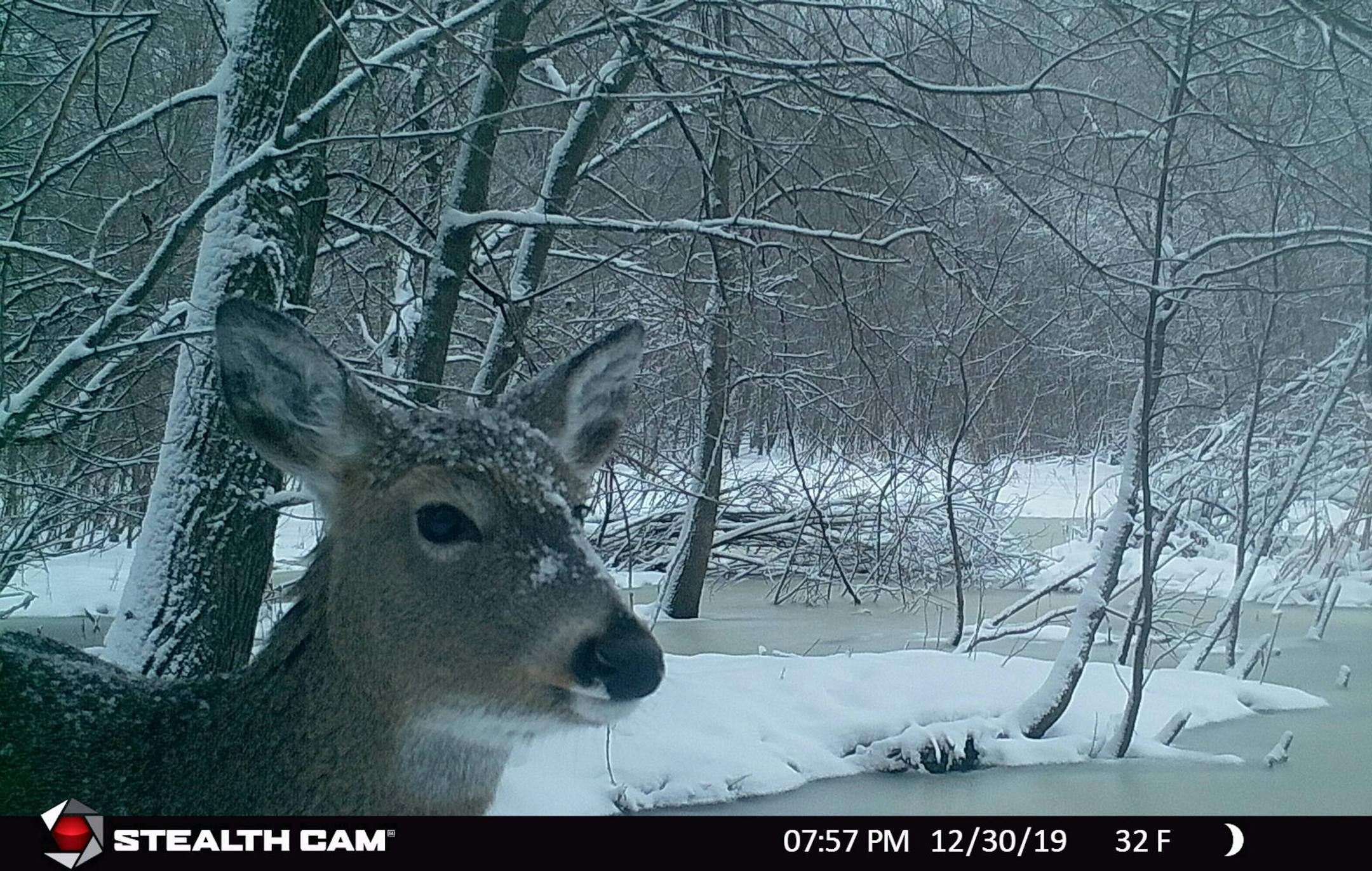
So Hogg decided to conduct what's called a camera trapping program. Launched in 2017, the project uses digital cameras, rather than physical traps, to capture images of animals in the wild.
The cameras are equipped with motion detectors that trigger their shutters, so they photograph anything that crosses their lenses. They also are equipped to take pictures in the dark.
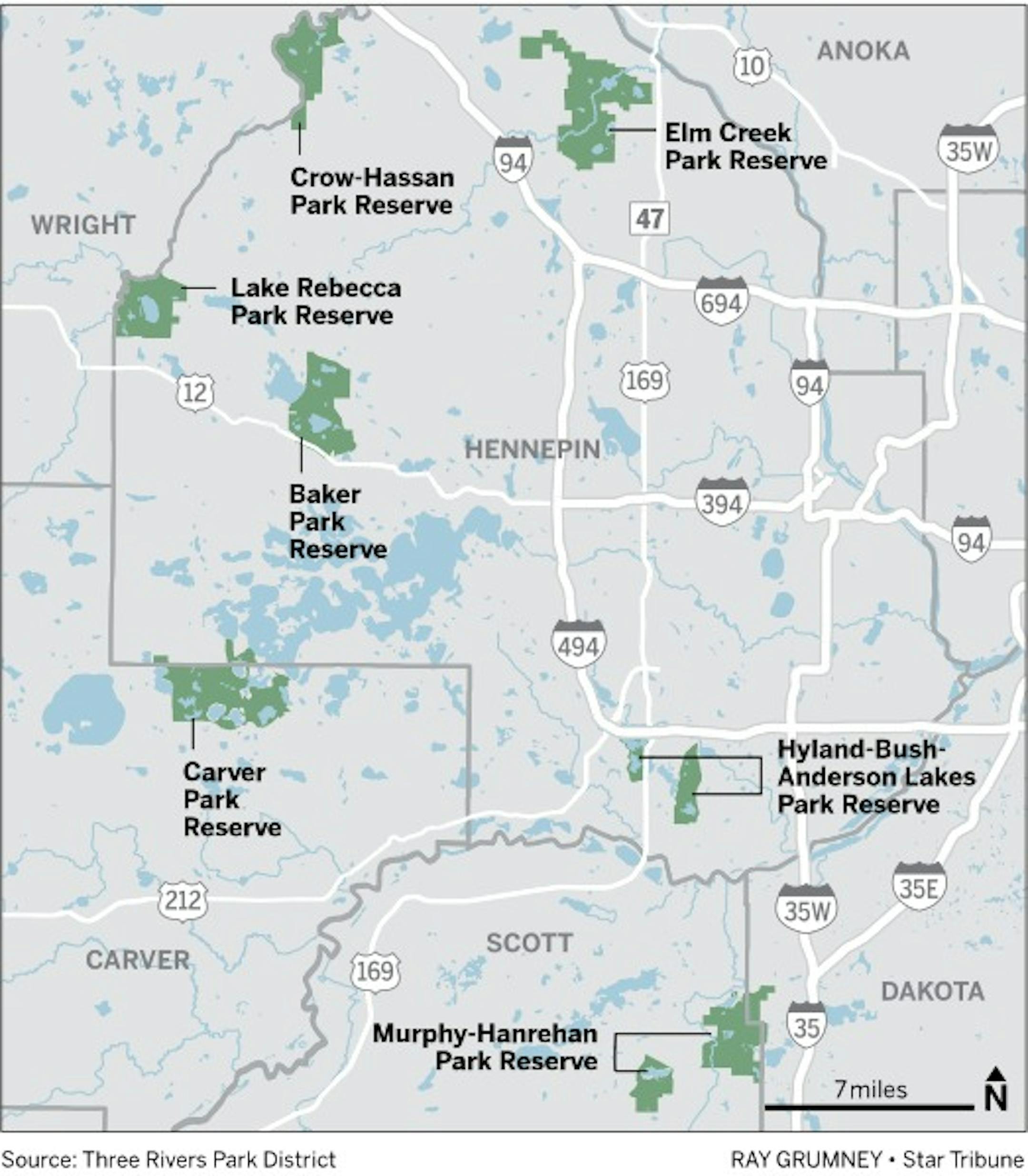
Volunteers, or "citizen scientists," regularly venture deep into seven Three Rivers park reserves around the west and south metro area, strap the cameras around trees and return every three weeks to collect the images and move the cameras to different locations. The project covers wide swaths of territory and produces tens of thousands of photos a year.
Over the program's three years, the cameras have captured coyotes, raccoons, wild turkeys, two kinds of fox, three kinds of squirrels, opossums, minks, owls, bats, a 4-foot-tall sandhill crane and its baby (called a colt) and thousands of deer — bucks, does and fawns.
Hogg was particularly interested when a photo was shot of a fisher, a member of the weasel family, because historically the animals have lived in northern Minnesota.
![Cheryl Batson is an avid camera trapper and volunteers for Three Rivers Park District to place her camera's throughout Elm Creek Park Reserve in Maple Grove, Minn. She collected three of her cameras on Friday, January 10, 2020 to take them home and update them. ] RENEE JONES SCHNEIDER ¥ renee.jones@startribune.com](https://arc.stimg.co/startribunemedia/NQE32AJW4RWWNC4DCGZYVREGJE.jpg?&w=1080)

![Cheryl Batson is an avid camera trapper and volunteers for Three Rivers Park District to place her camera's throughout Elm Creek Park Reserve in Maple Grove, Minn. She collected three of her cameras on Friday, January 10, 2020 to take them home and update them. ] RENEE JONES SCHNEIDER ¥ renee.jones@startribune.com](https://arc.stimg.co/startribunemedia/W7FTM7JKZMV6S3YWLW23HW7GIQ.jpg?&w=1080)
![Cheryl Batson is an avid camera trapper and volunteers for Three Rivers Park District to place her camera's throughout Elm Creek Park Reserve in Maple Grove, Minn. She collected three of her cameras on Friday, January 10, 2020 to take them home and update them. ] RENEE JONES SCHNEIDER ¥ renee.jones@startribune.com](https://arc.stimg.co/startribunemedia/G2SVTV7UTVPRGRZTOSXHLIMCSU.jpg?&w=1080)


