

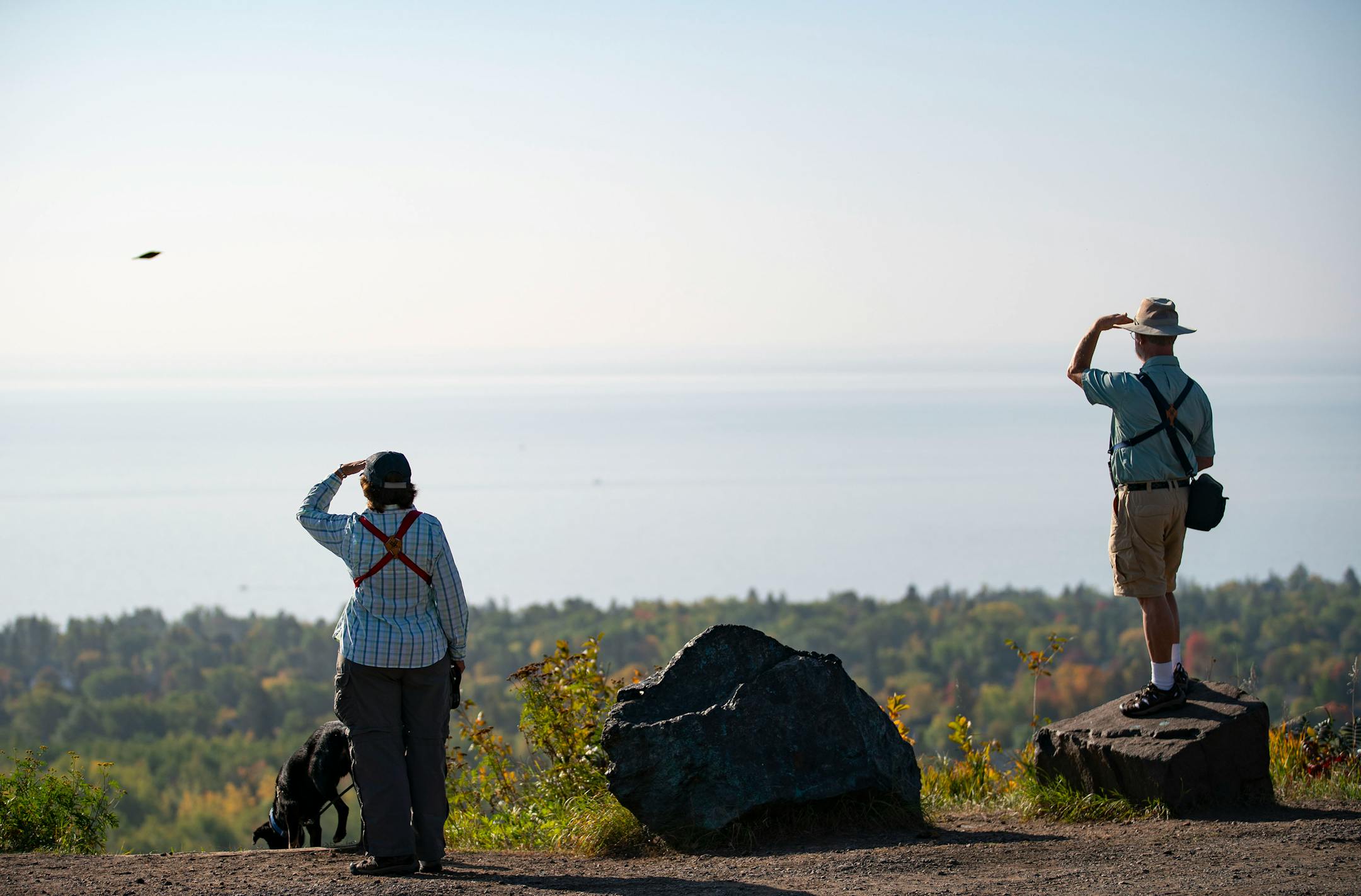
An all-day birding event Saturday on lands within the Three Rivers Parks District system isn't serious science, but it has value.
The Big Day count is part of the park system's Big Year of Birds, which featured a World Migratory Bird Day festival last spring at Eastman Nature Center, regular birding talks and a focus on cultivating interest among young people through clubs and camps.
Trying to identify birds Saturday — whether through their wing bars or tails or coloring or song — also will give Three Rivers staff a snapshot of what's at places like Crow-Hassan Park Reserve near Rogers, Murphy-Hanrehan Park Reserve in Savage and Carver Park Reserve in Waconia, where creating habitat is taken seriously by wildlife managers.
A variety of sparrows and meadowlark species in Three Rivers prairie systems are doing well, while their numbers are declining statewide owing to habitat loss, said parks district senior wildlife manager John Moriarty. In fact, Audubon says grassland species are the most imperiled birds in North America. They've declined by 53% since 1970, according to a study by leading research institutions in the U.S. and Canada. Eastern and western meadowlarks have decreased by a combined 139 million birds.
Three Rivers has strategically built up resilient prairies of 100 to 200 acres to attract birds and other wildlife, knowing it needs to carve out even larger areas if healthy bird populations are to thrive. Crow-Hassan has a 1,200-acre restored prairie complex, and work continues to add more prairie to Murphy-Hanrehan and Carver.
Ten teams of two to five people will course through parks district lands from 7 a.m. to 5 p.m. Saturday — Moriarty among one. They'll cover a variety of habitats, and conclude at Mississippi Gateway Regional Park. He knows he's likely to see some breeding great horned owls that reside at Silverwood, and he is hoping to see a variety of shorebirds that are moving through this time of September.
Counters will submit their findings through Cornell Lab of Ornithology's eBird app, which has become a standard for data collection, said Moriarty. Three Rivers already monitors the everyday tallies on its lands by eBird users, he added.
"[The count] gives us a good snapshot of what we can find at the beginning of the fall migration," Moriarty said. "Sometimes with that many eyes, you can pick up some species you don't ordinarily see."


