

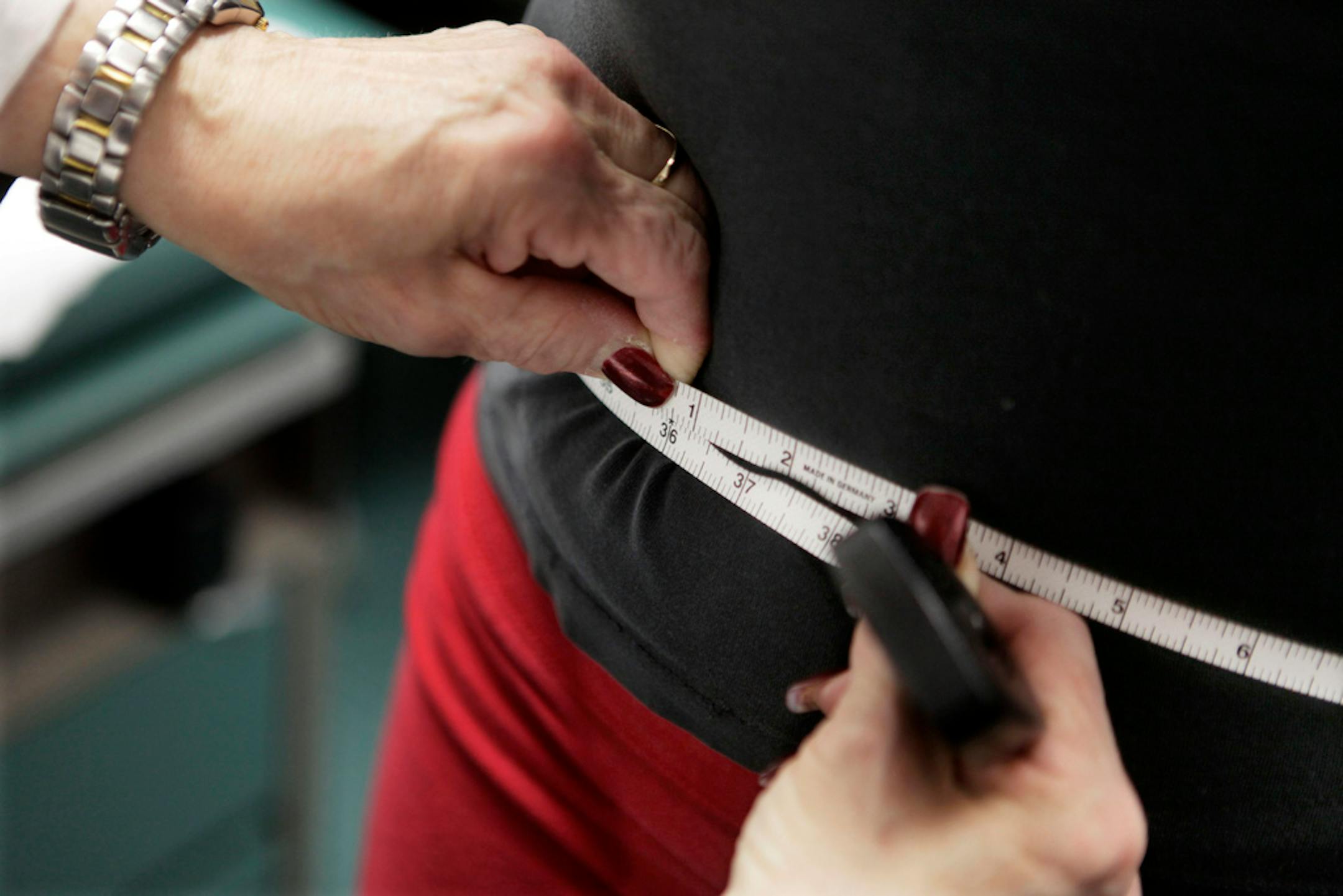
Nearly three-quarters of U.S. adults are overweight or obese, according to a sweeping new study. The findings have wide-reaching implications for the nation’s health and medical costs as it faces a growing burden of weight-related diseases.
The study, published Thursday in the Lancet, reveals the striking rise of obesity rates nationwide since 1990 — when just over half of adults were overweight or obese — and shows how more people are becoming overweight or obese at younger ages than in the past. Both conditions can raise the risk of diabetes, high blood pressure and heart disease, and shorten life expectancy.
The study’s authors documented increases in the rates of overweight and obesity across ages. They were particularly alarmed by the steep rise among children, more than 1 in 3 of whom are now overweight or obese. Without aggressive intervention, they forecast, the number of overweight and obese people will continue to go up — reaching nearly 260 million people in 2050.
“I would consider it an epidemic,” said Marie Ng, who is an affiliate associate professor at the Institute for Health Metrics and Evaluation at the University of Washington School of Medicine and a co-author of the new paper.
Ng and her co-authors wrote that existing policies have failed to do enough to address the crisis, adding that “major reform” was needed to prevent it from worsening.
“It’s going to require a lot more attention and a lot more investment than we are currently giving the problem,” said Dr. Sarah Armstrong, a professor of pediatrics and population health sciences at Duke University who was not involved in the study.
The paper defined “overweight” adults as those who were age 25 and over with a body mass index at or over 25, and “obese” adults as those with a BMI at or over 30. The authors acknowledged that BMI is an imperfect measure that may not capture variations in body structure across the population. But from a scientific perspective, experts said, BMI is correlated with other measures of body fat and is a practical tool for studying it at a population level.
The authors found a steady increase in the share of people who are overweight or obese over the past three decades. The rate of obesity in particular rose steeply, doubling in adults between 1990 and 2021 to more than 40% — and nearly tripling, to 29%, among girls and women aged 15 to 24.

