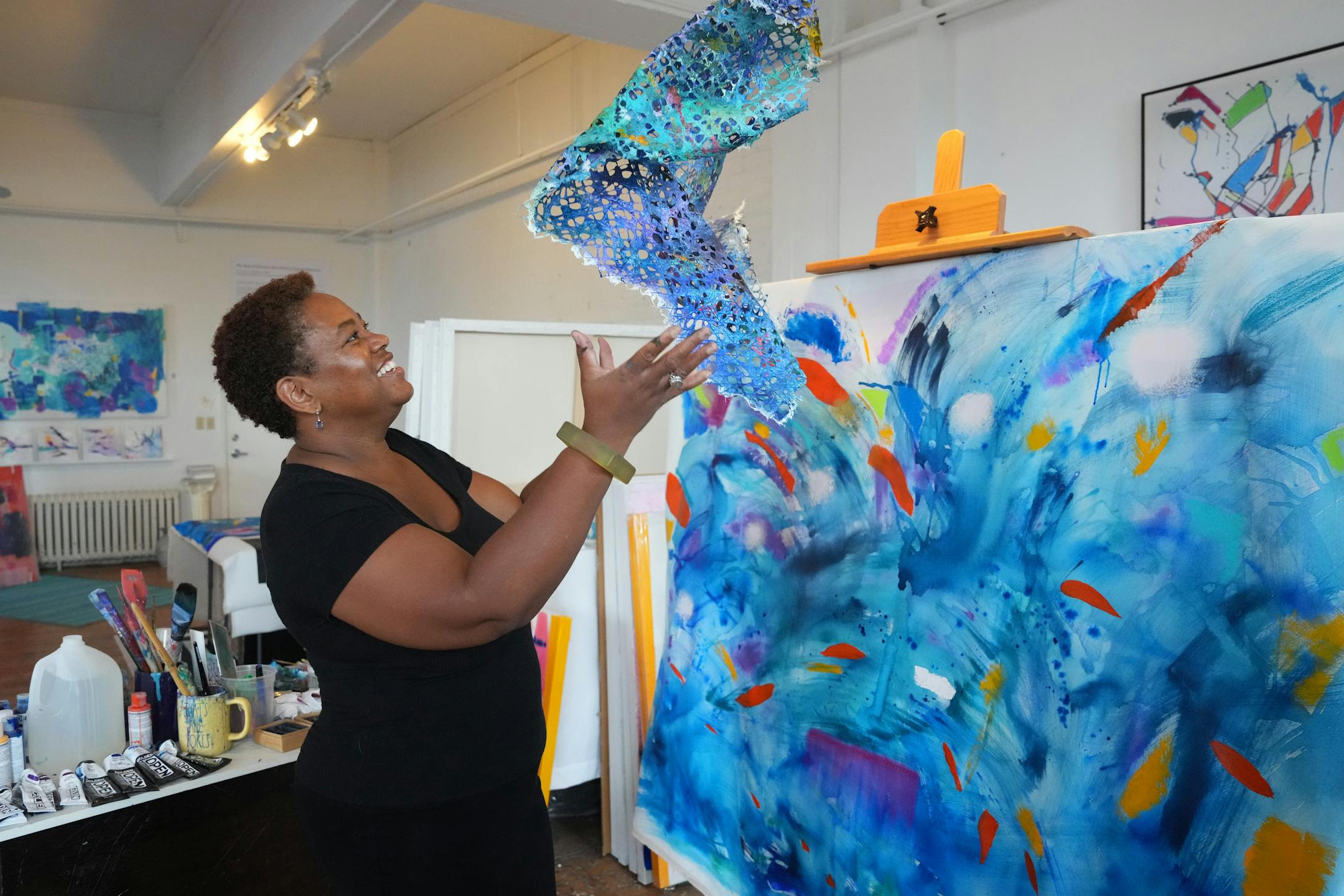
Three Minnesota artists representing different mediums and methods offer work that can add meaning, comfort and intrigue to your interior spaces.
Loriene Pearson
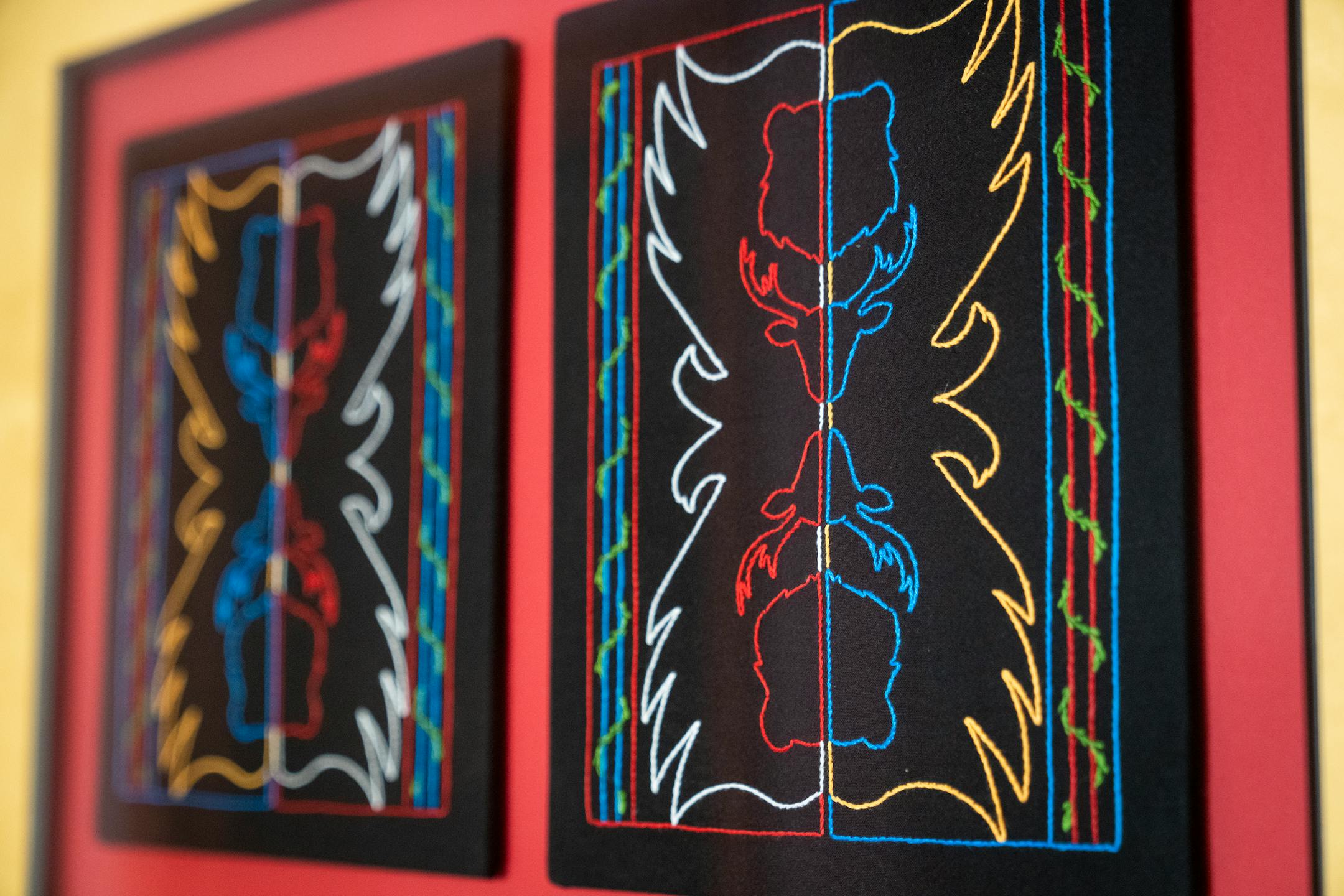
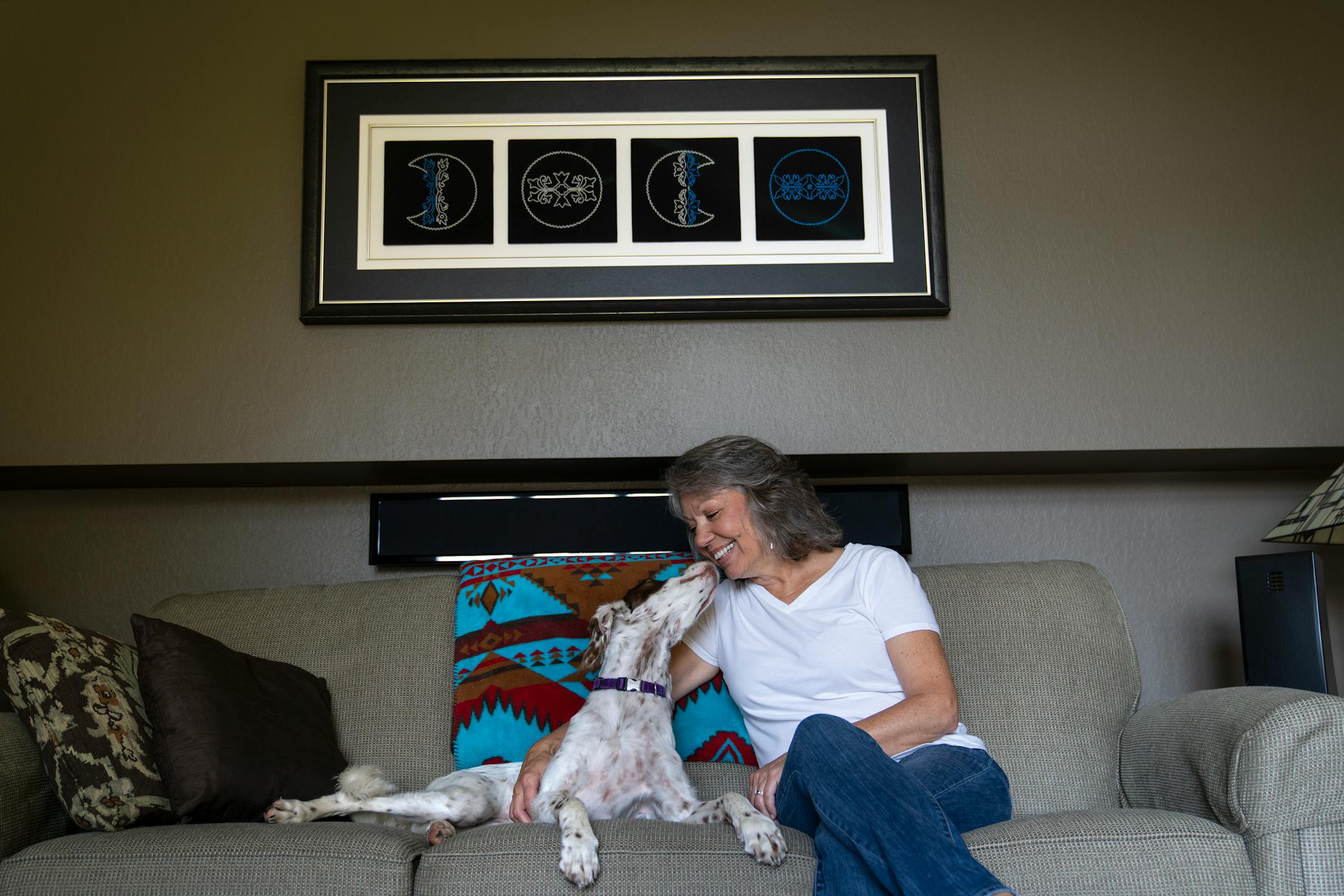
The work: After retiring from the corporate world, Pearson leaned into her lifelong love of photography. Photos she took of applique dresses during a Winnebago Tribe of Nebraska pow wow inspire the embroidery art she's working with now. She replicates the patterns on pieces of fabric and arranges them in a frame suitable for hanging, creating a new context for traditional crafts that lets her express her passion for nature and the Winnebago tribe's history. Ideas for new pieces come from those pow wows, her family, and the 100-plus-mile hikes she takes with her husband, Tim. Pearson's work has appeared in group and solo exhibitions in Minnesota, South Dakota and Nebraska.
The philosophy: "Reciprocity is an important idea for me; there's give and take, mirrored images, keeping the balance between everything," says Pearson.
What's next: She has recently branched into wearable art, stitching her designs into denim jackets.
For more: lorienepearson.com
Erin Peña
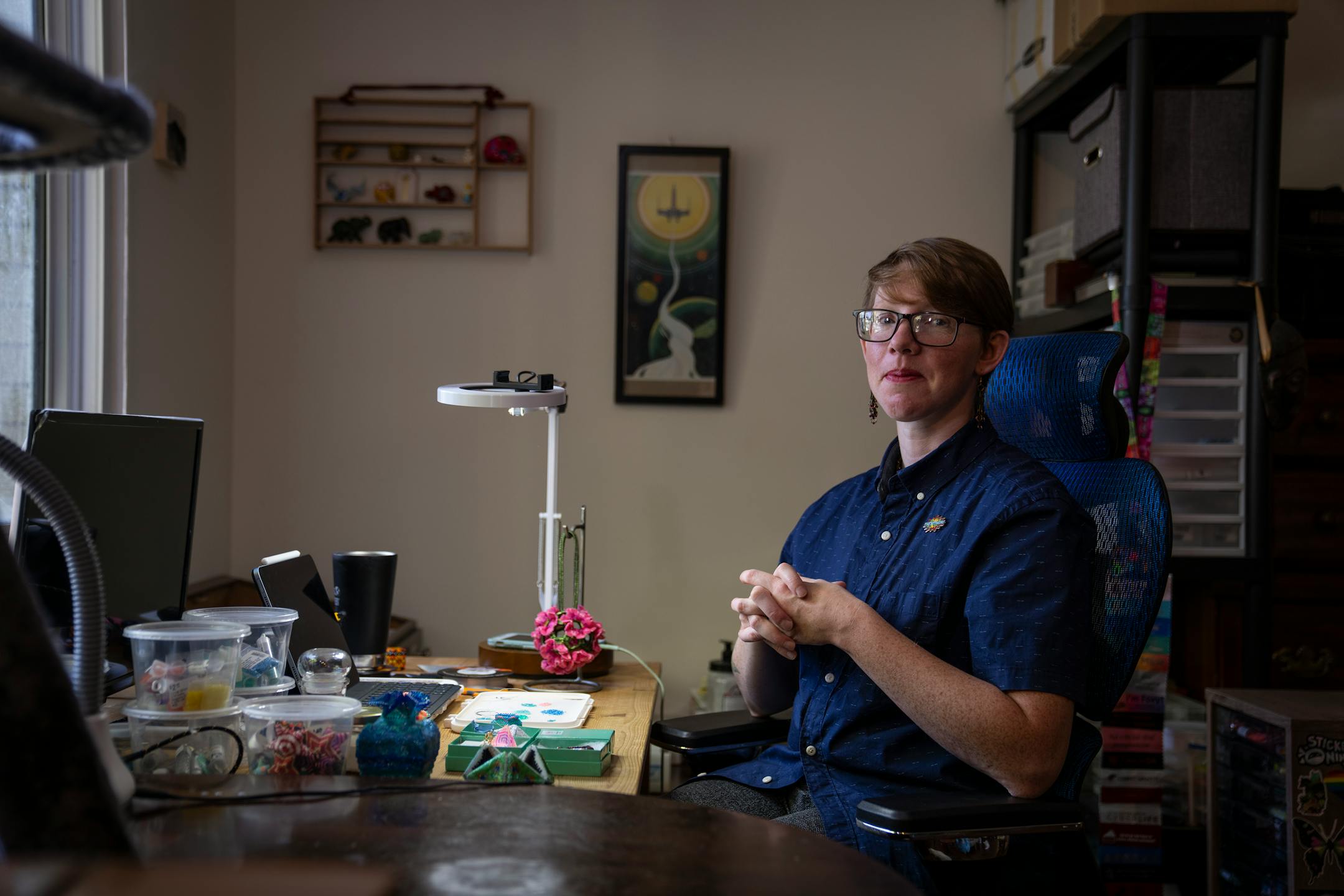
The Work: Peña, based in the Twin Cities, uses beads, thread and lights to create geometric sculptures — called "sculptural beadweavings" — that explore shapes pulled from science fiction and the natural world. As a child, Peña learned fiber arts from their family, such as knitting, cross-stitching and beading, as well as home repairs and construction from their father's extensive remodeling projects. When they learned the peyote stitch, a beading pattern that lends itself to building large shapes, they found the perfect way to blend the experiences they had into a personalized art form. Peña's art expresses their thoughts about issues in the world, ranging from colonialism's impact on the environment to the possibility of meeting extraterrestrial life.
The philosophy: "What I'm all about is curiosity. I'm always trying to dive deeper into the structure of things. I want to take something apart and put it back together, maybe in a way that isn't strictly realistic but captures its essential qualities. I want to keep exploring," Peña says.
What's next: Peña says they are still evolving, learning new techniques and expanding their knowledge of math and geometry. They use Adobe Procreate to design custom beading patterns that suit their vision, and then stitch the components together by hand.