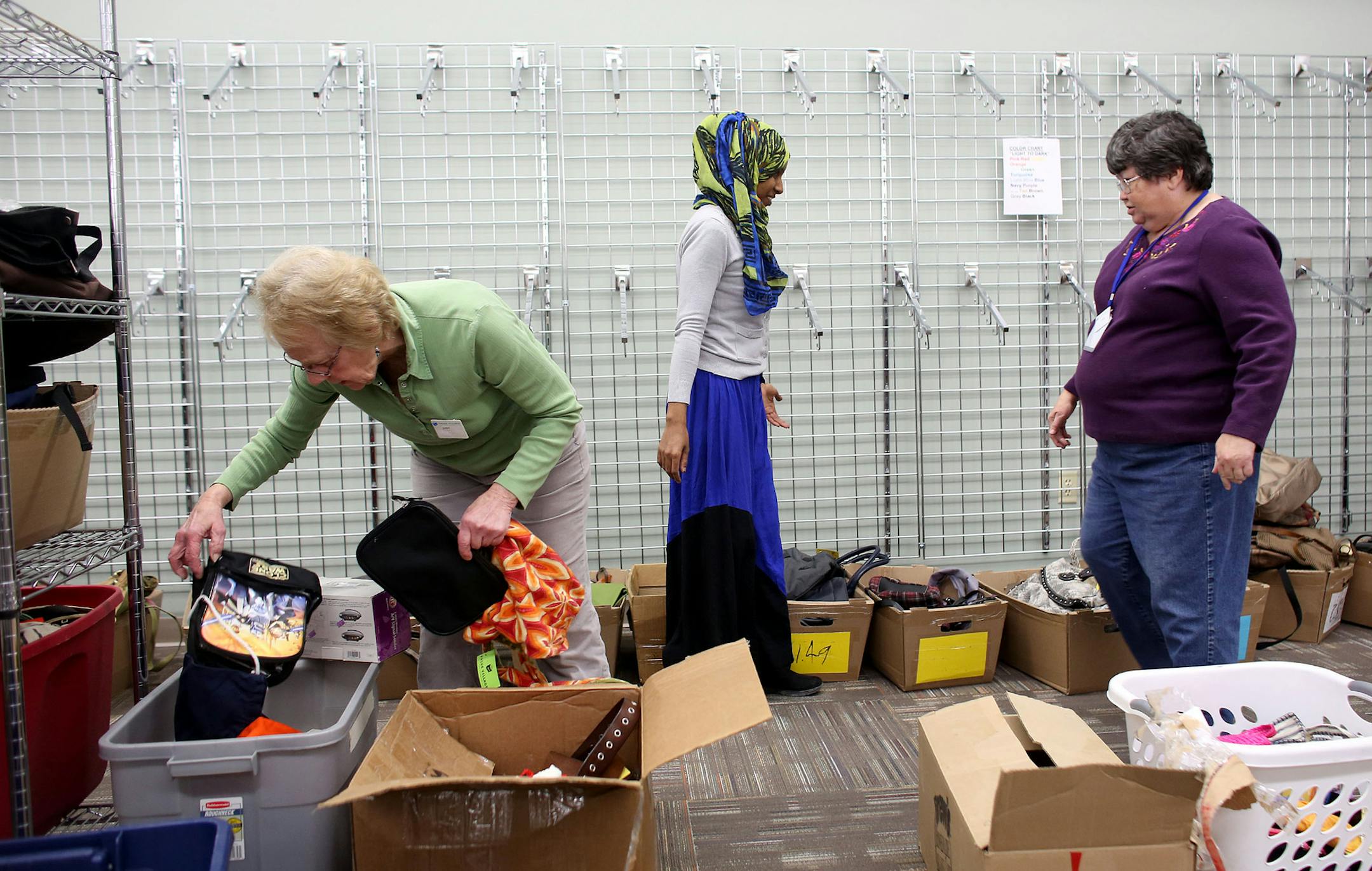
![Susan Maquardt helped Nuria Omar identify what size a pair of shoes was so that it can be properly labeled and put on the shelf. ] (KYNDELL HARKNESS/STAR TRIBUNE) kyndell.harkness@startribune.com Arc's Value Village preparing for opening in Bloomington , Min., Friday, November 21, 2014.](https://arc.stimg.co/startribunemedia/XWJVCNMAL62GNHXEO5ZGYIC73Q.jpg?&w=1080)
The Twin Cities has seen a major expansion of nonprofit and for-profit resale shops throughout the year, but, in recent weeks, that action seems to have concentrated in Bloomington.
Three charitable groups — Arc's Value Village, Hope Chest and Bridging — opened stores in the metro area's biggest suburb just in time for the holiday season. The new Arc's Value Village outlet opens Saturday.
While Bloomington is the home of the Mall of America, the city also offers secondhand retailers plenty of affordable real estate and a diverse base of shoppers, said Laurel Hansen, director of thrift stores at Arc's Value Village. "It has plenty of strip malls in well-established commercial areas where the rents are more affordable than new construction," Hansen said. "And well-established households with good incomes."
Arc's new location in Bloomington is its fifth in the metro area and will be slightly larger than most of its stores. The charity helps people with intellectual and developmental disabilities and their families.
All year, resale shops have been expanding in the Twin Cities. The Salvation Army opened a by-the-pound store and Goodwill created the Gina + Will concept store for young adults in Dinkytown. Meanwhile, NYT Clothing Exchange and Device Pitstop opened in Minnetonka and Style Encore arrived in Eagan and Maple Grove.
Nationally, the number of used goods stores has grown 7 percent each year since 2010, according to the National Association of Resale and Thrift Shops.
Barbara Hensley, founder and CEO of Hope Chest, was looking for locations in Edina, Eden Prairie and Bloomington to serve the customer base that was already shopping in the Orono store. "We knew we had name recognition in the Bloomington area," she said.
Open for a month, the Bloomington store is already exceeding its planned sales by nearly 20 percent. Although Hope Chest lost its lease in St. Paul and closed earlier this month, Hensley still plans to open four to seven more stores in the Twin Cities to serve their mission of helping financially challenged people with breast cancer pay everyday expenses like rent and utilities.
![Carol Sandoval arraigned items in the display case as she and other employees and volunteers got ready for their opening. ] (KYNDELL HARKNESS/STAR TRIBUNE) kyndell.harkness@startribune.com Arc's Value Village preparing for opening in Bloomington , Min., Friday, November 21, 2014.](https://arc.stimg.co/startribunemedia/33UVQIS5U2GDAFWRADIYCATL5E.jpg?&w=1080)