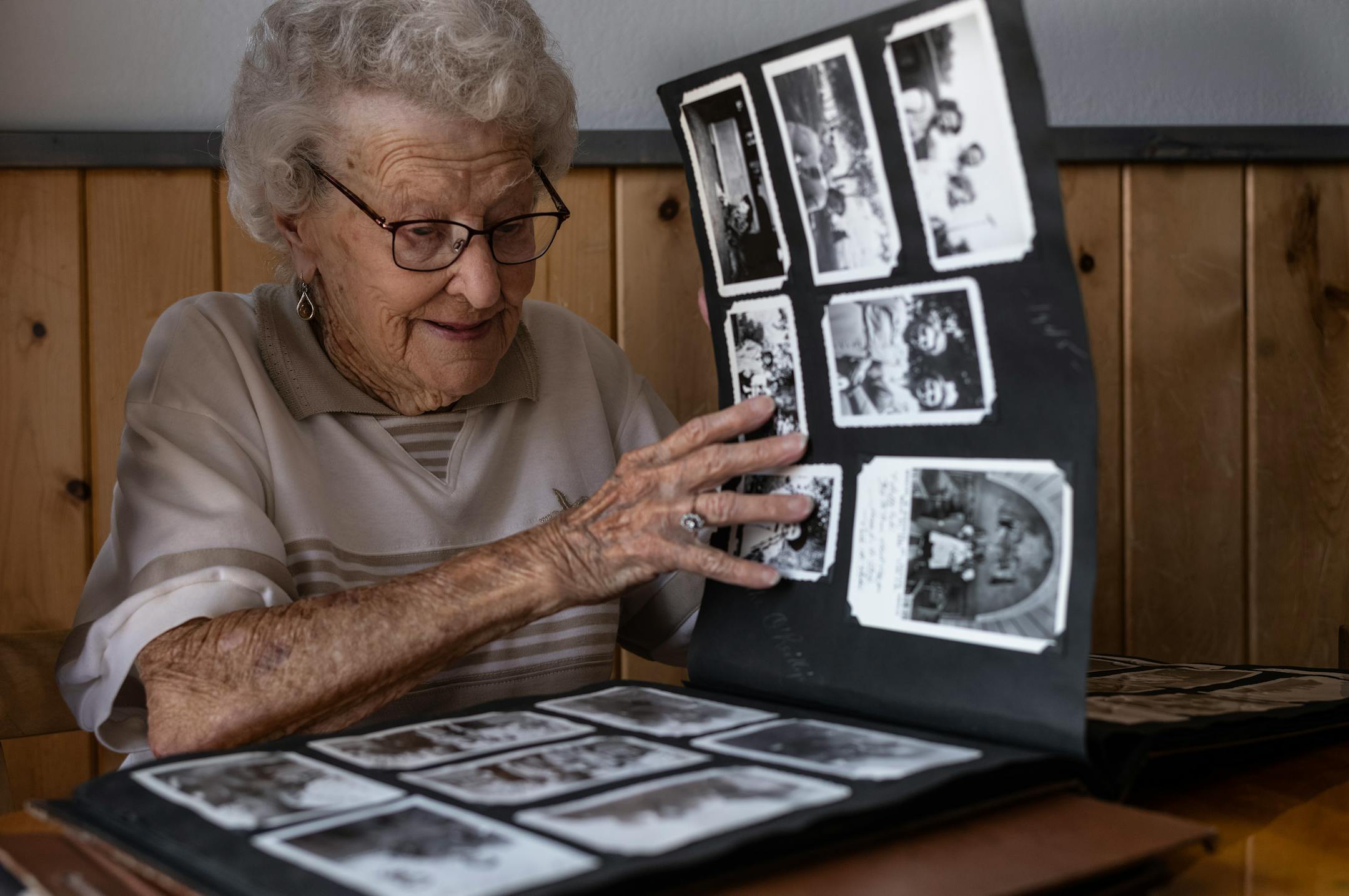
The young women in the black-and-white photos look cheerful, carefree and ready for whatever adventures and happily-ever-afters might lie ahead. They’re neatly dressed in the styles fashionable in years just before World War II: crisp white blouses, dark-red lipstick, elaborately coiffed hair.
There seems little chance the women in the photos could have imagined a future where they’d be looking at these fresh faces 80 years later, on a hot July day over lunch in a Burnsville restaurant.
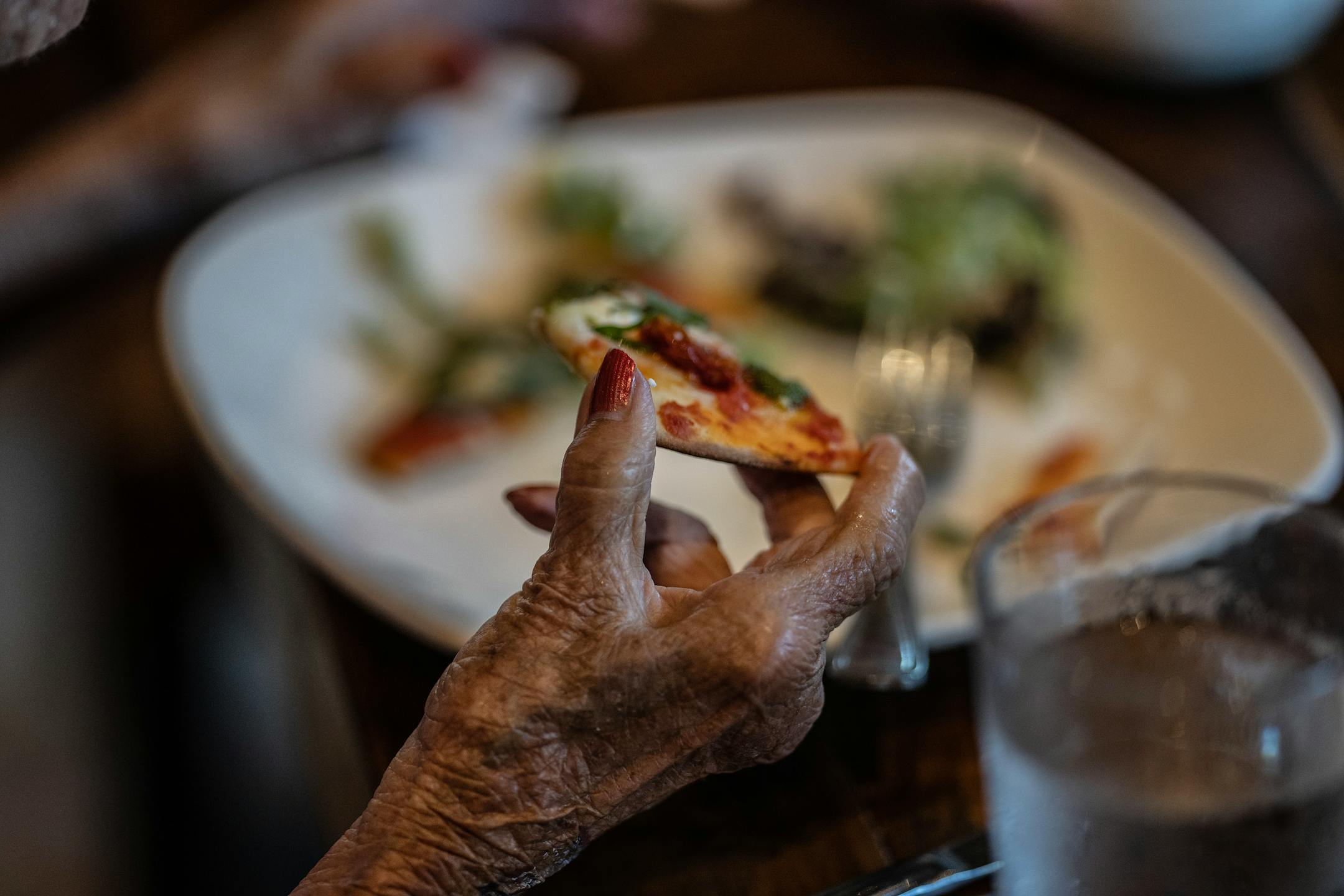
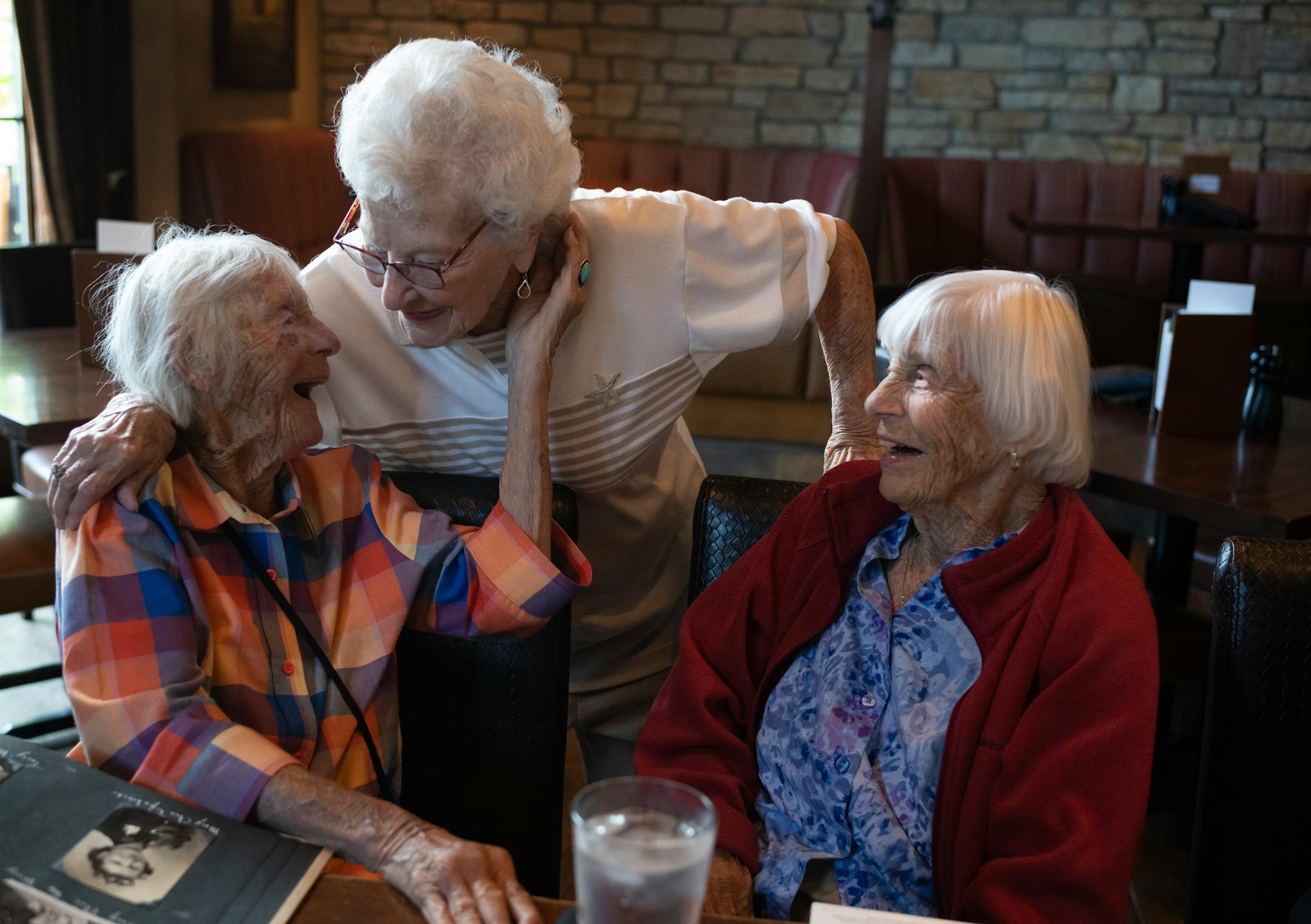
But there they were, all three now 101 years old: Virginia Goering of New Hope, Vera Sims of Waterville and her twin sister, Viva Froemming of Isanti, long-ago graduates of Alexandria High School (classes of ‘40 and ‘41).
They became friends and stayed in touch over the decades, their get-togethers and bridge games ebbing and flowing around marriages, babies and aging.
“Look how we had our hair curled,” Virginia said.
“You look more like your mother every day,” Vera told Virginia, glancing up from one photo.
Of course they couldn’t have foreseen it. Mainly because in 1950, the first year for which there are even reliable estimates, there were only about 2,300 centenarians in the whole United States. Thanks to medical advances at both ends of the life cycle, average life expectancy (at birth) expanded by three decades during the 20th century to the current 77.5 years.
Nowadays the odds of living a century are about 10 times higher, and though estimates vary there are more than 100,000 centenarians in the country. Virginia’s husband was one of them, in fact, until he died last year at 102. The centenarian population is expected to more than quadruple over the next 30 years.