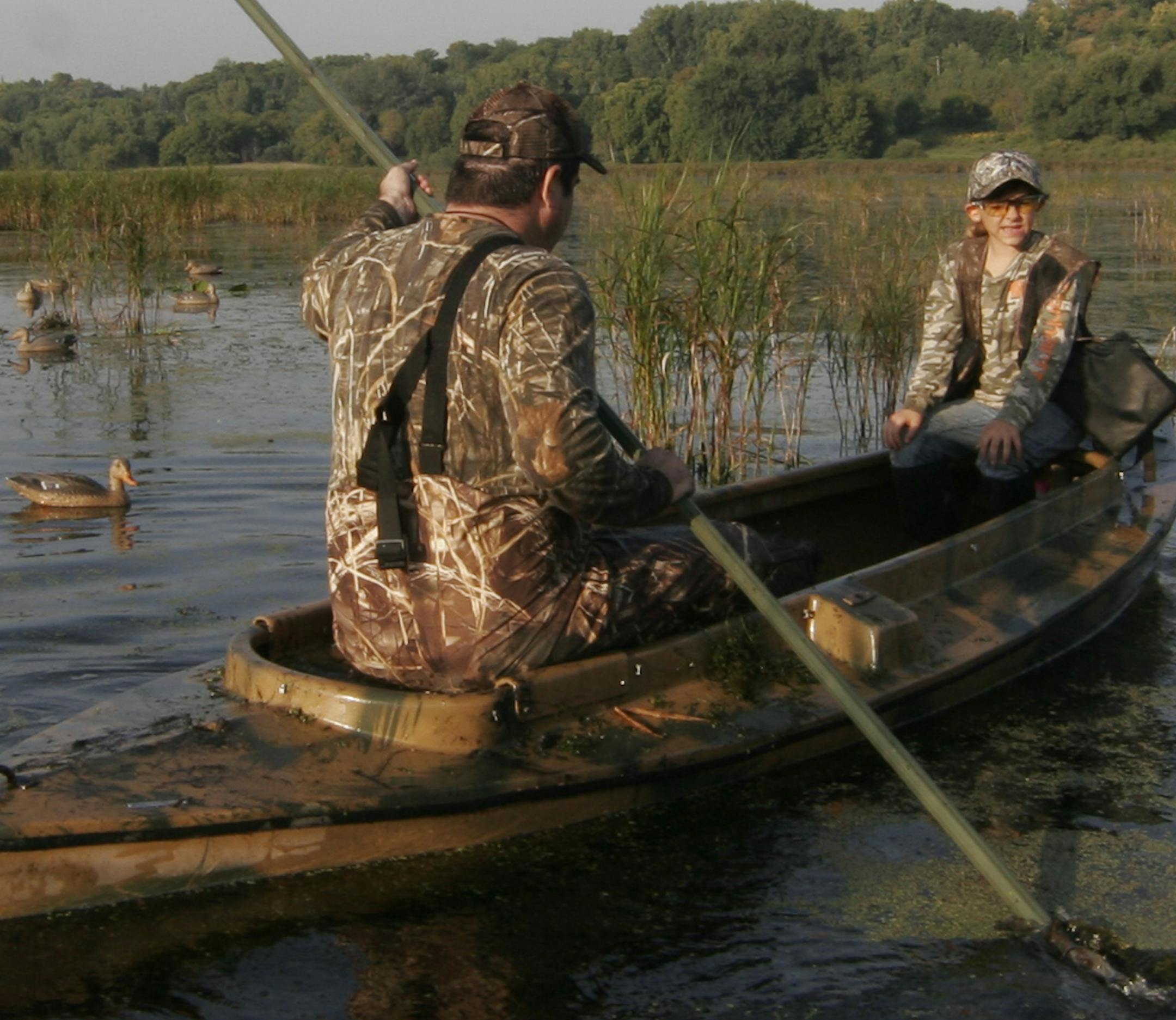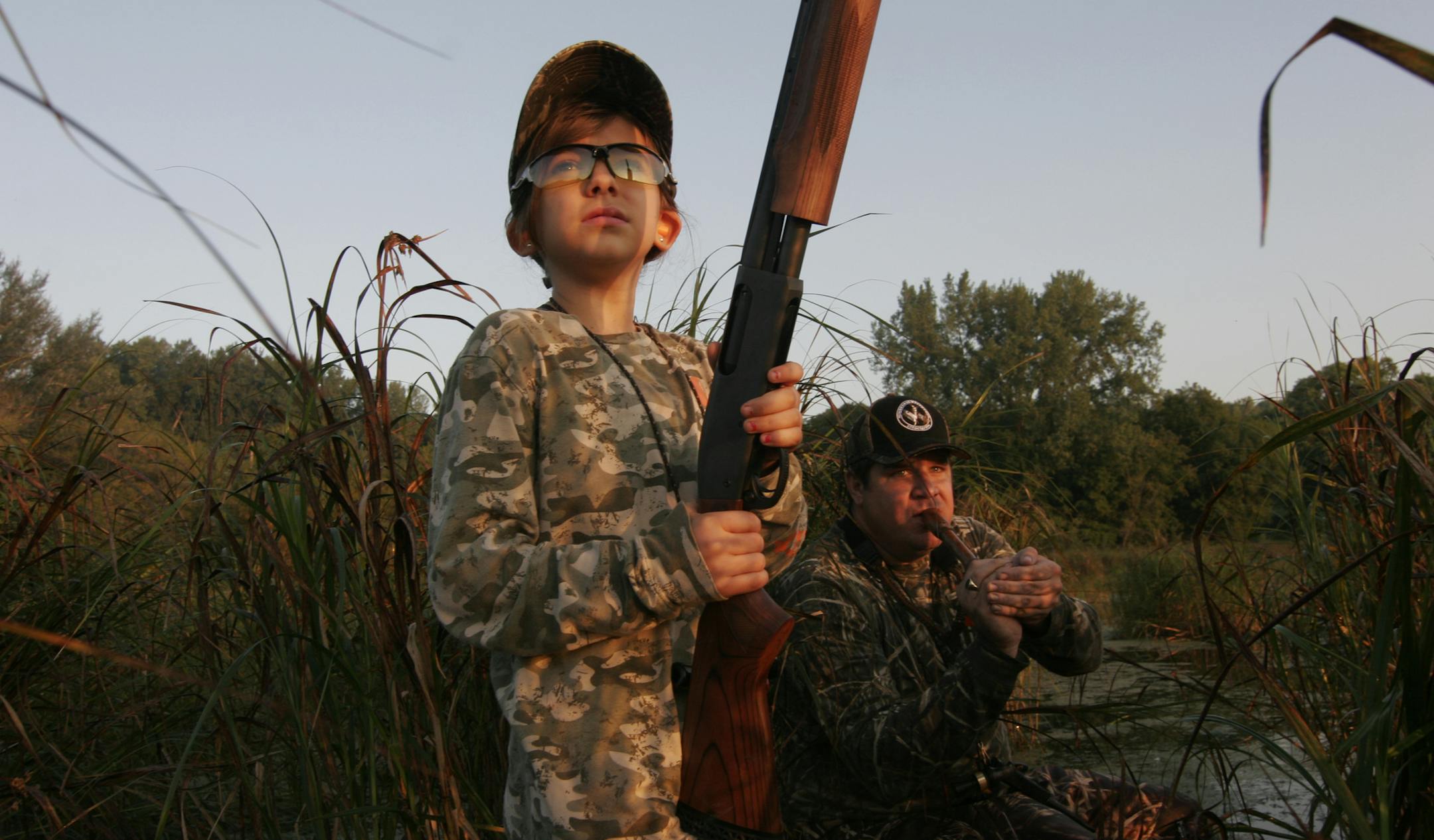
Eleven-year-old Grace Rodemann, cradling her 20-gauge shotgun, scanned the clear morning sky for ducks Saturday on a dank, mosquito-laden marsh near the Minnesota River — her first-ever hunt.
"I want ducks to fly in,'' she said, hunkered in a duck boat with her mentor, John Wartman, 47, of Waconia, and his eager 1-year-old black Lab, Drake. Nearby in a canoe, her grandfather, Bill Thompson, 65, of Pelican Rapids, and I watched.
A few teal and wood ducks did fly in, but they all jetted away unscathed.
"I had fun,'' Grace said afterward. "I liked shooting at the ducks. What I didn't like was their speed.''
Spoken like a true waterfowler.
Grace was among an estimated 5,000 youngsters age 15 and under who endured summerlike heat and humidity to take a crack at ducks and geese on Minnesota's 18th annual Youth Waterfowl Day. The purpose is to give kids a taste of waterfowling, with the hope that some will take up the sport. It is one of many youth hunting events — including pheasant, turkey and deer hunts — offered in Minnesota, an evolution that began decades ago to try to stem the decline of hunter numbers and to provide opportunities that family members, for myriad reasons, sometimes no longer give.
But is it working? Will Grace and the other young hunters who hunkered in blinds Saturday become duck hunters, and remain avid hunters when they are 20, 30 and 40 years old? How do parents, other hunters and natural resource agencies keep those kids hunting? In fact, can they do anything to influence that course?
The answers are as elusive as blue-winged teal rocketing past decoys.