

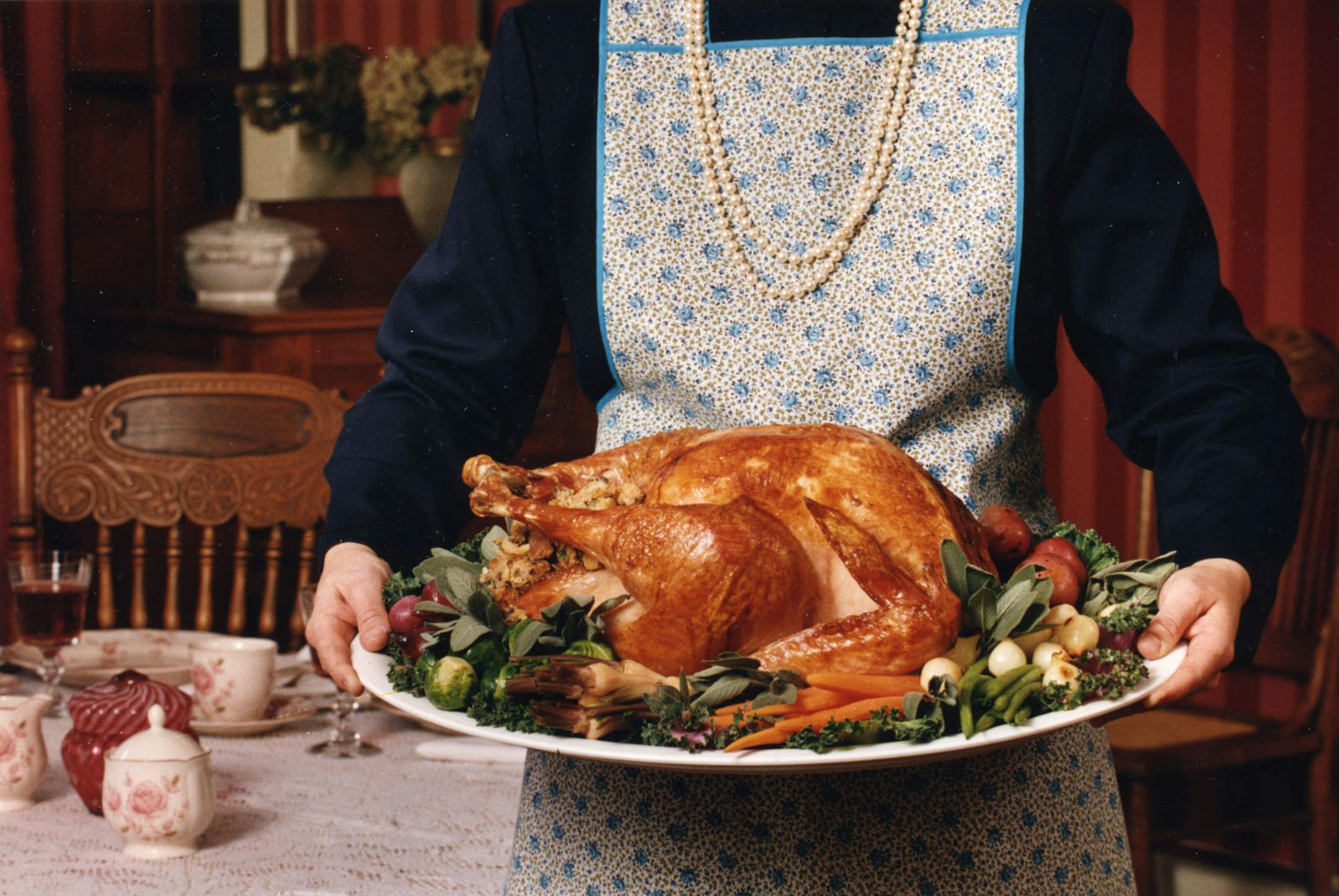
As a kid, roasting the Thanksgiving turkey drummed up family drama. Every year, my mom tried the latest method advanced in a magazine.
One year, she draped the turkey with cheesecloth doused in butter, but it clung tightly and tore off the skin. The next, she shrouded the bird in aluminum foil that steamed the thing.
When she roasted the turkey in a brown grocery bag, it caught fire and set off the smoke alarm. Firemen, axes raised, stormed the kitchen (Dad gave them all a beer).
My brother, a propane-grill guy, deep-fries his turkey. It's tricky, dangerous, outside business. Cars are moved to the street, kids and pets locked inside. Wearing protective goggles and elbow-length fireproof gloves, he lowers the bird on a chain into a roiling, spitting vat of oil set over a ring of fire, to emerge blackened and blistered. Sure, the meat is spectacularly juicy, but there's no the skin or crackly nub my dad called "the pope's nose."
In my own kitchen, I've tried Barbara Kafka's high-heat technique that yields a beautiful bronze, juicy turkey. But the spattering grease required we disarm the smoke alarm and it took me three days to clean the oven. I've tried the low-heat, slow method, but it simply takes too long.
After 25 years of cooking Thanksgiving turkeys, I've landed on this very simple surefire technique.
Choose a fresh, free-range turkey; the meat is firmer, juicier and tastier. A day before, rinse and pat the turkey dry, season all over with salt and pepper and set the turkey on a plate, uncovered, in the refrigerator. This evaporates excess moisture, ensuring brown, crisp skin.
Don't stuff the turkey as it slows the cooking time; bake the dressing alongside in a casserole.


