

Some history buffs dig into genealogy websites to mine ancestors' records. Some send in saliva for DNA scrutiny. Others comb through photo albums and mildewed boxes in attics and basements.
Then there's Linda Leraas Ray, 67, a retired floral designer who lives along the Mississippi River near Monticello. She embraces history with action, delving into her past with unusual zeal.
Ray has placed new headstones in a Minneapolis cemetery where her great-aunt and great-uncle were buried in unmarked graves in the 1870s, childhood victims of diphtheria and dysentery. She's raised $90,000 to shore up and preserve a rural Minnesota church where her great-grandfather, Ole Leraas, plied his carpentry skills to build the altar and communion rails at Immanuel Lutheran Church in the 1880s.
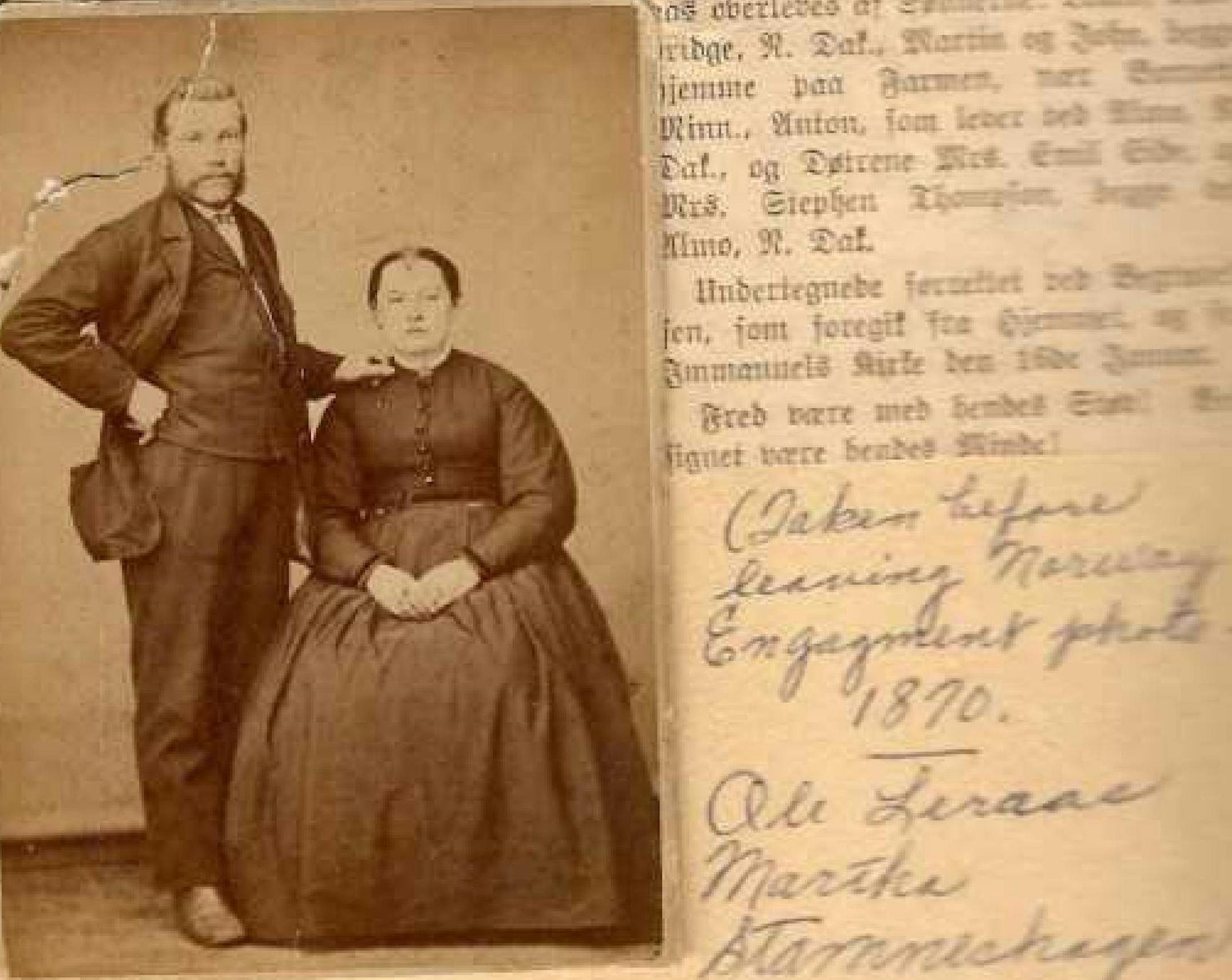
Ray dresses in black Norwegian period costumes to portray her great-grandmother Martha, Ole's wife, for cemetery tours and family reunions. She's trekked up a Norwegian mountain on foot to find the farm where Ole was born in 1844. There's no road leading to it.
"I'm just humbled by the sacrifices my ancestors made and the many hardships they endured," she said.
Through extensive research, Ray learned that Olav (Ole) Leraas became the first family member to emigrate from Norway to America in 1866 — but not before he asked for Martha's hand. They'd known each other their whole lives. Martha worked as a maid at the Leraas family farm.
Sailing alone to Quebec, Ole made his way to Goodhue County and worked as a cook at a hotel in Kenyon. He saved wages to return to Norway four years later, fetching his bride and sailing back west with Martha aboard the ship Harmonie.
They married in a church near Kenyon on Sept. 19, 1870, signing the marriage certificate as Ole Johnson and Martha Larson. When they realized how many Ole Johnsons lived in Minnesota, they opted for "Leraas," a reference to Ole's birthplace in Norway.


