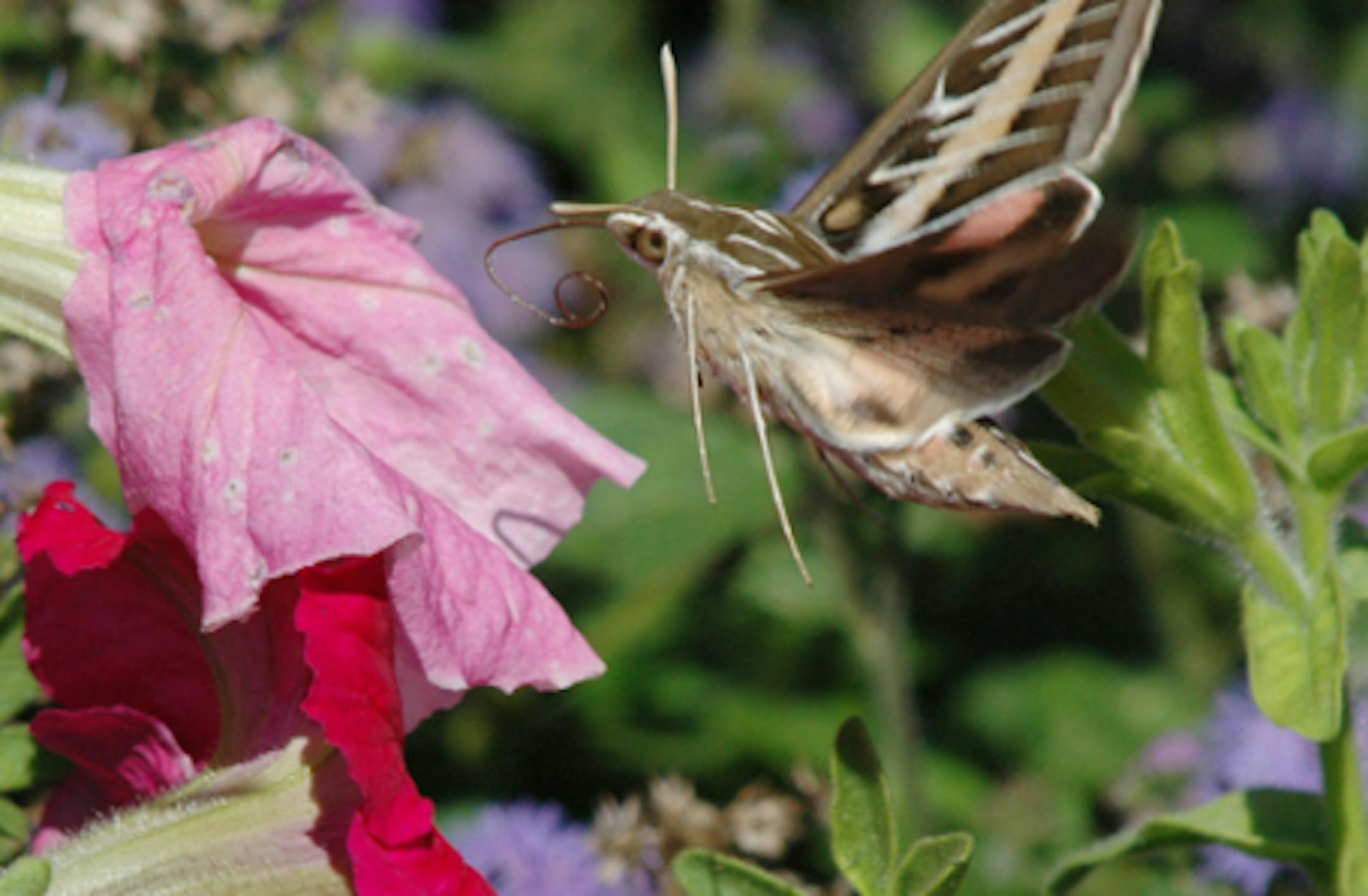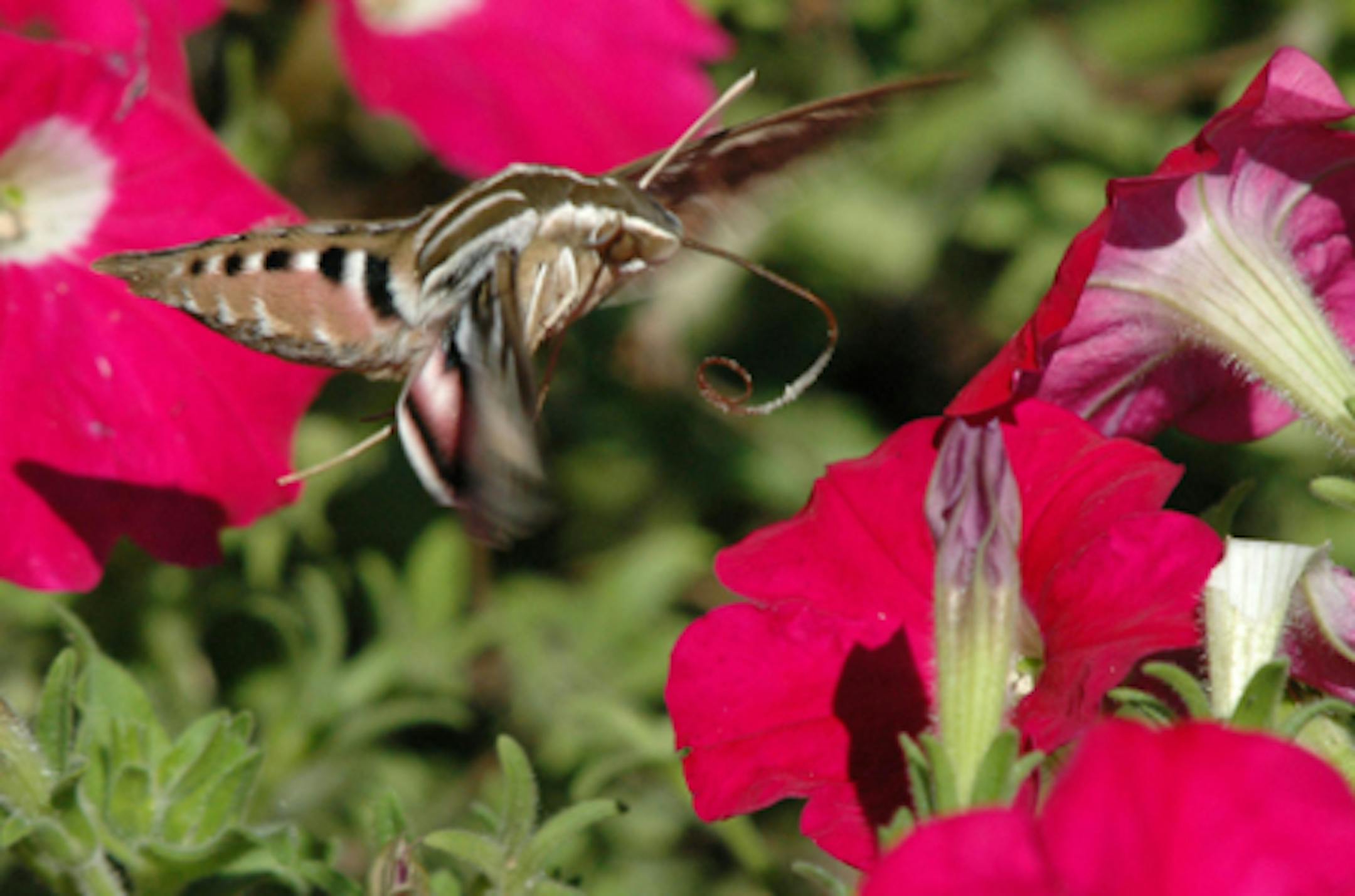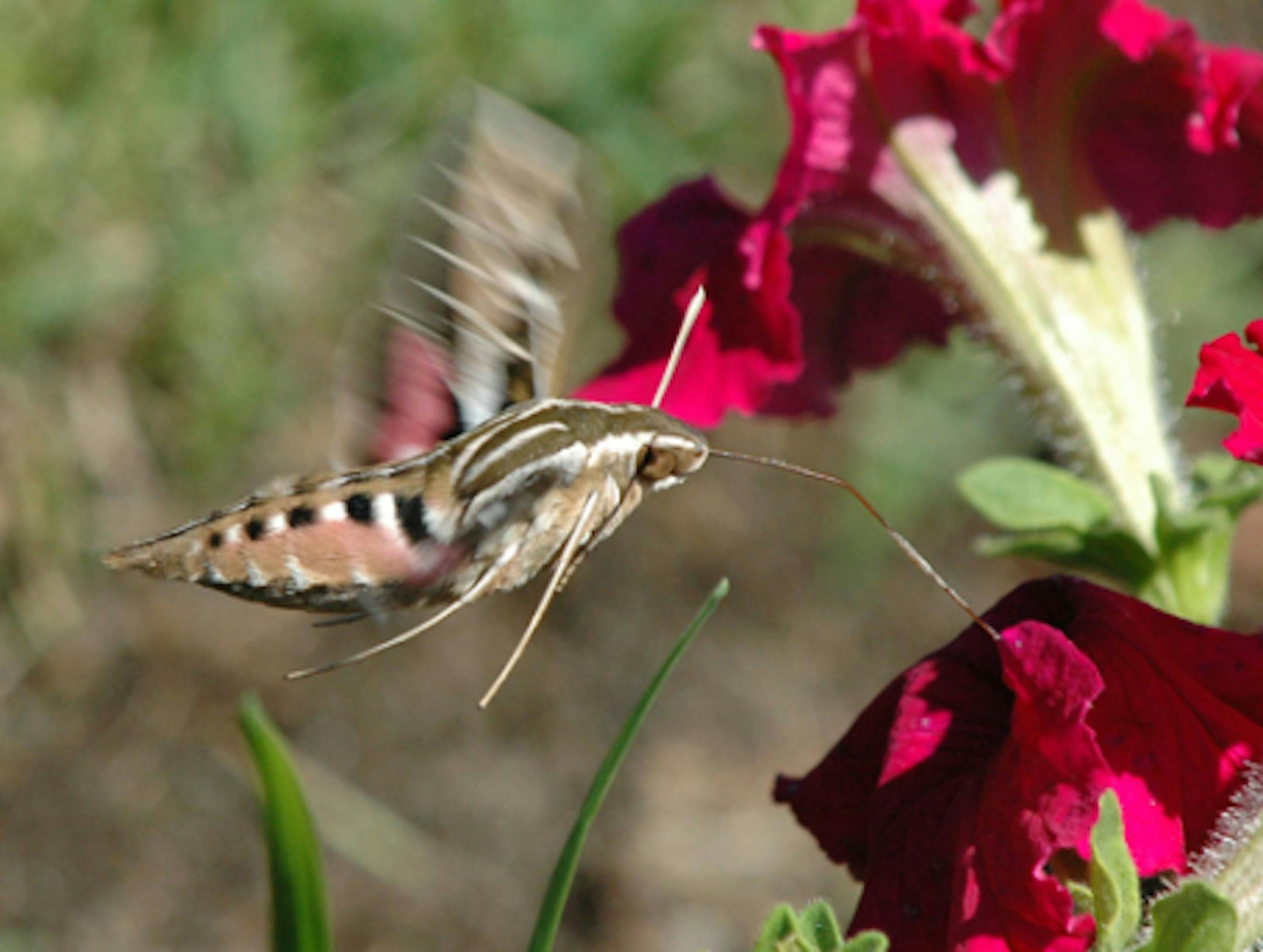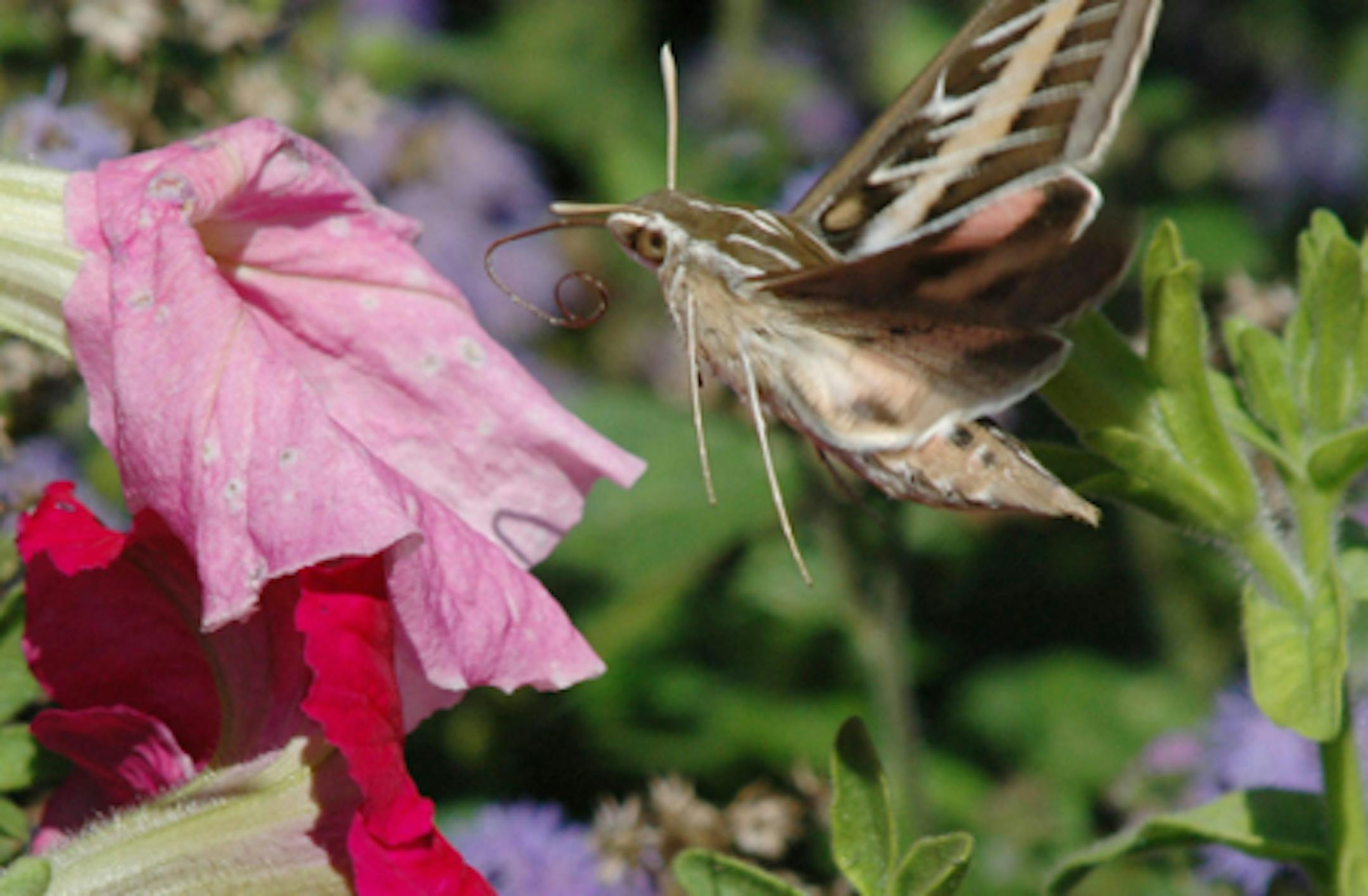
A reader has asked me to identify the "hummingbird" shown below. It's not a bird. It's a White-lined Sphinx Hummingbird Moth. It's often called simply a Sphinx Moth. You see them hovering over flowers, just like hummingbirds. The moths are gathering nectar, as do the birds. The hovering ability has evolved just three times in nectar feeders: the birds, this family of moths, and certain species of bat. If you watch the moths closely, you'll see them swing from side to side as they feed. Biologists believe this action evolved to help the moth avoid predators that could ambush from inside the flower. The moths can fly as fast as 30 mph. The proboscis, carried tightly curled on the moth's face, extends over an inch. The insects have a wingspan of 1.5 to 5 inches, depending on species. This species, the one we see here, goes about two inches tip to tip. They're smaller than a hummingbird, but they certainly behave like one. You can find more information by Googling "sphinx moth." The photos were taken last summer in a neighbor's garden.