

Movies that imagine an asteroid or comet catastrophically colliding with Earth always feature a key scene: a solitary astronomer spots the errant space chunk hurtling toward us, prompting panic and a growing feeling of existential dread as the researcher tells the wider world.
On March 11, life began to imitate art. That evening, at the Konkoly Observatory's Piszkésteto Mountain Station near Budapest, Krisztián Sárneczky was looking to the stars. Unsatisfied with discovering 63 near-Earth asteroids throughout his career, he was on a quest to find his 64th — and he succeeded.
At first, the object he spotted appeared normal. "It wasn't unusually fast," Sárneczky said. "It wasn't unusually bright." Half an hour later, he noticed "its movement was faster. That's when I realized it was fast approaching us."
That may sound like the beginning of a melodramatic disaster movie, but the asteroid was just over 6 feet long — an unthreatening pipsqueak. And Sárneczky felt elated.
"I have dreamed of such a discovery many times, but it seemed impossible," he said.
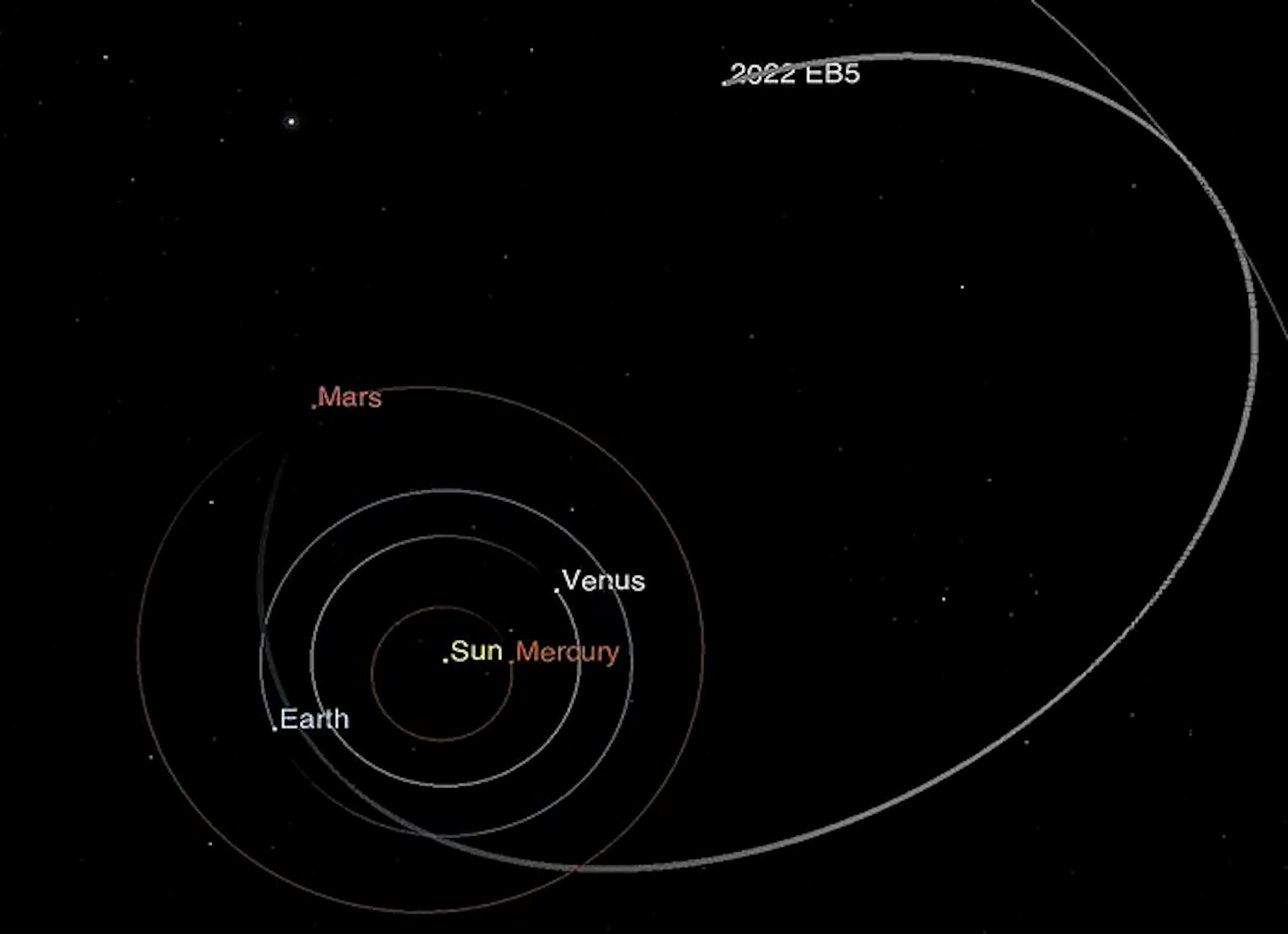
Not only had he spied a new asteroid, he had detected one just before it struck planet Earth, only the fifth time such a discovery has ever been made. The object, later named 2022 EB5, may have been harmless, but it ended up being a good test of tools NASA has built to defend our planet and its inhabitants from a collision with a more menacing rock from space.
One such system, Scout, is software that uses astronomers' observations of near-Earth objects and works out approximately where and when their impacts may occur. Within the hour of detecting 2022 EB5, Sárneczky shared his data and it was speedily analyzed by Scout. Even though 2022 EB5 was going to hit Earth just two hours after its discovery, the software managed to calculate that it would enter the atmosphere off the east coast of Greenland. And at 5:23 p.m. Eastern time on March 11, it did just that, exploding in midair.
"It was a wonderful hour and a half in my life," Sárneczky said.


